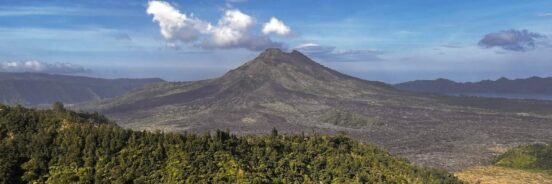
Sumatra is not a single destination—it is an entire world. Vast, wild, and deeply layered, this island stretches from the northern edge of Indonesia to the southern gateway of the archipelago, offering volcanic highlands, ancient cultures, powerful coastlines, and remote islands that remain largely untouched by mass tourism.
For IndoHiddenGem, Sumatra represents Indonesia at its most authentic: raw nature, living traditions, and landscapes that still feel undiscovered.
Sumatra at a Glance
- Second-largest island in Indonesia
- Home to rainforests, volcanoes, highland lakes, surf coasts, and indigenous cultures
- Less commercialized than Java or Bali, yet far richer in geographic and cultural diversity
- Ideal for travelers seeking depth, meaning, and exploration beyond mainstream routes
Northern Frontier — Aceh & Sabang
At Indonesia’s northernmost edge, Aceh marks the symbolic beginning of the nation.
Highlights:
- Titik Nol Kilometer, Sabang – The northernmost point of Indonesia, surrounded by forest and deep blue seas.
- Pulau Weh & Pulau Rubiah – Crystal-clear waters, world-class snorkeling, and a laid-back island rhythm.
- Pulau Banyak (Aceh Singkil) – A remote archipelago of white-sand islands often compared to a “local Maldives.”
- Leuser Ecosystem – One of the last rainforests on Earth where orangutans, elephants, rhinos, and tigers still coexist.
Aceh is powerful, spiritual, and untamed—a destination for travelers who value meaning over convenience.
Volcanic Highlands — North Sumatra & Lake Toba
At the heart of North Sumatra lies one of Southeast Asia’s most dramatic landscapes.
Highlights:
- Danau Toba – The largest volcanic lake in the world, formed by a super-eruption thousands of years ago.
- Samosir Island – Cultural heartland of the Batak people, with traditional houses, rituals, and lakeside villages.
- Sipiso-piso Waterfall – A towering waterfall plunging toward Lake Toba from the highlands.
- Bukit Holbung – Rolling green hills often described as “Raja Ampat on land.”
This region blends epic geology with a strong living culture, making it one of Sumatra’s most iconic yet still underexplored areas.
West Sumatra — Culture, Canyons & Coastlines
West Sumatra is where nature and tradition intertwine seamlessly.
Highlights:
- Ngarai Sianok – A dramatic canyon cutting through Bukittinggi, best explored at sunrise or from hidden viewpoints.
- Rumah Gadang – The iconic horn-roofed traditional houses of the Minangkabau people.
- Harau Valley (Hidden Sides) – Sheer cliffs, waterfalls, and rice fields often overlooked beyond the main valley.
- Pesisir Selatan & Air Tarusan – Coastal karst formations often referred to as “Raja Ampat Mini.”
West Sumatra is deeply philosophical, matrilineal, and proud—its landscapes as poetic as its people.
Remote Islands & Maritime Gateways — Riau Islands & Bintan
Facing Singapore and the South China Sea, the Riau Islands form Sumatra’s maritime face.
Highlights:
- Bintan Island – Beyond its resorts lie mangroves, fishing villages, sand dunes, and quiet beaches.
- Tanjung Pinang & Senggarang – Historic Chinese settlements with temples rising directly from the sea.
- Anambas & Natuna Islands – Ultra-remote granite islands, turquoise lagoons, and premium underwater ecosystems.
This region blends accessibility with isolation—perfect for uncovering hidden coastal narratives.
Highlands & Ancient Forests — Jambi & Kerinci
Central Sumatra is dominated by mountains, lakes, and deep jungle.
Highlights:
- Gunung Kerinci – The highest volcano in Indonesia, with one of the most challenging and rewarding summit trails.
- Danau Gunung Tujuh – The highest lake in Southeast Asia, hidden within a volcanic caldera.
- Danau Kaco – A glowing blue forest lake known for its surreal clarity.
- Kerinci Villages – Cool-climate settlements surrounded by tea fields and cinnamon forests.
This is Sumatra at its most primal—misty, quiet, and powerful.
The Wild West Coast — Bengkulu & Enggano
Bengkulu remains one of the least visited provinces in Sumatra, yet its potential is immense.
Highlights:
- Surfing Waves of Bengkulu – Consistent Indian Ocean swells with minimal crowds.
- Enggano Island – A remote island with unique ecosystems and isolated beaches.
- Bukit Kandis – Massive granite formations rising from the forest.
- Historic Fort Marlborough – A reminder of colonial-era maritime power.
Bengkulu is raw, open, and ideal for adventure-driven exploration.
Southern Heartland — South Sumatra
Often overlooked, South Sumatra hides highlands, rivers, and ancient stone cultures.
Highlights:
- Pagar Alam & Gunung Dempo – Tea plantations, waterfalls, and sunrise above the clouds.
- Lahat Megaliths – One of Southeast Asia’s largest collections of prehistoric stone statues.
- Musi River – Lifeline of Palembang, with hidden river villages and wetlands.
- Prabumulih & Muara Enim Highlands – Underrated landscapes and geothermal terrain.
This region connects Sumatra’s ancient past with its living river culture.
Island of Stone & Surf — Nias
Off the west coast of Sumatra lies Nias, an island defined by tradition and waves.
Highlights:
- Nias Tribal Heritage – Stone-jumping rituals, warrior traditions, and ancestral villages.
- Sorake & Lagundri Bay – World-class surf breaks attracting surfers from around the globe.
- Megalithic Villages – Massive stone structures built centuries ago, still central to daily life.
Nias is one of Indonesia’s strongest examples of cultural continuity.
Why Sumatra Matters for IndoHiddenGem
Sumatra is not built for shortcuts. It rewards patience, curiosity, and respect. From Lake Toba’s volcanic legacy to Nias’ living traditions, from Bintan’s quiet mangroves to Bengkulu’s surf coast, Sumatra offers experiences that cannot be replicated elsewhere in Indonesia.
This is not a checklist destination.
This is a journey into Indonesia’s depth.
Uncover Sumatra.
Because the greatest stories are found where tourism has not yet finished the sentence.