Unveiling the Untamed: Maluku and Papua, Indonesia’s Final Frontiers
For travelers who crave landscapes that challenge imagination and cultures shaped by millennia, Eastern Indonesia remains one of the last great frontiers. Far beyond the familiar rhythms of Bali and Java lie Maluku—the legendary Spice Islands—and Papua, a land of raw wilderness and living tradition. These regions are not simply destinations; they are journeys that redefine what adventure truly means.
Often overlooked, Maluku and Papua represent Indonesia at its most elemental. Here, nature remains largely untouched, and cultural traditions endure with remarkable authenticity. This is a curated guide to exploring these extraordinary lands, revealing rare places that reward curiosity, patience, and respect.
Maluku: The Archipelagic Legacy of the Spice Islands
Once the epicenter of the global spice trade, Maluku is an intricate chain of more than a thousand islands scattered across luminous seas. Cloves and nutmeg once drew empires to its shores; today, the region captivates travelers with its quiet beauty, layered history, and profound connection to the ocean.
Expect colonial-era forts perched above cobalt waters, reefs alive with color, and coastal villages where life moves in harmony with tides and seasons. The Banda Islands stand as Maluku’s historic and natural crown, blending dramatic volcanic scenery with exceptional marine life and a tangible sense of the past.
Papua: Where Primeval Nature Meets Living Culture
Papua occupies the western half of New Guinea, one of the most biologically and culturally diverse islands on Earth. It is home to Indonesia’s highest peak, vast rainforests, and hundreds of indigenous groups whose traditions remain deeply rooted in daily life.
From the unrivaled marine biodiversity of Raja Ampat to the misty highlands of the interior, Papua is defined by contrast. It is a destination for those who seek immersion—into wilderness, into culture, and into experiences that feel profoundly original.
The 12 Most Hidden Gems of Maluku & Papua
Each destination below is a distinct location, selected to highlight the remarkable diversity of these regions without repetition.
1. Gunung Api Banda, Banda Islands (Maluku)
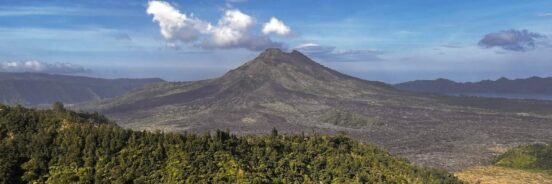
An active volcano that rewards early risers with one of Indonesia’s most spectacular sunrises. The pre-dawn climb culminates in sweeping views across the Banda archipelago, where volcanic silhouettes rise from a turquoise sea.
2. Pulau Geser, Seram Sea (Maluku)
A slender island off Seram known for its striking “Blue River” estuary, where mineral-rich freshwater meets the sea in shifting shades of blue. Village life here offers an unfiltered glimpse into everyday Maluku culture.
3. Danau Biru, Matinan
A rarely visited crater lake whose colors shift from vivid turquoise to deep sapphire, surrounded by dense forest. Reaching it is an adventure in itself, often rewarded with complete solitude.
4. Teluk Triton, Kaimana (West Papua)
Often described as Raja Ampat’s quieter counterpart, this bay features dramatic karst islands, rich coral reefs, and seasonal whale shark encounters—without the crowds. Ideal for kayaking and remote beach camping.
5. Lembah Baliem & Festival Lembah Baliem, Papua Highlands
The Baliem Valley is known, but its annual cultural festival reveals its true depth. Tribes from across the highlands gather to perform ritual mock battles, music, dance, and ceremonies that offer rare insight into Papua’s living heritage.
6. Pulau Lucipara, Central Maluku
A remote atoll in the Banda Sea, accessible only by long liveaboard journeys. Its reefs are pristine, with vibrant soft corals and abundant pelagic life—an extraordinary destination for experienced divers.
7. Kampung Bungai, Raja Ampat (West Papua)
Beyond the luxury resorts lies this traditional village offering simple homestays and a deep connection to local conservation practices. From lagoon viewpoints to daily village life, Bungai reveals Raja Ampat from an authentic perspective.
8. Ternate & Tidore Hinterlands, North Maluku
While the sultan’s palaces draw visitors, the true discoveries lie inland. Forested volcanic trails lead to hidden sulfur lakes, forgotten fort ruins, and clove plantations with panoramic views over the twin islands.
9. Sungai Baliem & Highland Hot Springs, Papua
Following the Baliem River away from Wamena reveals suspension bridges, natural hot springs, and villages where highland life unfolds at its own pace—far from established trekking routes.
10. Kepulauan Sula, Southwest Maluku
A remote archipelago with a distinct cultural identity. Sanana Island’s old Dutch fort anchors a region known for untouched reefs, undocumented snorkeling sites, and rare birdlife such as the Sula megapode.
11. Lembah Grime, Papua
A lesser-known alternative to the Baliem Valley. Trekking into Grime Valley passes cloud forests and hidden waterfalls before reaching villages that receive very few visitors, offering an intimate view of highland life.
12. Pulau Nusa Laut, Lease Islands (Maluku)
The smallest of the Lease Islands, defined by tranquility. It is home to one of Indonesia’s oldest Protestant churches and a long stretch of white sand known as Pasir Panjang, bordered by clear, shallow waters.
Travel Essentials & Ethical Guidelines
Access
Ambon serves as the main gateway to Maluku, while Jayapura and Sorong are key entry points for Papua. Inter-island travel typically involves ferries and small aircraft.
Best Time to Visit
Maluku is best visited from October to April. Papua’s highlands are most accessible from May to October, while Raja Ampat can be explored year-round.
Responsible Travel
These regions are ecologically fragile and culturally sensitive. Travelers should obtain necessary permits, including the Surat Jalan for Papua, engage local guides, respect local customs, and always ask before photographing people. Practicing low-impact, community-focused travel is essential.
Traveling through Maluku and Papua is a privilege reserved for those who value depth over convenience. These journeys offer more than scenery—they offer perspective. By seeking out these hidden gems, you become part of their story, helping to ensure that their landscapes and cultures endure. Indonesia’s final frontiers are waiting, untamed and unforgettable.