
Kalimantan—Indonesia’s share of the island of Borneo—is one of the last places on Earth where ancient rainforest, vast river systems, and living indigenous cultures still shape daily life. Far beyond the usual travel map, this is a land of floating villages, rediscovered wildlife, forgotten mining landscapes, and ecosystems that literally change with the seasons.
For IndoHiddenGem, Kalimantan represents the ultimate destination for travelers seeking depth, authenticity, and true wilderness—where stories are written by rivers, forests, and people who have lived in balance with nature for centuries.

A rare cartographic reconstruction of the Kalimantan archipelago as it appeared in 1888. Reproduced by IndoHiddenGem Digital Archives.
The Core Identity of Kalimantan
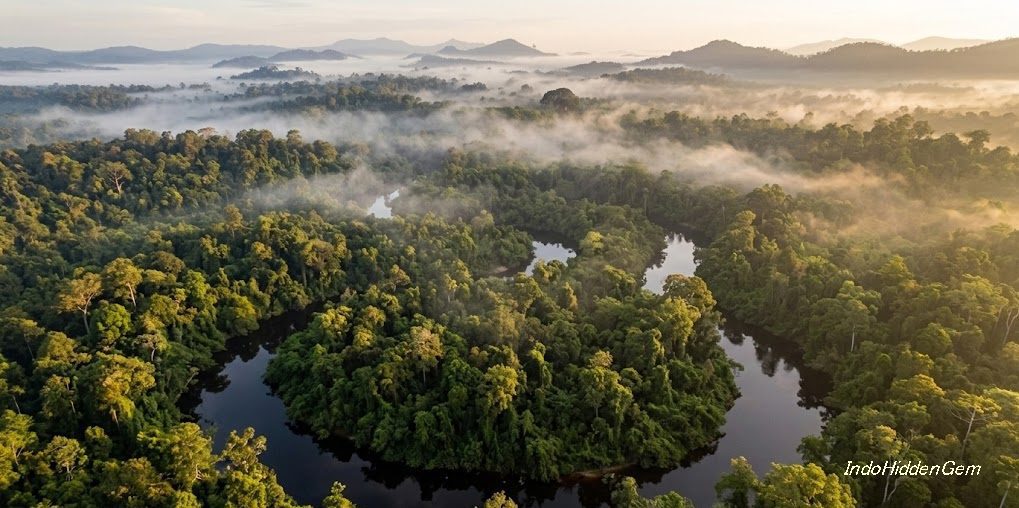
Kalimantan is defined by scale and resilience. Old-growth rainforests stretch across mountain ranges and peat swamps. Mighty rivers such as the Kapuas, Mahakam, and Barito function as highways, markets, and cultural lifelines. Indigenous Dayak traditions remain deeply connected to the forest, while Banjar river culture thrives in floating markets and stilted neighborhoods.
This is a place where nature produces its own wealth—wild honey, freshwater fish, forest resins, gemstones—and where landscapes shift dramatically between dry and flood seasons.
Why Traveling in Kalimantan Feels Different From the Rest of Indonesia
Most travelers arrive in Indonesia expecting movement.
Java moves fast with crowded cities, endless motorbikes, and volcanic landscapes filled with human activity. Bali feels curated and vibrant, where rice terraces, beach clubs, temples, and cafés blend into a carefully shaped travel experience. Sumatra offers dramatic volcanoes, dense jungles, and powerful cultural energy.
But Kalimantan feels different almost immediately.
The difference is not only visual. It is emotional.
Kalimantan — the Indonesian side of Borneo — feels quieter, slower, older, and far more remote than most parts of the archipelago. Instead of roads dominating the landscape, rivers shape entire civilizations. Instead of tourism infrastructure, vast rainforests still control the rhythm of daily life. For travelers searching for deeper experiences, hidden places, and true wilderness, Kalimantan offers something increasingly rare in Southeast Asia: the feeling of entering a world that still exists largely beyond mass tourism.
The Geography of Silence
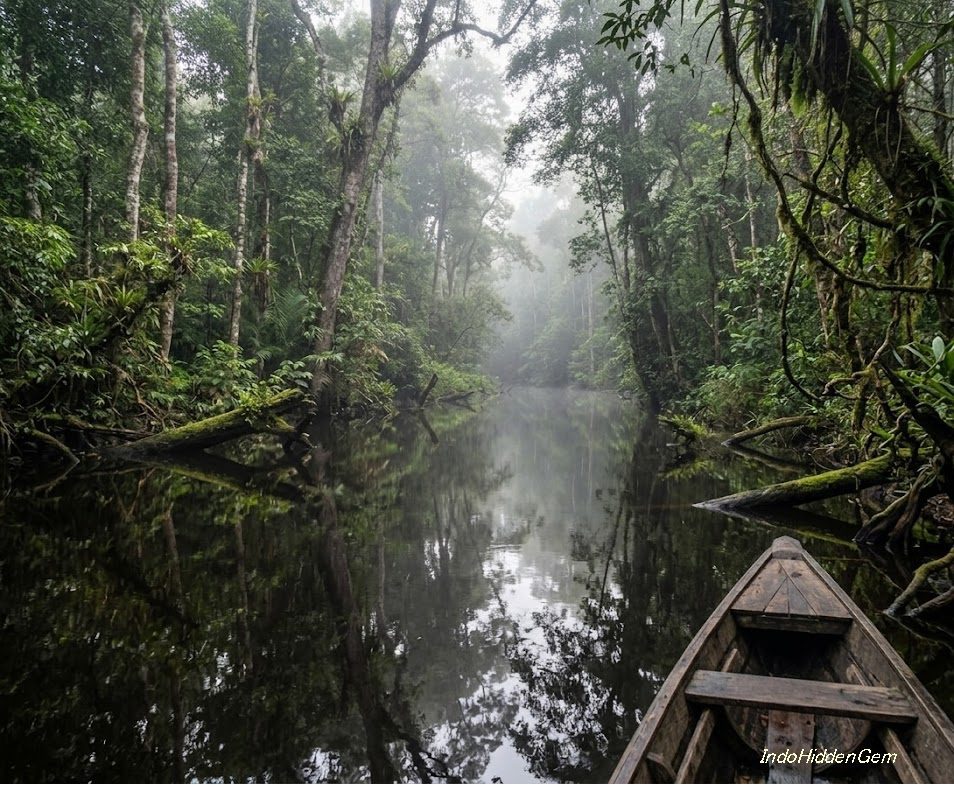
One of the first things travelers notice in Kalimantan is the silence.
Not complete silence, but natural silence — the sound of insects, distant birds, river currents, rainfall on leaves, and wind moving through giant rainforest canopies.
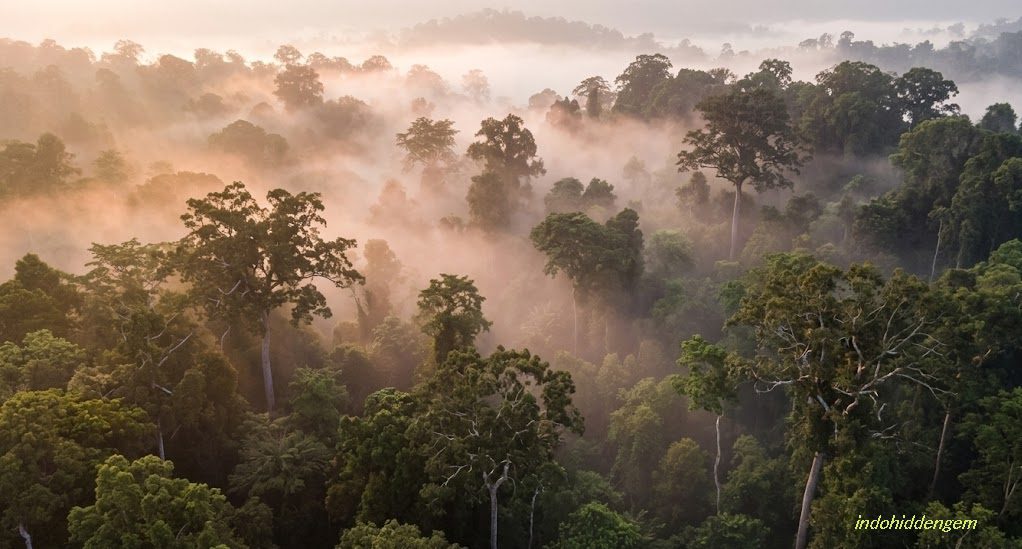
Unlike Java or Bali, where villages, shops, and roads appear almost everywhere, large parts of Kalimantan remain dominated by forest. The island contains some of the oldest tropical rainforests on Earth, with ecosystems stretching across peat swamps, mangroves, wetlands, mountains, and river corridors.
This scale changes the feeling of travel itself.
Driving through Kalimantan often means passing endless green landscapes with very few settlements in between. In more remote regions, roads disappear entirely and transportation shifts to longboats, wooden river vessels, or small forest trails.
For many travelers, this creates a sense of detachment from modern urban life that is difficult to experience elsewhere in Indonesia.
Where Rivers Matter More Than Roads
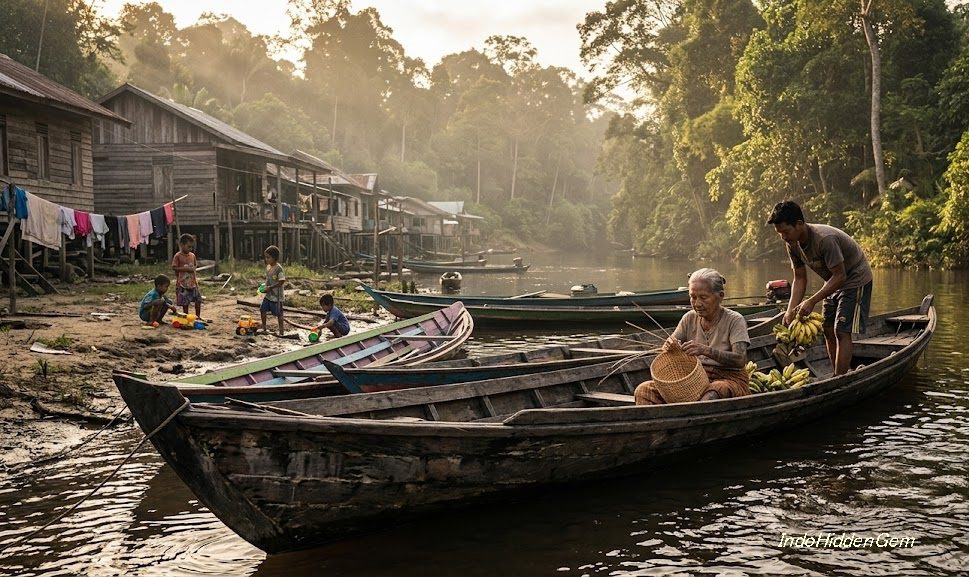
In many parts of Kalimantan, rivers are not simply geographical features. They are the foundation of life.
Major rivers such as the Kapuas River, Mahakam River, Barito River, and Kahayan River function as transportation routes, marketplaces, fishing grounds, and cultural centers. Entire communities continue to depend on river systems for movement, trade, and survival.
Floating villages and stilt houses remain common in several regions, especially in wetlands and floodplain areas. In places like South Kalimantan, river culture still shapes daily routines from sunrise to nightfall.
Traveling along these waterways creates a completely different experience from conventional tourism.
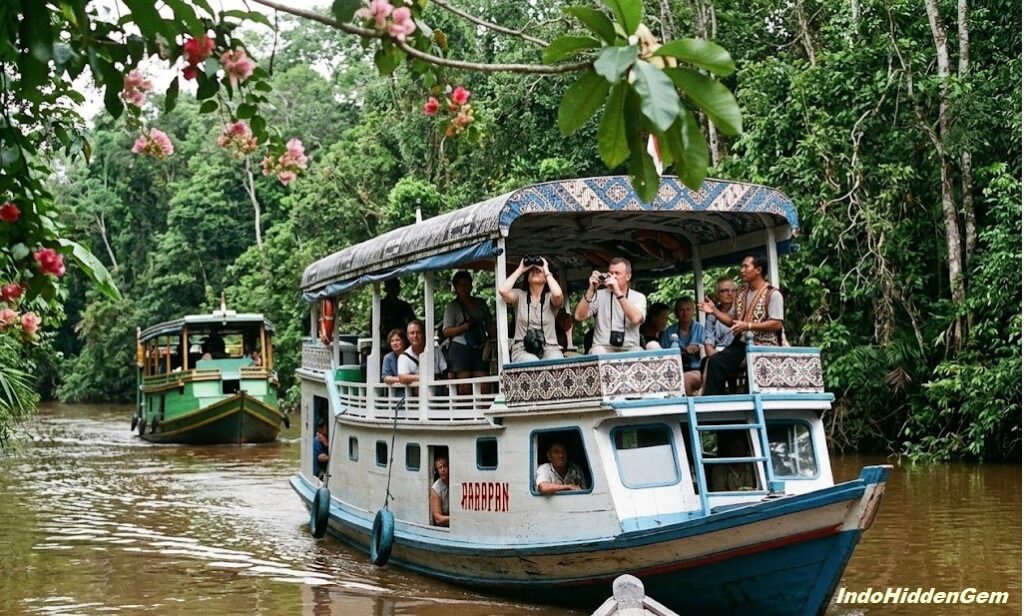
A journey by klotok boat through Tanjung Puting or along smaller river systems reveals floating homes, riverside mosques, traditional fishing techniques, and forests that appear almost untouched by modern development.
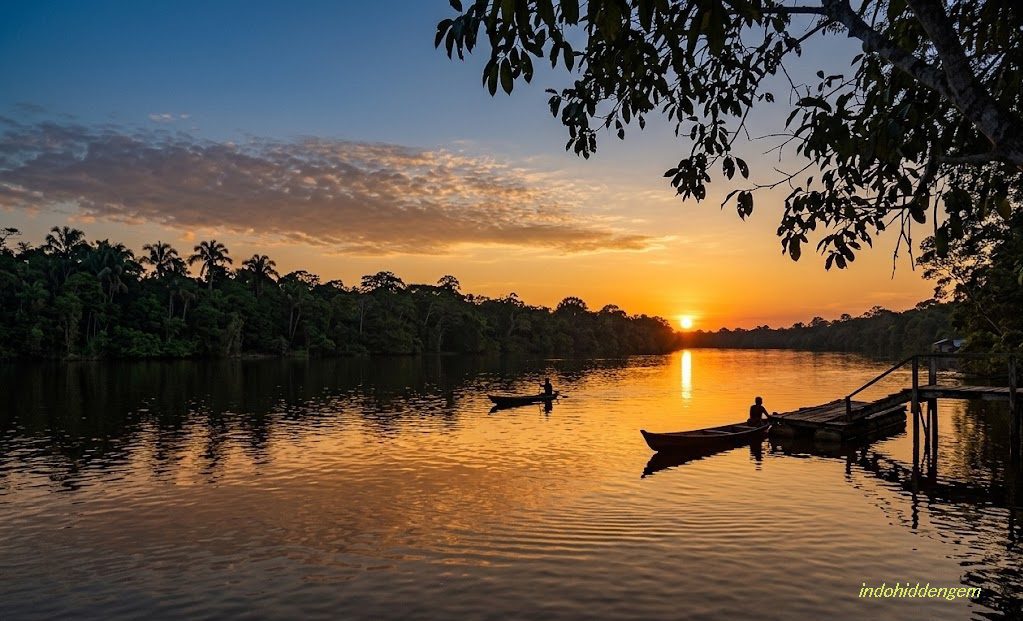
At sunrise, mist rises above blackwater rivers stained naturally by peat tannins. At night, the jungle becomes alive with insects, frogs, fireflies, and distant animal calls echoing through the darkness.
For many visitors, these river journeys become the defining memory of Kalimantan travel.
Entering One of the Oldest Rainforests on Earth
Kalimantan’s rainforests feel immense in a way that is difficult to explain until experienced directly.
The forests of Borneo are among the oldest tropical ecosystems on the planet, home to giant dipterocarp trees, peat swamp forests, rare orchids, carnivorous plants, and wildlife found nowhere else on Earth.
Inside the rainforest, the atmosphere changes completely.
The canopy blocks much of the sunlight, creating green filtered light across the forest floor. Humidity rises sharply. Sounds become amplified. Even short jungle walks can feel immersive and disorienting in the best possible way.
Unlike heavily touristed rainforest destinations elsewhere in Southeast Asia, many parts of Kalimantan still retain a genuine expedition atmosphere. Travelers often move by boat, trek through muddy trails, cross small rivers, and sleep in basic lodges or riverside camps.
This rawness is part of Kalimantan’s identity.
It is not a destination built around convenience. It is a destination built around exploration.
The Presence of Indigenous Dayak Culture
Kalimantan is also shaped by the long history of indigenous Dayak communities whose traditions remain deeply connected to forests and rivers.
Different Dayak groups such as the Kenyah, Kayan, Iban, Ngaju, Punan, and Meratus maintain unique cultural identities across the island. Longhouses, traditional tattoos, forest rituals, oral storytelling, and river-based lifestyles continue to survive in many areas despite rapid modernization elsewhere.
Unlike some tourism-heavy destinations in Indonesia, Dayak culture in Kalimantan often feels less commercialized and more closely tied to everyday life.
Visitors may encounter traditional longhouses in remote upriver settlements, local ceremonies, handmade crafts, or communities that still rely on forest resources through sustainable fishing, honey harvesting, and small-scale agriculture.
This creates a travel experience that feels observational rather than performative.
For many travelers, Kalimantan offers one of the strongest remaining connections between indigenous culture and natural landscapes in Indonesia.
Why Kalimantan Still Feels Wild
Many famous destinations across Indonesia have become increasingly developed over the last decade. Roads improve, resorts expand, cafés appear, and tourism infrastructure grows rapidly.
Kalimantan remains different.
Outside major cities such as Balikpapan, Samarinda, Pontianak, or Banjarmasin, large parts of the island still feel remote and difficult to access. Reaching hidden places in Kalimantan often requires multiple forms of transportation including domestic flights, long road journeys, river boats, and trekking routes.
Phone signals disappear quickly in remote regions. Accommodation may be simple. Weather conditions frequently shape travel schedules.
Yet this remoteness is exactly what attracts travelers seeking authenticity and solitude.
Kalimantan still offers moments that feel increasingly rare in modern travel:
- watching proboscis monkeys move through mangroves at sunset
- hearing gibbons at dawn deep inside the rainforest
- traveling for hours without passing another boat
- sleeping beside rivers surrounded by complete darkness
For travelers looking for true rainforest travel in Indonesia, few destinations remain as immersive as Kalimantan.
The Emotional Impact of Traveling in Kalimantan
Kalimantan changes the pace of travel.
Visitors often arrive expecting wildlife encounters or jungle adventures, but many leave remembering something more difficult to describe: the emotional feeling of space, silence, and disconnection from modern routines.
Life moves differently here.
Travel depends on rivers, weather, flood cycles, forest conditions, and long distances between settlements. Over time, travelers begin adapting to those rhythms themselves.
Days become slower. Attention shifts toward small details — rainfall on the canopy, boat engines echoing across wetlands, hornbills crossing the sky, or reflections moving across blackwater rivers at dusk.
This slower rhythm creates a rare sense of presence.
For many people, Kalimantan becomes less about sightseeing and more about perspective.
Why Kalimantan Leaves a Lasting Impression
Many destinations are memorable because they entertain.
Kalimantan is memorable because it feels vast.
The island reminds travelers how large natural landscapes can still be, how deeply rivers shape civilizations, and how closely culture and ecology remain connected in some parts of Indonesia.
Long after leaving Borneo, many visitors continue remembering:
- the silence of the rainforest
- the scale of the rivers
- the feeling of traveling beyond roads
- the sound of wildlife at night
- the sense of becoming temporarily disconnected from the modern world
That is what makes Kalimantan different.
It is not simply another Indonesian destination.
It feels like entering another version of Earth.
Iconic and Rare Wildlife of Kalimantan
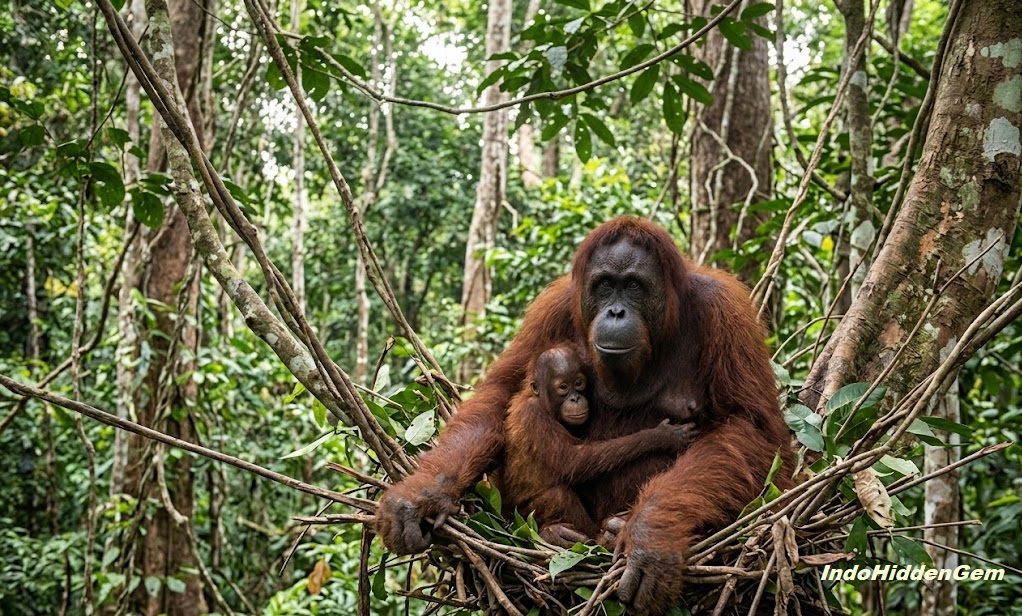
Kalimantan is one of Southeast Asia’s most important biodiversity strongholds, home to species found nowhere else on Earth.
Flagship Species
- Bornean Orangutan – Found in Tanjung Puting, Sebangau, Gunung Palung, Kutai, and remote forest corridors. A global conservation symbol.
- Proboscis Monkey (Bekantan) – The unmistakable long-nosed primate of mangroves and riverbanks, especially iconic in Kalimantan Selatan.
- Bornean Gibbons and Leaf Monkeys – Their dawn calls define the soundscape of intact forests.
Rediscovered and Endangered Wildlife
- Bay Cat (Bornean Red Cat) – One of the world’s rarest wild cats, once thought nearly extinct.
- Flat-headed Cat – A semi-aquatic forest cat tied to peat swamps and floodplains.
- Clouded Leopard (Bornean subspecies) – The apex predator of Kalimantan’s forests.
- Sun Bear (Beruang Madu) – The smallest bear species, elusive and critically threatened.
- Storm’s Stork and Bulwer’s Pheasant – Among the rarest birds in Asia, highly sought after by conservationists and birdwatchers.
River and Forest Life
- Giant Flying Foxes (Fruit Bats) – Thousands emerge from mangroves and forests at sunset.
- Freshwater Icons – Super Red Arowana, Belida (featherback fish), Patin river catfish, and Haruan.
- Mangrove Species – Mud crabs, shrimp, and estuarine fish sustaining coastal livelihoods.
The Forgotten Wildlife of Kalimantan
Kalimantan is one of the most important wildlife regions in Southeast Asia.
Although orangutans remain the island’s most internationally recognized species, the rainforests, mangroves, peat swamps, and river ecosystems of Borneo support hundreds of lesser-known animals found nowhere else on Earth. Many of these species are extremely elusive and rarely observed even by researchers working in the field for years.
From rare wild cats and clouded leopards to hornbills, sun bears, and proboscis monkeys, Kalimantan still contains some of the last surviving populations of wildlife increasingly threatened by deforestation, mining expansion, habitat fragmentation, and peatland destruction.
Beyond the Orangutan: The Hidden Side of Borneo Wildlife
For many travelers, orangutans are the first reason to visit Kalimantan.
However, the forests of Borneo contain a far wider range of rare and endangered species than most visitors realize. Large sections of rainforest remain difficult to access, allowing several animals to survive in isolated ecosystems across peat swamps, river corridors, mangroves, and mountain forests.
Many of these species are nocturnal, highly territorial, or dependent on habitats that are rapidly disappearing across Southeast Asia.
As a result, Kalimantan has become one of the most important remaining strongholds for rare wildlife in Indonesia.
The Bay Cat: Kalimantan’s Rarest Wild Cat
The bay cat is considered one of the rarest wild cats in the world.
Found only on the island of Borneo, this elusive reddish-brown feline remains extremely difficult to study due to its nocturnal behavior and preference for dense rainforest habitats. Researchers have captured very few confirmed photographs of the species in the wild.
The bay cat is most closely associated with remote forest ecosystems in Central and West Kalimantan, particularly areas containing peat swamp forests and old-growth rainforest.
Habitat loss caused by logging and plantation development continues to threaten its survival.
Proboscis Monkeys and the Mangrove Rivers
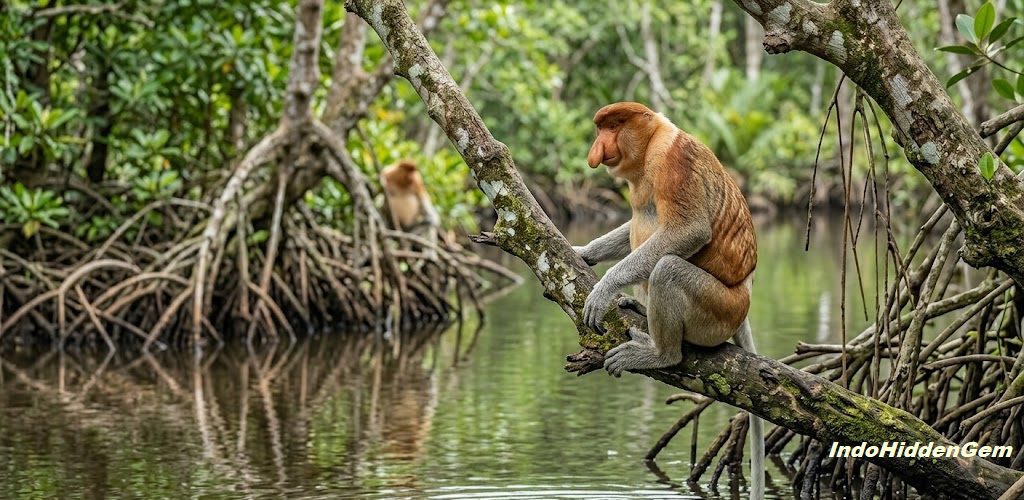
Proboscis monkeys, locally known as bekantan, are among the most recognizable animals in Kalimantan.
These long-nosed primates inhabit mangrove forests, riverbanks, wetlands, and coastal ecosystems throughout Borneo. Their large noses help amplify vocal calls that echo through river corridors, especially during sunrise and sunset.
Proboscis monkeys are strong swimmers and frequently move between mangrove islands and riverside forests in search of leaves, seeds, and unripe fruit.
Despite their adaptability to wetland environments, the destruction of mangroves and river ecosystems continues reducing their habitat range across Kalimantan.
The Clouded Leopard: Predator of the Rainforest Canopy
The clouded leopard is the apex predator of Kalimantan’s rainforest ecosystem.
Unlike larger cats that depend heavily on open terrain, clouded leopards are highly adapted to climbing and moving through dense forest canopies. Their long tails and powerful limbs allow them to navigate steep terrain and tree branches with remarkable agility.
Because the species is extremely elusive, most modern observations come from camera traps placed deep inside remote rainforest regions.
Habitat fragmentation caused by roads, logging, and mining expansion remains one of the greatest threats to clouded leopard populations in Borneo.
Sun Bears and the Forest Floor
Sun bears are the smallest bear species in the world and one of Kalimantan’s most threatened mammals.
Recognizable by the golden crescent marking on their chest, sun bears play an important ecological role within rainforest ecosystems by dispersing seeds and controlling insect populations.
The species depends heavily on healthy forest habitats containing fruiting trees, termite colonies, and old-growth vegetation.
Illegal wildlife trade and habitat destruction continue placing strong pressure on wild populations across Borneo.
Hornbills: The Sacred Birds of Borneo
Hornbills are deeply connected to indigenous Dayak symbolism and forest culture throughout Kalimantan.
Several hornbill species inhabit the island’s rainforests, including the rhinoceros hornbill, one of the most iconic birds in Borneo. Their loud wingbeats and distinctive calls are commonly associated with intact rainforest ecosystems.
For many indigenous communities, hornbills represent spiritual connection, ancestry, and the relationship between humans and the forest.
The loss of old-growth trees threatens nesting sites critical for hornbill survival.
Life Inside Kalimantan’s Peat Swamp Forests
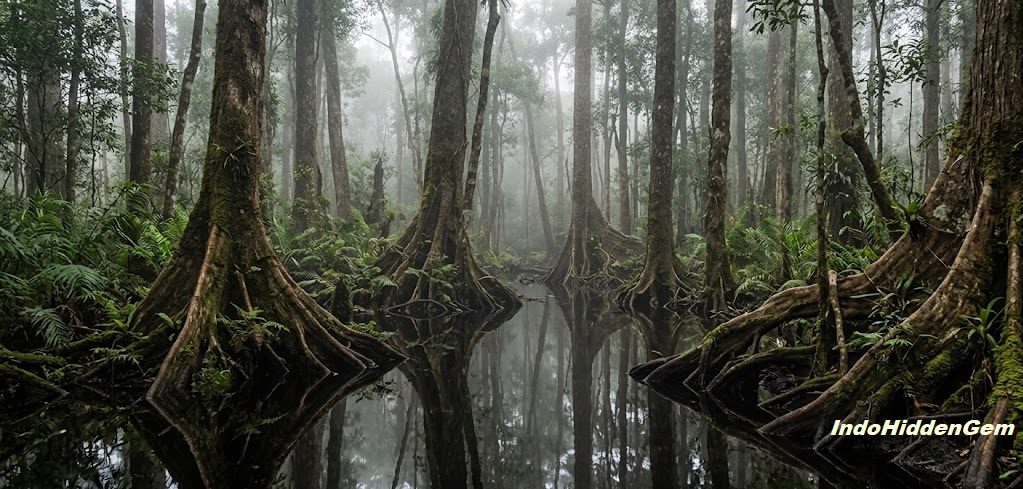
Peat swamp forests are among the most important and least understood ecosystems in Kalimantan.
Found across large parts of Central Kalimantan, West Kalimantan, and lowland river regions of Borneo, these flooded forests support rare wildlife, blackwater rivers, fishing communities, and one of the world’s largest natural carbon storage systems.
Unlike mountainous rainforests or dry tropical forests, peat swamp ecosystems remain permanently waterlogged for much of the year. The landscape is shaped by acidic blackwater, submerged roots, seasonal flooding, and deep layers of partially decomposed organic material that have accumulated over thousands of years.
What Makes Peat Swamp Forests Unique?
Peat is formed from partially decomposed plant material that accumulates in wet conditions over extremely long periods of time.
In Kalimantan, some peat deposits are estimated to be several meters deep and thousands of years old. These wetland systems act as natural water reservoirs, absorbing rainfall during the wet season and slowly releasing water into surrounding rivers during drier months.
Because of the high concentration of tannins and organic acids, rivers inside peat swamp forests often appear dark brown or black.
These blackwater ecosystems create highly specialized habitats that support wildlife adapted to acidic and oxygen-poor environments.
Blackwater Rivers and Flooded Ecosystems
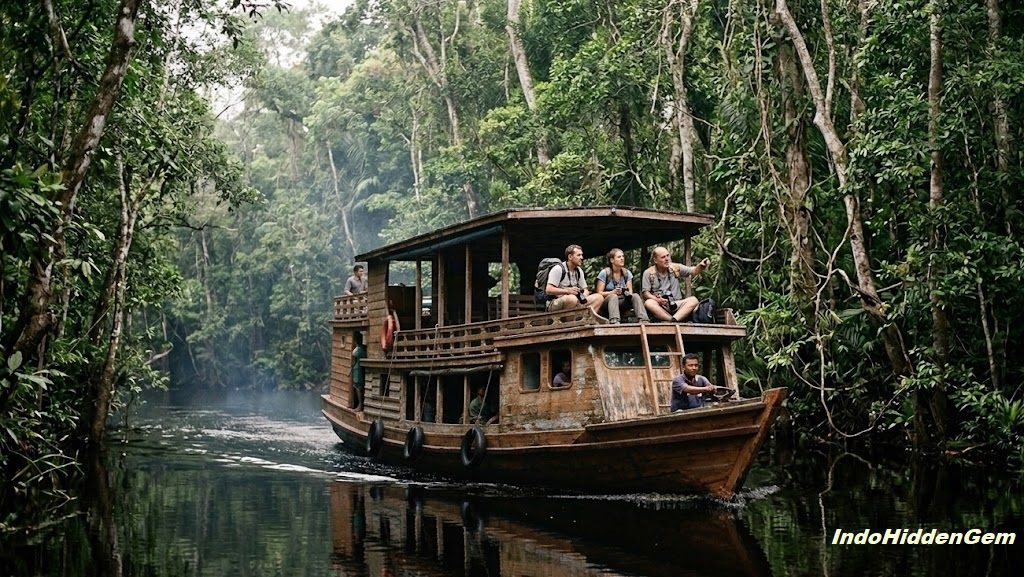
One of the defining characteristics of peat swamp forests is the presence of blackwater rivers.
Unlike muddy river systems, blackwater rivers are naturally dark due to decomposing organic material and tannins released from vegetation. The water is acidic, slow-moving, and closely connected to seasonal flooding cycles.
During the rainy season, large sections of forest become partially submerged, transforming the landscape into a vast flooded ecosystem navigated mainly by boat.
For many local communities, transportation across these waterways remains an essential part of daily life.
Trees That Adapt to Acidic Water
Plant life inside Kalimantan’s peat swamp forests has evolved unique adaptations to survive in permanently wet and acidic environments.
Several tree species develop elevated root systems or buttress roots that help stabilize trunks within unstable peat soils. Others rely on specialized breathing roots that rise above the water surface to absorb oxygen.
Species such as ramin, gelam, and bintangur have historically played important ecological and economic roles across Borneo’s wetland regions.
These forests also support orchids, pandanus palms, medicinal plants, and dense river vegetation that provide shelter for birds, fish, reptiles, and mammals.
Why Peat Swamps Store Massive Amounts of Carbon
Peat swamp forests are globally important because they store enormous amounts of carbon beneath the surface.
Over thousands of years, waterlogged conditions slowed decomposition and allowed organic material to accumulate deep underground. As a result, Borneo’s peatlands contain some of the largest carbon reserves in tropical ecosystems worldwide.
When peat forests are drained or burned, this stored carbon is released into the atmosphere, contributing heavily to climate change and regional haze events across Southeast Asia.
Because of this, peat swamp conservation has become increasingly important not only for Indonesia, but also for global environmental stability.
The Wildlife of Kalimantan’s Peat Forests
Despite their difficult conditions, peat swamp forests support remarkable biodiversity.
Species commonly associated with peat ecosystems include:
- orangutans
- proboscis monkeys
- clouded leopards
- sun bears
- hornbills
- freshwater fish species adapted to acidic water
Many animals rely on intact peat forests because these habitats provide food, shelter, nesting areas, and river access that cannot easily be replaced elsewhere.
Peat swamp forests also remain important refuges for endangered wildlife increasingly displaced by deforestation and plantation expansion.
Fishing Culture and Life on the Blackwater Rivers
Communities living near peat swamp forests have adapted closely to seasonal water cycles and blackwater river conditions.
Fishing remains one of the most important traditional livelihoods in many wetland areas of Kalimantan. Species such as snakehead fish, catfish, climbing perch, and freshwater prawns continue supporting local food systems and floating river economies.
Traditional fishing methods using lift nets, hand nets, floating platforms, and small wooden boats are still commonly practiced in remote regions.
In several areas, homes, markets, and transportation systems remain closely tied to river access and floodplain environments.
Peat Fires and Environmental Challenges
Peat swamp forests are highly vulnerable to fire once drainage systems lower the water table.
Unlike ordinary forest fires, peat fires can burn underground for long periods of time because the peat itself becomes combustible when dry. These fires release large amounts of smoke and carbon emissions while destroying wildlife habitat and damaging surrounding ecosystems.
Large-scale peat fires in Kalimantan have contributed to severe haze events affecting Indonesia, Malaysia, and Singapore.
Deforestation, plantation expansion, mining activity, and drainage canals remain among the biggest threats to peat swamp ecosystems today.
Why Peat Swamp Conservation Matters Globally
Protecting Kalimantan’s peat swamp forests is important for biodiversity, climate stability, water systems, and indigenous livelihoods.
Conservation projects across Borneo increasingly focus on:
- peatland restoration
- canal blocking
- reforestation
- wildlife protection
- community-based ecotourism
- sustainable forest management
Although many peat ecosystems remain under pressure, several conservation regions continue protecting large sections of intact blackwater forest.
Where Travelers Can Experience Peat Swamp Forests in Kalimantan
Some of the best places to experience peat swamp ecosystems in Kalimantan include:
- Sebangau National Park
- Tanjung Puting National Park
- Rungan River
- Danau Sentarum wetlands
- Kahayan River region
Traveling through these regions often involves river journeys, wooden boats, floating lodges, and guided exploration through blackwater forest corridors.
For many travelers, peat swamp forests become one of the most memorable and unexpected landscapes in Borneo.
The Rivers That Built Kalimantan
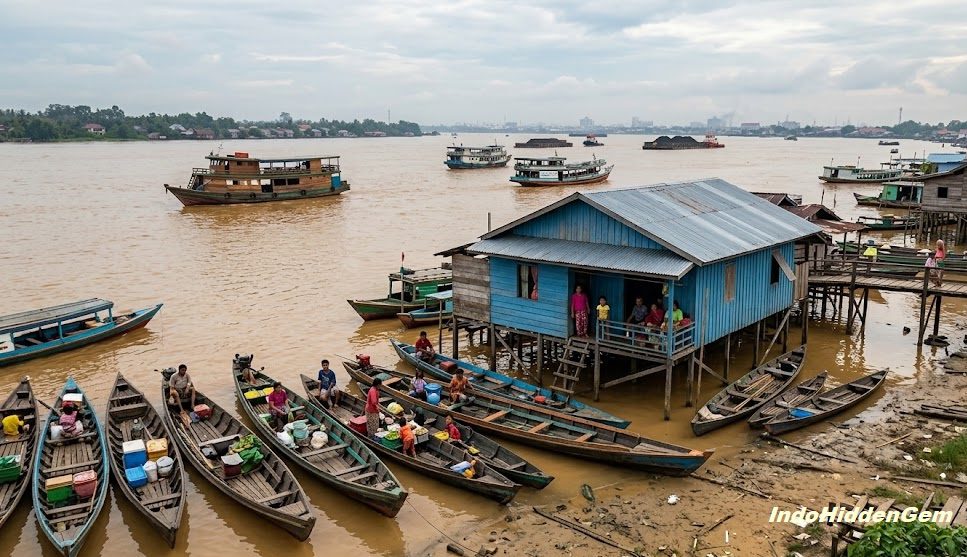
Rivers are the foundation of life across Kalimantan.
Unlike many parts of Indonesia where highways and urban centers dominate movement, large parts of Borneo still depend on river systems for transportation, trade, fishing, communication, and cultural identity. Rivers such as the Kapuas, Mahakam, Barito, Kahayan, and Kayan continue to function as the main arteries connecting remote settlements, rainforest regions, wetlands, and floating villages.
For centuries, these waterways shaped the development of indigenous communities, river markets, seasonal migration routes, and forest economies throughout Kalimantan.
Even today, many villages remain accessible only by boat.
Why Rivers Matter More Than Roads
Traveling through Kalimantan often means following water instead of asphalt.
In many remote areas, rivers remain far more reliable than roads due to dense rainforest, peat swamps, seasonal flooding, and mountainous terrain. Boats transport people, fuel, food supplies, building materials, livestock, and agricultural products between settlements separated by hundreds of kilometers.
This river-based transportation system creates a very different atmosphere from other parts of Indonesia.
Instead of traffic congestion and highways, travelers experience long stretches of quiet waterways lined by rainforest, mangroves, wetlands, and stilt villages. In some regions, daily life still follows flood cycles and seasonal water levels rather than fixed urban schedules.
Kapuas River: The Liquid Spine of West Kalimantan
The Kapuas River is the longest river in Indonesia, stretching more than 1,100 kilometers across West Kalimantan.
Beginning in the Müller mountain range and flowing toward Pontianak, the Kapuas supports countless fishing communities, floating settlements, river markets, and transportation routes. Many riverside villages continue relying on boats as their primary connection to nearby towns.
During the rainy season, floodwaters dramatically reshape the surrounding landscape. In some areas, forests and wetlands become temporarily submerged, while floating homes rise and fall with the water level.
This relationship between people and seasonal flooding has shaped local culture for generations.
Mahakam River: The Cultural Corridor of East Kalimantan
The Mahakam River is one of the most culturally important waterways in Borneo.
Flowing through East Kalimantan toward the Makassar Strait, the river connects Dayak communities, wetland villages, fishing settlements, and major trading areas. Traditional longhouses, floating markets, and seasonal fisheries continue to survive along parts of the Mahakam basin.
The river also reflects the contrast between traditional life and industrial development in modern Kalimantan. Large coal barges frequently move along the river, while smaller wooden boats continue serving remote communities nearby.
For travelers, the Mahakam offers one of the most immersive river journeys in Indonesia.
Barito River: The Heart of South Kalimantan
The Barito River forms the cultural backbone of South Kalimantan and the river city of Banjarmasin.
Smaller tributaries branch across floodplains and wetlands, creating the river networks that support floating markets, stilt houses, fishing communities, and swamp villages throughout the region.
Life along the Barito remains closely tied to water. Boats transport vegetables, fuel, fish, and household goods between riverside settlements every day.
In areas such as Kuin and Lok Baintan, floating markets continue operating at sunrise, preserving one of Kalimantan’s most recognizable cultural traditions.
Kahayan River: The Quiet Wilderness of Central Kalimantan
The Kahayan River flows through vast peat swamp forests and remote sections of Central Kalimantan.
Compared with larger commercial rivers, the Kahayan feels quieter and more closely connected to rainforest ecosystems. Fishing communities, orangutan habitats, and blackwater river systems dominate much of the surrounding landscape.
Traveling along the Kahayan often reveals dense river forests, traditional fishing techniques, and isolated settlements accessible only by boat.
This region also provides access to Sebangau National Park, one of the world’s most important orangutan conservation areas.
Kayan River: Expedition Territory in North Kalimantan
The Kayan River represents one of the most remote river systems in Indonesia.
Flowing through mountainous rainforest regions of North Kalimantan, the Kayan remains strongly connected to indigenous Dayak communities and expedition-style travel routes. Upper sections of the river contain rapids, isolated settlements, and dense forest landscapes rarely visited by mainstream tourism.
For travelers seeking remote exploration, the Kayan region offers one of the last true wilderness experiences in Borneo.
Hidden Landscapes of Kalimantan
Beyond its famous rainforests and river systems, Kalimantan contains some of the most remote and visually unusual landscapes in Indonesia.
Large sections of Borneo remain difficult to access, allowing mountain forests, karst formations, mangrove labyrinths, flooded wetlands, remote islands, and abandoned mining regions to survive far beyond mainstream tourism routes.
Many of these locations remain known primarily through local communities, researchers, expedition travelers, and conservation groups rather than large-scale tourism infrastructure.
Karst Mountains and Ancient Cave Systems
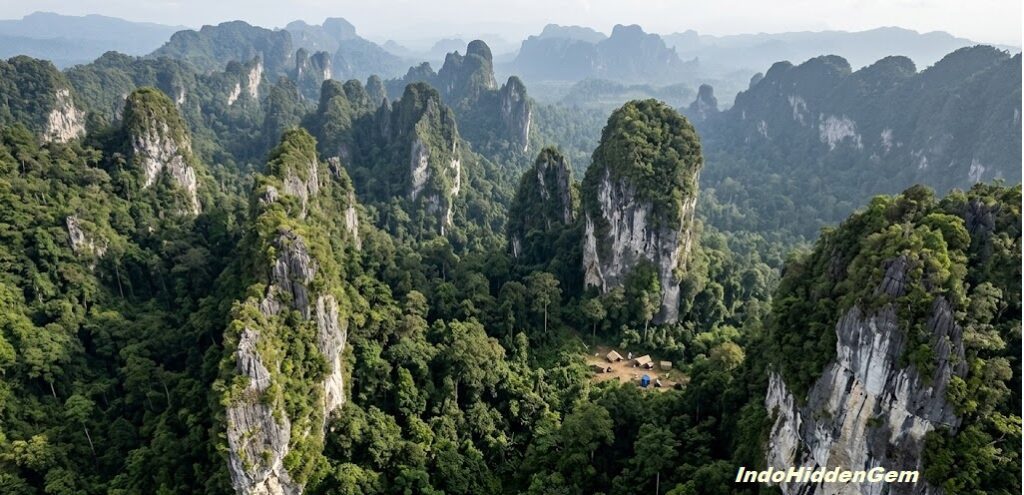
Eastern Kalimantan contains one of Southeast Asia’s largest karst landscapes: the Sangkulirang–Mangkalihat region.
This massive limestone formation stretches across East Kalimantan and contains steep stone cliffs, underground rivers, sinkholes, hidden cave systems, and dense rainforest valleys. Over thousands of years, water erosion carved extensive cave networks through the limestone terrain.
Many caves remain unexplored or difficult to access without local guides.
Prehistoric Rock Art and Hidden Caves
Several cave systems in East Kalimantan contain prehistoric rock art estimated to be more than 40,000 years old.
Hand stencils, animal illustrations, and ancient symbolic markings discovered within these caves represent some of the oldest known figurative artworks in the world.
Because many cave locations remain sensitive archaeological areas, access is often limited and guided by local communities or conservation authorities.
The surrounding cave systems also contain underground rivers, large chambers, limestone formations, and highly fragile ecosystems shaped over millennia.
The Blue Lakes of Former Mining Sites
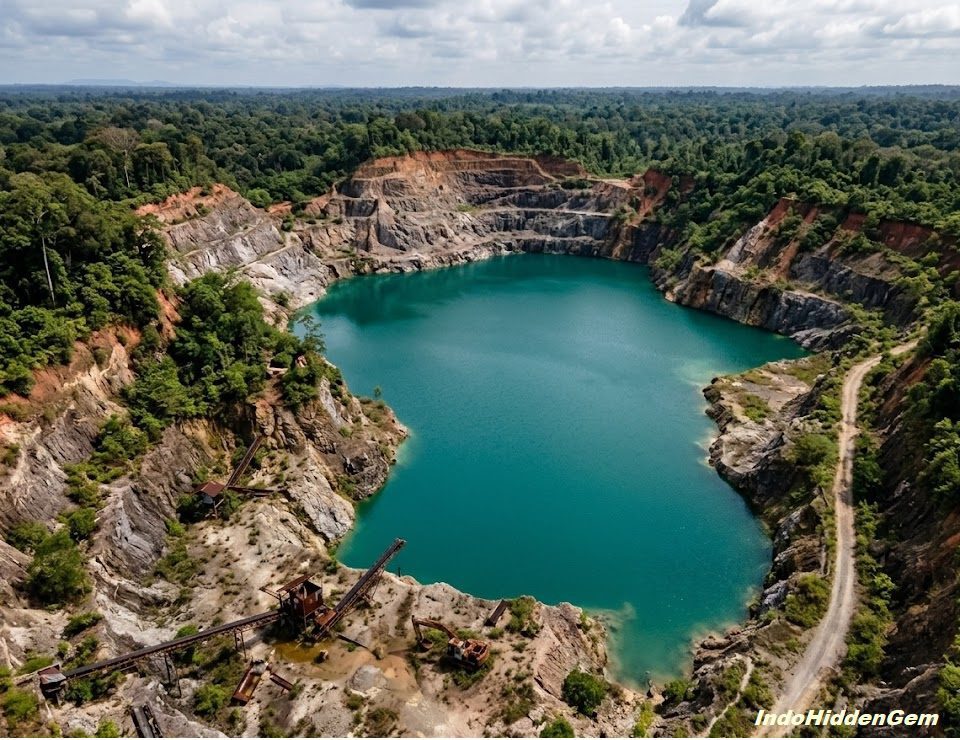
Across several parts of Kalimantan, abandoned mining pits have transformed into surreal blue lakes.
These artificial lakes formed after former coal and mineral excavation sites filled with groundwater. In some areas, mineral content and surrounding rock composition create striking turquoise or deep blue water colors.
Although visually dramatic, many former mining lakes also reflect the environmental consequences of deforestation and extractive industry across Borneo.
Today, some regions are exploring the possibility of turning selected post-mining landscapes into geotourism and environmental education sites.
Mangrove Forests and Coastal Wetlands
The coastal regions of Kalimantan contain vast mangrove ecosystems that support fisheries, birdlife, estuarine wildlife, and coastal protection.
Unlike heavily developed coastal tourism regions elsewhere in Indonesia, many mangrove areas in Borneo remain relatively wild and difficult to navigate without local boat guides.
These wetland corridors provide habitat for:
- proboscis monkeys
- crocodiles
- migratory birds
- mudskippers
- estuarine fish species
Mangroves also play an important role in protecting coastlines from erosion and maintaining river ecosystems connected to inland forests.
Danau Sentarum and Seasonal Floodplain Ecosystems
Danau Sentarum in West Kalimantan represents one of the most unique wetland systems in Indonesia.
During the rainy season, large floodplains become interconnected lakes and waterways. During drier months, water levels retreat dramatically, exposing grasslands, fishing zones, and seasonal agricultural areas.
Communities living around Danau Sentarum have adapted closely to these seasonal flood cycles for generations.
The wetlands also support high biodiversity, migratory birds, freshwater fish populations, and traditional river-based livelihoods.
Mountain Forests in the Heart of Borneo
Although Kalimantan is often associated with lowland rainforest and rivers, the island’s interior also contains extensive mountain landscapes.
The Müller Mountains, Schwaner Mountains, and Meratus Range form part of the rugged backbone of Borneo and contain some of the most remote forest ecosystems in Indonesia.
These upland forests support cooler climates, cloud forest vegetation, river headwaters, and indigenous communities with deep historical connections to the surrounding environment.
In some remote regions, access still requires multi-day river journeys and trekking routes through dense rainforest terrain.
Remote Islands and Marine Landscapes of Northern Kalimantan
Northern coastal regions near the Sulawesi Sea contain remote island systems, coral reefs, marine ecosystems, and turtle nesting beaches associated with greater Kalimantan geography.
Beyond the better-known islands of Derawan, smaller isolated islands remain lightly visited and accessible mainly through local fishing routes.
These regions support:
- sea turtles
- coral reef ecosystems
- traditional fishing communities
- mangrove coastlines
- marine biodiversity
Several areas continue developing small-scale conservation and ecotourism initiatives focused on sustainable marine protection.
Why Kalimantan Still Feels Undiscovered
One of the defining characteristics of Kalimantan is the scale of unexplored and lightly developed landscapes that still remain across the island.
Many regions continue lacking major tourism infrastructure, making exploration slower, more difficult, and often heavily dependent on rivers, local guides, weather conditions, and seasonal access.
For travelers seeking expedition-style travel experiences, Kalimantan offers one of the last remaining opportunities in Southeast Asia to experience landscapes that still feel genuinely remote.
People, Culture, and Living Traditions
Kalimantan is not defined only by rainforest and rivers, but also by the communities that continue shaping life across the island through traditions, river economies, indigenous knowledge, and cultural adaptation.
Across Borneo, daily life has historically depended on waterways, seasonal flooding, forest resources, fishing, farming, and long-distance river travel. These environmental conditions helped create cultures that evolved differently from many other regions of Indonesia.
For travelers, Kalimantan often feels culturally quieter than Java or Bali. Ceremonies, architecture, and traditions are less commercialized and more deeply connected to local landscapes, rivers, and community life.
Unlike destinations dominated by large tourism industries, many cultural experiences in Kalimantan still feel closely tied to everyday reality rather than staged performances.
The Dayak Peoples of Kalimantan
The term “Dayak” refers to a wide collection of indigenous ethnic groups living throughout the interior regions of Borneo.
Rather than representing a single tribe, Dayak communities consist of many distinct cultural groups with different languages, artistic traditions, rituals, architectural styles, and historical territories spread across Kalimantan.
For centuries, many Dayak communities developed strong relationships with rivers, forests, and upland ecosystems. Traditional knowledge systems continue influencing agriculture, fishing, forest management, medicinal plant use, and seasonal adaptation throughout several parts of the island.
Although modernization and urban migration continue reshaping younger generations, indigenous identity remains deeply important across many regions of Kalimantan.
Longhouses and Communal Living Traditions
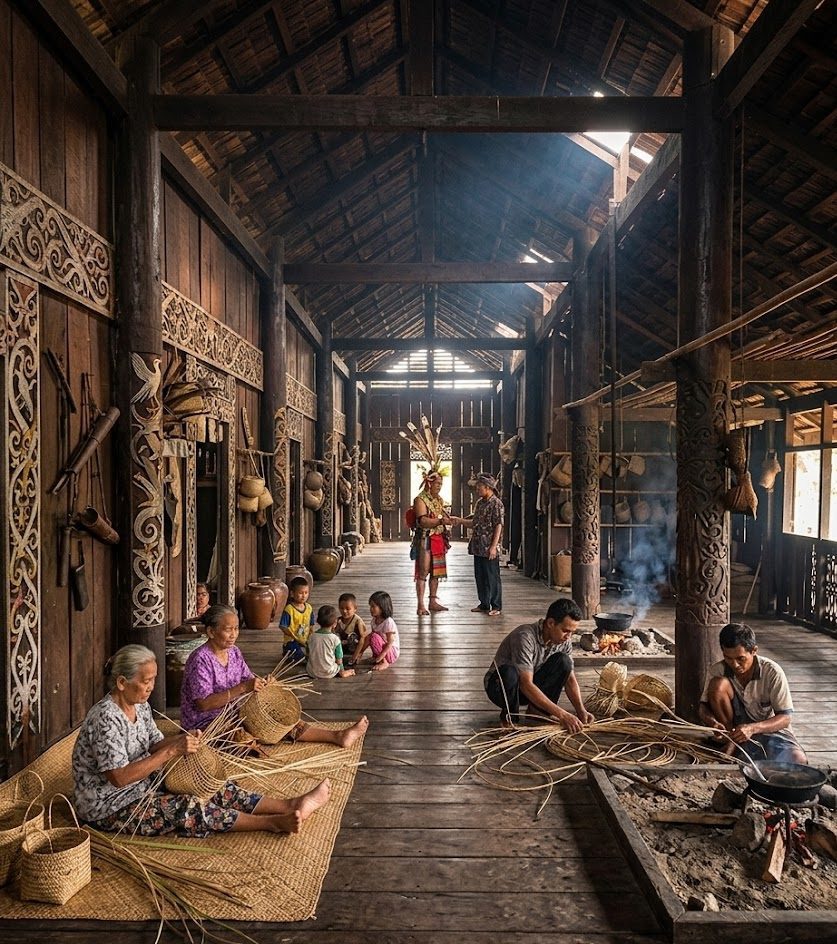
One of the most recognizable cultural symbols in Kalimantan is the traditional longhouse.
Known by different local names depending on the region, these elongated wooden structures historically functioned as communal homes shared by multiple families connected through kinship and community relationships.
Longhouses were designed not only for shelter, but also for collective living, ceremonies, conflict resolution, storage, craftsmanship, and social gatherings.
In several remote regions of West, Central, and North Kalimantan, traditional longhouses continue serving as important cultural centers despite increasing modernization.
For travelers, visiting a longhouse often provides insight into how architecture adapted to tropical climate, river conditions, and communal lifestyles throughout Borneo.
River Civilizations and Floating Communities
Many communities in Kalimantan developed around river systems rather than roads.
Settlements along the Kapuas, Mahakam, Barito, and Kahayan rivers continue depending on boats for transportation, trade, fishing, and communication between villages. In some regions, floating houses and riverside settlements remain part of daily life.
Traditional river markets still survive in parts of South Kalimantan, where wooden boats transport vegetables, fruit, fish, and household goods through interconnected waterways during the early morning hours.
These river cultures reflect the continuing importance of water in shaping movement, economy, and social interaction throughout Borneo.
Banjar Culture and the Wetland World of South Kalimantan
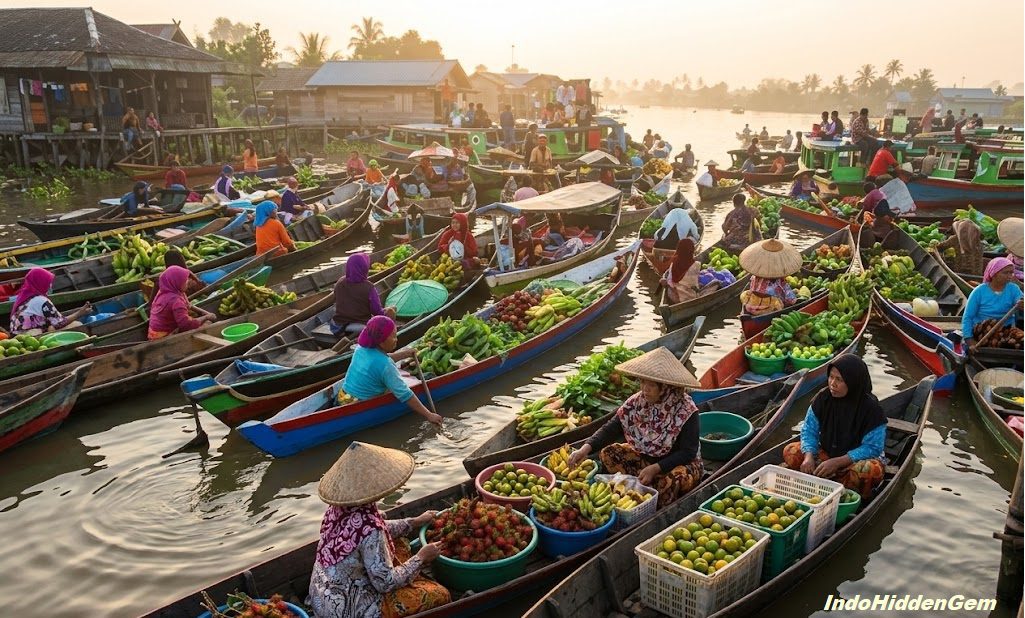
The Banjar people are closely associated with the river and wetland environments of South Kalimantan.
Historically connected to river trade, Islamic scholarship, agriculture, and maritime exchange networks, Banjar culture developed around floodplains, swamp landscapes, and waterways that shaped transportation and settlement patterns throughout the region.
Traditional wooden houses built above wetlands, floating markets, river mosques, and fishing communities remain important elements of Banjar cultural identity today.
Banjarmasin, often called the “City of a Thousand Rivers,” continues reflecting this strong relationship between urban life and water-based culture.
Forest Economies and Traditional Livelihoods
In many rural regions of Kalimantan, local livelihoods remain closely connected to forests and river ecosystems.
Fishing, rubber tapping, rattan collection, small-scale farming, boat building, weaving, and forest gathering continue supporting communities across several provinces.
Traditional ecological knowledge often plays an important role in determining planting cycles, fishing seasons, flood adaptation, and sustainable forest use.
Although industrial expansion and urbanization continue changing many rural economies, traditional livelihoods remain deeply connected to the environmental rhythms of Borneo.
Spiritual Traditions and Cultural Adaptation
Religious and spiritual life across Kalimantan reflects centuries of cultural interaction and adaptation.
Islam became highly influential in many coastal and river regions, especially among Banjar and Malay communities. Christianity spread through parts of the interior during later historical periods, while several indigenous belief systems and ceremonial traditions continue surviving within Dayak communities today.
Across the island, cultural identity often reflects a combination of indigenous heritage, religious influence, river trade history, and environmental adaptation rather than a single uniform tradition.
Festivals, harvest rituals, music, dance, wood carving, beadwork, and ceremonial gatherings continue preserving these cultural connections throughout Kalimantan.
Why Culture in Kalimantan Feels Different
One of the most distinctive aspects of Kalimantan is the way culture remains deeply connected to geography.
Rivers, wetlands, rainforest corridors, and remote landscapes continue influencing architecture, transportation, settlement patterns, food systems, and social traditions throughout the island.
For many travelers, Kalimantan feels less performative than heavily commercial tourism destinations elsewhere in Southeast Asia.
Instead of large tourism spectacles, cultural experiences often emerge through slower encounters with river communities, longhouse traditions, local markets, forest livelihoods, and everyday life along the waterways of Borneo.
Practical Travel Guide to Kalimantan
Traveling across Kalimantan requires more preparation than many other destinations in Indonesia.
Large distances, river-based transportation, tropical weather, and limited infrastructure in remote regions make travel slower and more unpredictable than places such as Bali or Java. However, this remoteness is also part of what makes Kalimantan feel more immersive and rewarding for travelers interested in rainforest exploration, wildlife encounters, and river culture.
Best Time to Visit Kalimantan
The dry season between May and September is generally considered the best time to visit Kalimantan.
During these months, river conditions become more stable, trekking routes are easier to access, and wildlife sightings are often more frequent near riverbanks and forest edges.
The rainy season between November and March brings heavier rainfall, flooding, and slower transportation conditions in several regions. However, rainforest landscapes also become greener and more dramatic during this period.
Travel conditions can vary significantly depending on the province, river systems, and peatland areas being visited.
Airports and Main Entry Points
Most travelers reach Kalimantan through domestic flights from Jakarta, Bali, Surabaya, or other Indonesian cities.
Major entry points include:
- Balikpapan
- Samarinda
- Pontianak
- Banjarmasin
- Palangka Raya
- Tarakan
From these cities, travel often continues by road, riverboat, speedboat, or domestic connections toward more remote destinations.
Transportation Across Kalimantan
Transportation in Kalimantan is heavily shaped by geography.
Although highways and road networks continue expanding, rivers still remain essential transportation routes across many parts of Borneo. Traveling between destinations often requires combinations of flights, long-distance road journeys, ferries, riverboats, and trekking routes.
Travel times may appear short on maps but can take significantly longer due to road conditions, flooding, weather, and remote terrain.
For many travelers, slow travel becomes part of the Kalimantan experience itself.
River Travel and Klotok Expeditions
Traditional wooden riverboats known as klotoks are among the most iconic forms of transportation in Kalimantan.
These boats are commonly used for wildlife expeditions, orangutan tours, and river journeys through national parks such as Tanjung Puting.
Multi-day klotok trips often include:
- sleeping onboard
- river exploration
- wildlife observation
- rainforest trekking
- visits to floating villages
Traveling by river remains one of the most immersive ways to experience Kalimantan’s rainforest landscapes and traditional river culture.
Health and Safety Preparation
Travelers visiting remote regions of Kalimantan should prepare for humid tropical conditions, insects, changing weather, and limited medical infrastructure outside major cities.
Recommended preparation may include:
- insect repellent
- waterproof bags
- lightweight clothing
- trekking footwear
- reusable water bottles
- basic medical supplies
Travel insurance covering evacuation and remote travel is strongly recommended for longer expeditions into rainforest or river regions.
Internet Access and Connectivity
Major cities in Kalimantan generally provide stable mobile internet access and 4G coverage.
However, connectivity becomes limited in many remote regions, especially inside national parks, mountain areas, peat swamp forests, and interior river systems.
Travelers planning longer expeditions should prepare for periods without internet access or mobile signal.
For many visitors, this digital disconnection becomes one of the most memorable aspects of traveling in Kalimantan.
Responsible and Ethical Travel
Kalimantan contains some of Southeast Asia’s most environmentally sensitive ecosystems.
Travelers are encouraged to support responsible tourism practices by:
- hiring local guides
- staying in community-based accommodations
- avoiding wildlife exploitation
- reducing plastic waste
- respecting protected ecosystems
- supporting ethical conservation programs
Responsible tourism plays an increasingly important role in supporting rainforest conservation and local livelihoods across Borneo.
Cultural Etiquette in Indigenous Communities
Many regions of Kalimantan remain closely connected to indigenous Dayak culture and traditional river communities.
Travelers visiting longhouses or rural villages should approach local customs respectfully, ask permission before taking photographs, and follow guidance provided by local hosts or guides.
Learning simple Indonesian greetings and respecting local traditions can significantly improve travel experiences and cultural interactions throughout Kalimantan.
What to Pack for Kalimantan
Practical items for Kalimantan travel often include:
- lightweight clothing
- rain protection
- trekking sandals or boots
- headlamp
- insect repellent
- waterproof dry bags
- reusable water bottle
- power bank
- camera protection for humid conditions
Travel conditions vary widely between rainforest regions, river systems, mountain areas, and coastal destinations.
Why Preparation Matters in Kalimantan
Kalimantan rewards travelers who arrive prepared, patient, and adaptable.
Unlike heavily developed tourism destinations, many regions of Borneo still depend on rivers, weather conditions, and local knowledge rather than highly organized tourism infrastructure.
For travelers willing to embrace slower journeys and unpredictable conditions, Kalimantan offers one of the most immersive rainforest travel experiences remaining in Southeast Asia.
Why Kalimantan Matters Now
Kalimantan is at a crossroads. Deforestation, peat fires, abandoned mining pits, and shrinking river cultures threaten one of the planet’s most important ecosystems. At the same time, responsible exploration, conservation-driven travel, and indigenous storytelling offer a path forward.
IndoHiddenGem believes Kalimantan is not a destination to exploit—but a world to understand, document, and protect.
Kalimantan and the Meaning of Wilderness
Kalimantan is more than a travel destination.
For many travelers, the rainforests, rivers, wetlands, and remote landscapes of Borneo create a deeper reflection about humanity’s relationship with nature, silence, and modern life itself.
In a world increasingly shaped by speed, urbanization, and constant digital connection, Kalimantan remains one of the few places in Southeast Asia where vast natural systems still dominate the rhythm of daily life.
A Different Relationship With Silence
One of the most powerful experiences in Kalimantan is the presence of natural silence.
Not complete silence, but the layered sounds of rainforest ecosystems: insects moving through the canopy, distant hornbills, river currents, rainfall, frogs, and branches shifting above blackwater rivers.
For many travelers arriving from major cities, this environment creates an unfamiliar sense of stillness and distance from modern routines.
River journeys through peat swamp forests and remote rainforest corridors often become less about sightseeing and more about learning to slow down and observe the surrounding environment differently.
The Disappearing Rainforests of Borneo
Kalimantan also represents one of the world’s most important remaining tropical rainforest regions.
However, large areas of Borneo have experienced rapid deforestation caused by logging, mining activity, plantation expansion, peatland drainage, and infrastructure development.
These environmental pressures threaten:
- orangutan habitat
- river ecosystems
- indigenous territories
- wildlife corridors
- carbon-rich peat swamp forests
The disappearance of these forests represents more than the loss of biodiversity. It also represents the disappearance of landscapes that continue shaping cultural identity, ecological stability, and traditional ways of life across Kalimantan.
Rivers, Time, and Slower Ways of Living
The rivers of Kalimantan reflect a different relationship with time.
Across many parts of Borneo, transportation, trade, fishing, and village life still follow seasonal water levels, flood cycles, and river conditions rather than rigid urban schedules.
Traveling slowly along the Kapuas, Mahakam, Barito, or Kahayan rivers often changes the pace of travel itself.
For many visitors, river journeys become moments of reflection shaped by distance, silence, changing light, and the gradual rhythm of movement through the rainforest.
Indigenous Knowledge and Forest Stewardship
Many indigenous Dayak communities maintain long-standing cultural relationships with forests, rivers, and seasonal ecosystems throughout Kalimantan.
Traditional ecological knowledge continues influencing:
- fishing practices
- forest management
- medicinal plant use
- flood adaptation
- community agriculture
- spiritual traditions connected to nature
Although modernization continues reshaping many regions, indigenous knowledge remains deeply important for understanding sustainable relationships between humans and rainforest environments.
Extraction, Development, and Conservation
Modern Kalimantan exists between two competing realities.
On one side are industries connected to mining, logging, plantation agriculture, and large-scale infrastructure development. On the other side are growing conservation efforts focused on protecting rainforests, peatlands, wildlife habitats, and indigenous territories.
This tension continues shaping the future of Borneo.
Across Kalimantan, local communities, conservation organizations, researchers, and ecotourism initiatives increasingly work to protect ecosystems that remain globally important for biodiversity and climate stability.
What the Loss of Wilderness Really Means
The disappearance of wilderness affects more than wildlife populations.
As natural landscapes disappear, the world also loses places that still allow people to experience silence, remoteness, unpredictability, and direct connection with large ecological systems.
For many travelers, Kalimantan offers a rare reminder that nature is not simply scenery. It is a living system that continues shaping culture, identity, and human perspective.
Why Kalimantan Still Matters
Kalimantan remains one of the last places in Southeast Asia where rainforest, rivers, wetlands, mountain forests, and indigenous cultures still exist on an immense scale.
Traveling through Borneo often becomes more than a tourism experience. It becomes a reflection on what modern societies choose to preserve, what they choose to consume, and what may disappear if remaining wilderness regions are lost.
For travelers willing to move slowly, listen carefully, and travel respectfully, Kalimantan offers something increasingly difficult to find in the modern world:
the feeling of entering a landscape that still feels larger than ourselves.
Frequently Asked Questions About Kalimantan
Is Kalimantan safe for travelers?
Kalimantan is generally considered safe for travelers, especially in rural communities where local hospitality remains strong. Most risks are related to environmental conditions rather than crime, including river currents, remote travel routes, wildlife encounters, and changing weather conditions. Travelers visiting remote rainforest or river regions are strongly advised to use local guides and follow local safety recommendations.
When is the best time to visit Kalimantan?
The dry season between May and September is usually considered the best time to visit Kalimantan. During these months, river travel becomes easier, trekking conditions improve, and wildlife sightings are often more frequent. The rainy season between November and March brings heavier flooding and slower transportation conditions across many regions.
How do travelers reach Kalimantan from Jakarta or Bali?
Most travelers reach Kalimantan through domestic flights from Jakarta, Bali, or Surabaya. Major entry points include Balikpapan, Pontianak, Banjarmasin, Palangka Raya, Samarinda, and Tarakan. From these cities, travel often continues by road, speedboat, ferry, or traditional riverboats depending on the destination.
Where can travelers see orangutans in Kalimantan?
The best-known destination for orangutan experiences in Kalimantan is Tanjung Puting National Park in Central Kalimantan. Other important conservation areas include Sebangau National Park, the Rungan River region, and several rehabilitation centers connected to orangutan conservation programs across Borneo.
What wildlife can be found in Kalimantan?
Kalimantan supports some of Southeast Asia’s most important rainforest wildlife populations, including orangutans, proboscis monkeys, clouded leopards, sun bears, hornbills, crocodiles, and numerous endemic bird and freshwater fish species.
Large sections of Borneo’s forests, wetlands, mangroves, and peat swamp ecosystems continue functioning as critical wildlife habitats despite ongoing environmental pressure.
Are there dangerous animals in Kalimantan?
Several wild animals in Kalimantan require caution and respect, including saltwater crocodiles, snakes, and certain large mammals. However, dangerous encounters remain relatively rare when travelers follow local guidance and avoid entering remote ecosystems without experienced guides.
Mosquitoes carrying dengue fever and malaria also remain an important consideration in some remote areas.
What is a klotok riverboat?
A klotok is a traditional wooden riverboat commonly used throughout Kalimantan for transportation and ecotourism journeys.
Many travelers use klotoks to explore river systems and national parks such as Tanjung Puting, where multi-day boat journeys provide opportunities to experience rainforest wildlife and floating river culture.
How difficult is transportation in Kalimantan?
Transportation across Kalimantan can be slower and more challenging than in other parts of Indonesia due to large distances, river systems, peatlands, and limited infrastructure in remote areas.
Many destinations require combinations of flights, long-distance road travel, riverboats, and trekking routes. However, these logistical challenges are also part of what makes Kalimantan feel more remote and exploratory.
What are the best hidden destinations in Kalimantan?
Some of Kalimantan’s most remarkable hidden destinations include:
- Danau Sentarum wetlands
- Sangkulirang karst landscapes
- Meratus Mountains
- Kayan River region
- remote peat swamp forests
- floating villages
- mangrove ecosystems
- lesser-known islands near the Sulawesi Sea
Many of these areas remain lightly developed and are best explored with local guides.
Can travelers visit Dayak communities?
Yes, travelers can visit certain Dayak communities and traditional longhouses in several parts of Kalimantan. Visits should always be arranged respectfully through local guides, community tourism programs, or village organizations.
Travelers are encouraged to ask permission before taking photographs and to approach indigenous culture with respect rather than treating communities as tourist attractions.
What are peat swamp forests?
Peat swamp forests are wetland ecosystems formed by deep layers of partially decomposed organic material that accumulated over thousands of years.
These forests support blackwater rivers, rare wildlife, and some of the world’s largest tropical carbon storage systems. Peat swamp ecosystems are especially important for orangutan habitat and climate regulation.
Why is Kalimantan important for conservation?
Kalimantan contains some of the largest remaining tropical rainforest ecosystems in Southeast Asia and plays an important role in biodiversity protection, carbon storage, freshwater systems, and indigenous cultural preservation.
Conservation efforts across Borneo increasingly focus on wildlife protection, peatland restoration, sustainable tourism, and forest conservation.
Is haze season a problem in Kalimantan?
During severe dry seasons, forest and peat fires can create haze conditions affecting parts of Kalimantan and neighboring countries. Conditions vary each year depending on rainfall and fire activity.
Travelers visiting during peak dry months should monitor regional air quality conditions before departure.
Can travelers explore Kalimantan independently?
Independent travel is possible in major cities and some tourism regions, but many remote destinations require local guides due to river navigation, limited infrastructure, language barriers, and environmental conditions.
Using local guides also helps support community-based tourism and improves safety in remote regions.
What should travelers pack for Kalimantan?
Travelers visiting Kalimantan should prepare for humid tropical conditions and remote travel environments.
Useful items include:
- lightweight clothing
- rain protection
- insect repellent
- waterproof bags
- trekking sandals or boots
- headlamp
- reusable water bottle
- power bank
- basic medical supplies
River journeys and rainforest conditions often require practical expedition-style preparation.
Uncover Kalimantan with IndoHiddenGem
This master dossier is the foundation. From here, IndoHiddenGem will unfold Kalimantan province by province, and spot by spot—revealing stories that rarely reach the surface of mainstream travel media.
Kalimantan is not hidden because it is small.
It is hidden because it is vast.