
Java Travel Guide: Sacred Sites, Wild Coasts, and Untouched Wonders
Java is often misunderstood.
For most travelers, it’s a quick stop — a sunrise at Mount Bromo, a visit to Borobudur, then off to Bali. But that version of Java barely scratches the surface.
Beneath the crowds lies a deeper island:
a place of sacred volcanoes, ancestral villages, misty highlands, and coastlines still untouched by mass tourism.
This is where Java reveals its true identity.
This guide explores 100 hidden gems in Java — curated for travelers who seek authenticity, slow travel, and experiences that feel earned, not packaged.
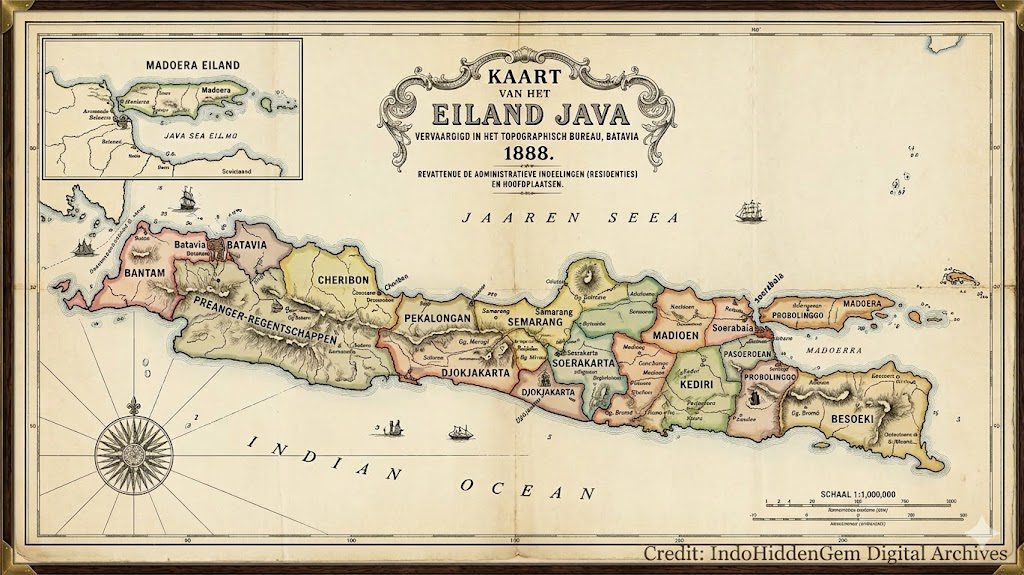
A rare cartographic reconstruction of the Java archipelago as it appeared in 1888. Reproduced by IndoHiddenGem Digital Archives.
-
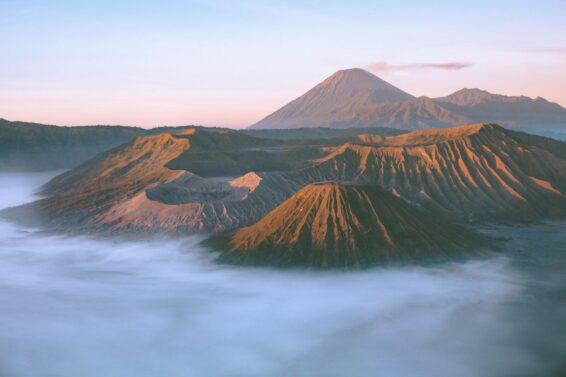
Mount Bromo
Mount Bromo Travel Guide: Indonesia’s Otherworldly Sunrise for European & US Travelers Discover the Volcanic Magic of East Java There are beautiful sunrises—and then there is Mount Bromo. Located in East Java, Indonesia, within the breathtaking Bromo Tengger Semeru National Park, Mount Bromo offers one of the most surreal landscapes on Earth. A vast “Sea…
-
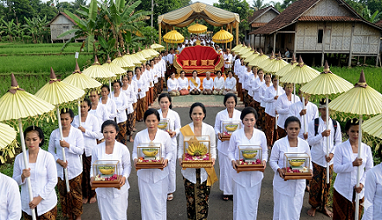
Sunda Wiwitan
Sunda Wiwitan Travel Guide: Indonesia’s Ancient Spiritual Hidden Gem in West Java Sunda Wiwitan – Indonesia’s Forgotten Spiritual World Waiting to Be Discovered There are places in the world where history is preserved in museums.And then there are places where history is still alive. Hidden in the highlands of West Java, far from the crowded…
Why Java Is Indonesia’s Most Important Island For Travelers
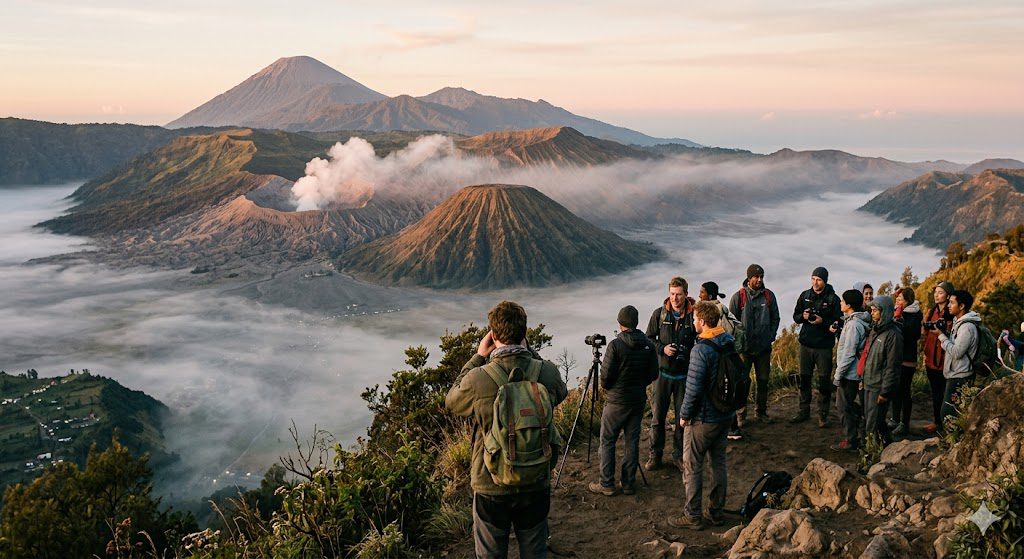
For many international travelers, Indonesia begins with Bali. But for those who want to understand the country beyond beach clubs and resort towns, the real heart of Indonesia is Java.
Java is not just another island in the Indonesian archipelago. It is the political, economic, historical, and cultural center of the country. More than half of Indonesia’s entire population lives here, creating an island that feels endlessly alive, intense, diverse, and constantly moving.
For travelers from Europe and the United States, Java offers something that is increasingly difficult to find in Southeast Asia: a large-scale overland travel experience that still feels authentic.
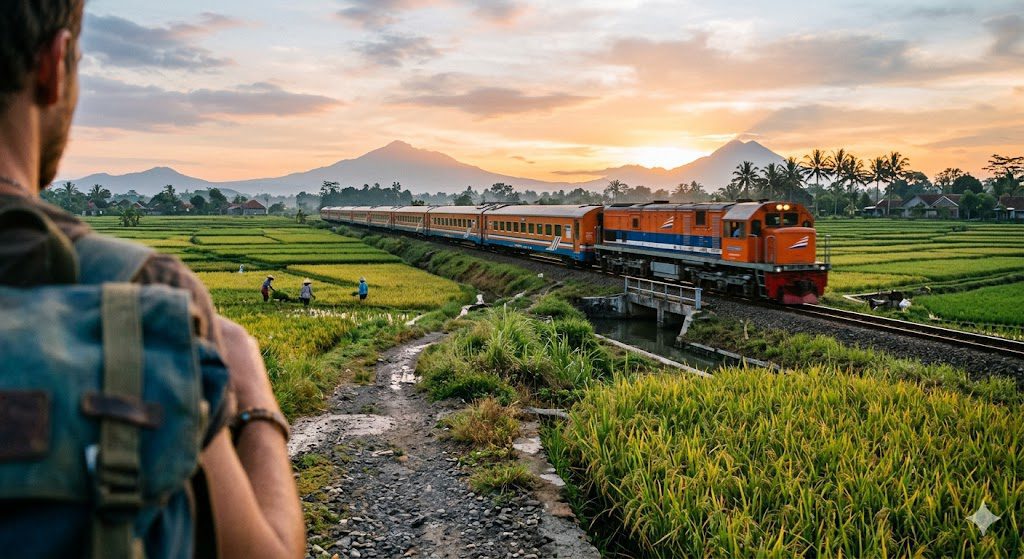
Unlike Bali, which has become heavily tourism-oriented in many areas, Java remains deeply local. In one journey, travelers can move from futuristic Jakarta skyscrapers to ancient Hindu temples, from Dutch colonial train stations to smoking volcanoes, from cool tea plantations to crowded street food alleys filled with scooters and the sound of evening prayer calls.
What makes Java especially rewarding is its variety. Few islands in Asia combine this many different experiences within relatively manageable travel distances. You can watch sunrise above Mount Bromo, explore the temples of Borobudur, drink coffee in Bandung’s creative neighborhoods, walk through royal palaces in Yogyakarta, and finish the trip surfing near remote beaches in East Java — all within a single route.
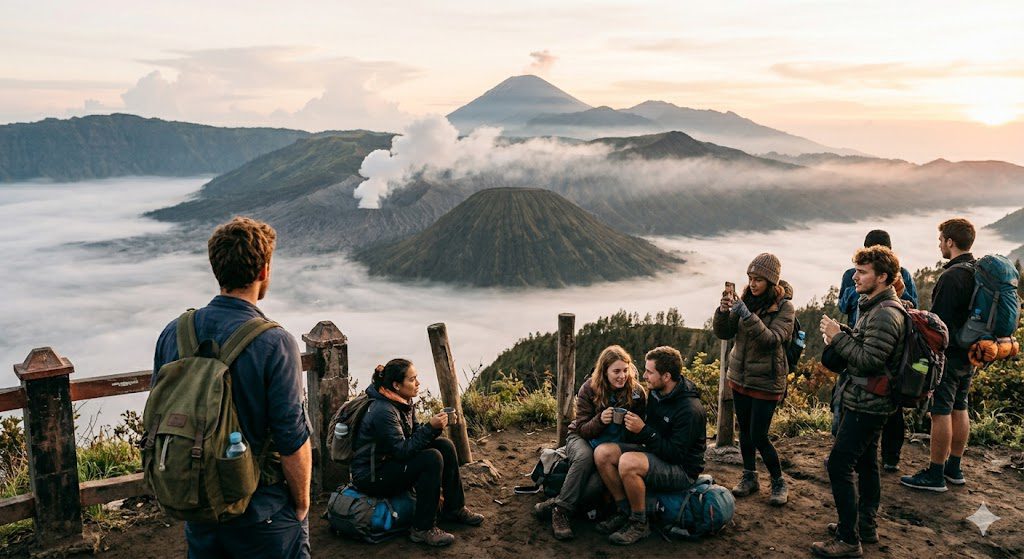
Java is also one of the easiest places in Indonesia to travel independently.
While destinations like Papua, Maluku, or remote parts of Sumatra often require complex logistics, Java has relatively strong infrastructure. The island is connected by long-distance trains, domestic flights, highways, buses, and ferries. For travelers who want adventure without completely sacrificing convenience, Java becomes one of the best entry points into Indonesia.
That does not mean Java is always easy.
Traffic can be exhausting. Major cities are crowded. Sidewalks are inconsistent. English is less common outside tourism hubs. Travel days often take longer than expected, especially in mountainous regions. The heat and humidity can also overwhelm first-time visitors unfamiliar with tropical climates.
But those challenges are also part of what makes Java memorable.
Java feels real. It feels lived-in. It feels human.
Instead of existing purely for tourism, the island functions primarily for the millions of Indonesians who live their daily lives here. Travelers are stepping into an active culture rather than a destination built around visitors.
This creates experiences that often feel more immersive than Bali. Sitting beside locals on long-distance trains, eating nasi goreng at midnight roadside stalls, hearing mosque speakers echo across villages at dawn, or watching farmers work beneath volcanic mountains are moments that become part of the journey itself.
For travelers willing to embrace movement, unpredictability, and sensory overload, Java becomes far more than a checklist destination.
It becomes one of the most rewarding travel routes anywhere in Southeast Asia.
What Daily Life In Java Actually Feels Like
For many travelers, the most memorable part of Java is not necessarily the famous temples or volcanoes. It is the feeling of daily life unfolding around you almost everywhere you go.
Java is intense, crowded, noisy, energetic, and deeply human.
Unlike destinations designed primarily around tourism, most of Java functions for the millions of Indonesians who live here every day. Visitors are entering a living environment rather than a tourism bubble, and that creates a very different travel experience compared to places like Bali.
Mornings in Java often begin early.
Before sunrise, the sound of mosque speakers echoes across villages and cities as the call to prayer spreads through the air. In smaller towns surrounded by rice fields or volcanic hills, the atmosphere can feel calm and beautiful. In larger cities like Jakarta or Surabaya, the day starts fast, with traffic already building before many travelers are fully awake.
Scooters dominate nearly every road in Java.
For first-time visitors from Europe or the United States, the traffic can initially feel overwhelming. Thousands of motorbikes flow continuously through intersections, markets, narrow streets, and highways in movements that somehow appear chaotic yet strangely coordinated at the same time.
Crossing roads often becomes an adventure of its own.
But after several days, many travelers begin adjusting to the rhythm. What first appears chaotic slowly starts feeling normal.
Street food culture is another huge part of everyday life in Java.
Small roadside food stalls known as warungs appear almost everywhere, serving local dishes from morning until late at night. Fried rice, noodles, grilled chicken, satay, soups, coffee, and spicy sambal are all deeply woven into daily routines.
Many travelers quickly discover that some of their best meals in Java happen in very simple places.
Plastic chairs beside busy roads, tiny family kitchens, night markets filled with smoke from charcoal grills — these often become more memorable than expensive restaurants.
Coffee culture is also growing rapidly across Java, especially in cities like Bandung and Yogyakarta.
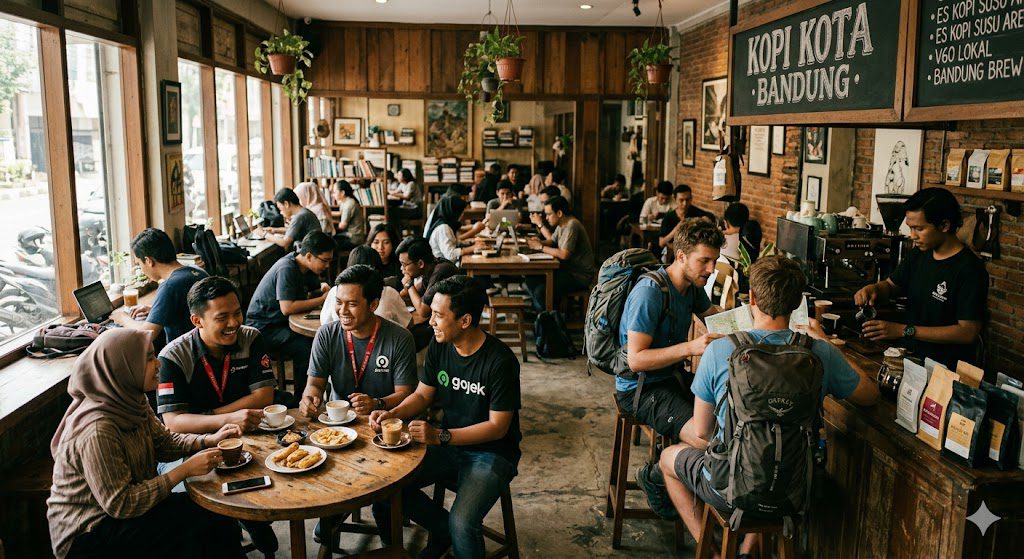
Alongside traditional kopi tubruk and local beans grown on volcanic slopes, modern cafés now fill creative neighborhoods with young Indonesians working remotely, studying, socializing, or simply escaping the tropical heat for several hours.
This contrast between old and new appears constantly throughout Java.
Ancient temples stand beside modern shopping malls.
Luxury cafés exist only minutes away from traditional markets.
Farmers still work manually beneath volcanic mountains while nearby cities build elevated highways and modern business districts.
For travelers, this creates an island that constantly feels layered and evolving.
At the same time, Java can also be physically exhausting.
The tropical climate is hot and humid for much of the year, especially in lowland cities. Traffic noise rarely disappears completely in urban areas. Long travel days, overnight volcano tours, and crowded transportation can slowly wear travelers down if they move too quickly.
Rest days matter more in Java than many people expect.
English is increasingly common in tourism areas, but outside major destinations communication sometimes becomes limited. Fortunately, Indonesians are generally patient and welcoming toward foreign visitors, and simple interactions often become some of the most rewarding parts of the journey.
Many travelers remember the friendliness of Java long after leaving.
Train attendants helping with luggage, strangers offering directions, food vendors smiling despite language barriers, or locals inviting travelers into conversations all help create the feeling that Java remains genuinely hospitable despite its size and intensity.
That human warmth becomes one of the island’s strongest memories.
Java is not polished in the way some global tourism destinations are polished.
It can feel messy, loud, humid, unpredictable, and overwhelming.
But it also feels deeply alive.
And for many travelers, that is exactly what makes it unforgettable.
How To Travel Across Java
One of Java’s biggest advantages compared to many other Indonesian islands is transportation. While traveling across Indonesia can sometimes feel fragmented and unpredictable, Java has one of the country’s strongest transportation networks, making independent travel significantly easier for foreign visitors.
That said, Java is much larger than many travelers initially expect.
The island stretches more than 1,000 kilometers from west to east, and moving across it requires realistic planning. Travel days can become exhausting if you try to cover too much too quickly.
The best Java trips are not rushed.
For most travelers, the ideal route moves gradually from west to east:
Jakarta → Bandung → Yogyakarta → Malang → Mount Bromo → Ijen → Bali
This route allows travelers to experience the island’s changing landscapes, cultures, and climates naturally without excessive backtracking.
International Flights Into Java
Most international travelers arrive in Java through Jakarta.
Jakarta (CGK) — Main International Gateway
Jakarta’s Soekarno-Hatta International Airport is the largest airport in Indonesia and usually offers the cheapest and most frequent international connections.
Common routes include:
- Singapore → Jakarta
- Kuala Lumpur → Jakarta
- Bangkok → Jakarta
- Doha → Jakarta
- Dubai → Jakarta
- Amsterdam → Jakarta
- Tokyo → Jakarta
For travelers coming from Europe or the United States, Jakarta is often the easiest arrival point because of stronger airline competition and more flexible connections.
However, many travelers underestimate Jakarta’s size and traffic.
Even short airport transfers inside Jakarta can take two to three hours during rush hour.
If you arrive late at night after a long-haul flight, staying one or two nights in Jakarta before continuing east is usually a better idea than immediately taking another domestic flight or overnight train.
Other Airports In Java
Yogyakarta International Airport (YIA)
Yogyakarta is one of the most popular cultural destinations in Indonesia and has growing domestic and regional connections.
Many travelers fly directly here after arriving in Jakarta.
Yogyakarta is the best access point for:
- Borobudur
- Prambanan
- Central Java temples
- Javanese culture
- Solo
- Mount Merapi
Surabaya (SUB)
Surabaya is the largest city in East Java and the main gateway for:
- Mount Bromo
- Ijen Crater
- Madura
- East Java volcano routes
For travelers short on time, flying directly into Surabaya and exploring East Java only is often more realistic than attempting the entire island.
Bandung (BDO)
Bandung’s airport handles mostly domestic and regional flights.
Bandung is popular for:
- cooler mountain climate
- tea plantations
- food culture
- cafés
- creative scene
- nearby volcanoes
The city is especially popular with younger Indonesian travelers.
Train Travel Across Java
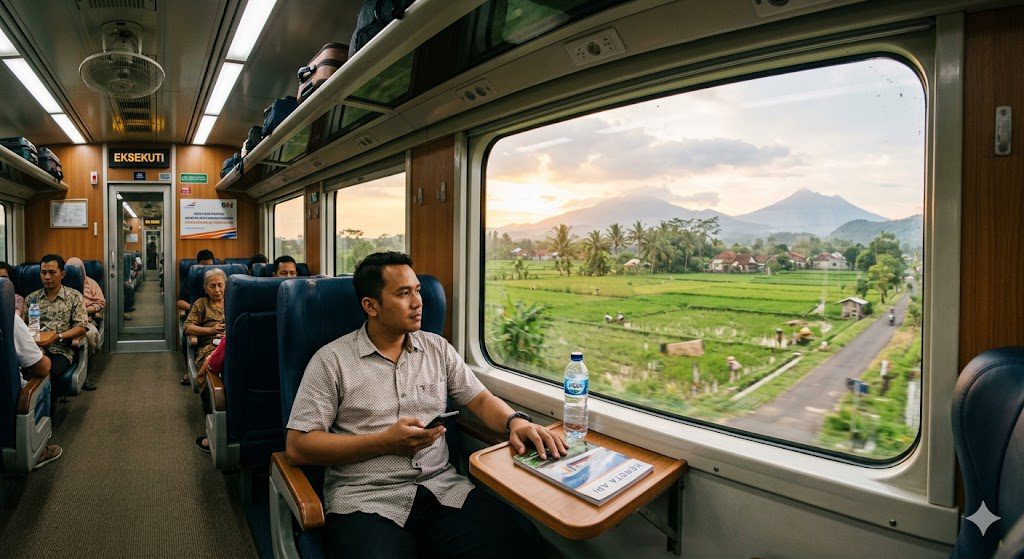
For many international visitors, train travel becomes the highlight of traveling in Java.
Java’s long-distance trains are surprisingly comfortable compared to what many travelers expect before arriving in Indonesia.
Executive-class trains often include:
- air conditioning
- reclining seats
- onboard food
- assigned seating
- spacious legroom
- relatively clean bathrooms
The train system connects most major cities across the island and allows travelers to avoid some of Java’s worst traffic.
For travelers from Europe, the experience often feels surprisingly enjoyable and scenic.
Rice fields, volcanoes, villages, forests, and coastal landscapes slowly pass by the windows for hours.
Unlike domestic flights, trains also allow travelers to actually experience the transition between different regions of Java.
Best Train Routes In Java
Jakarta → Yogyakarta
One of the most famous routes.
Travel time:
Around 7–9 hours depending on the train.
Best for:
- first-time travelers
- cultural travelers
- slow travel experiences
Yogyakarta → Malang
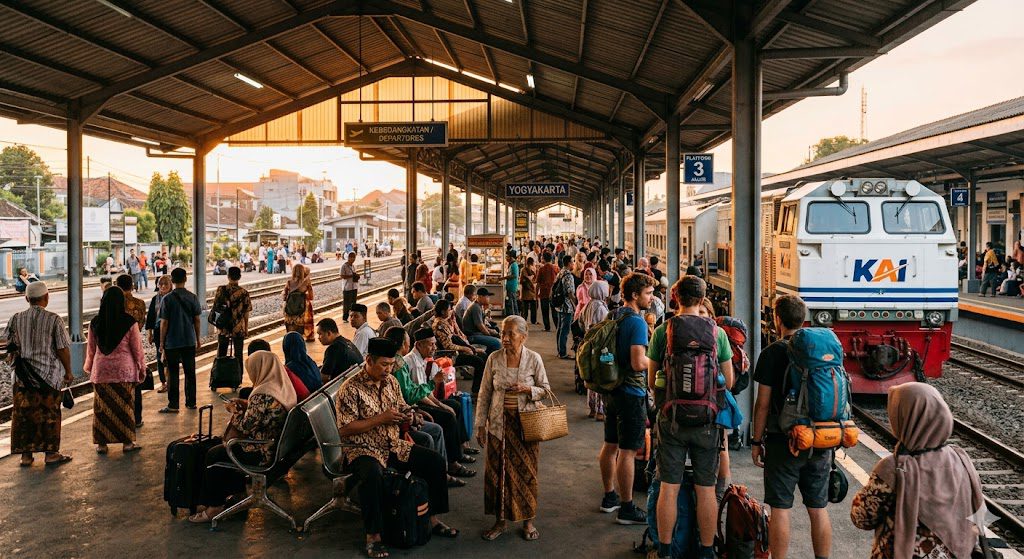
A beautiful route crossing Central and East Java.
Travel time:
Approximately 7–8 hours.
This route becomes increasingly scenic as volcanic landscapes begin appearing across East Java.
Surabaya → Banyuwangi
Best route for travelers heading toward Ijen Crater and Bali ferry crossings.
Travel time:
Around 6–7 hours.
Booking Trains In Indonesia
Most travelers now use:
- KAI Access app
- Traveloka
- Tiket.com
Booking several days in advance is highly recommended, especially during Indonesian holidays.
Executive-class tickets can sell out quickly on popular routes.
Private Drivers Vs Trains
Many travelers eventually combine both.
Trains work best for:
- long-distance city-to-city movement
Private drivers work best for:
- volcano areas
- waterfalls
- rural destinations
- sunrise tours
- hidden villages
In mountain regions, public transportation can become slower and less predictable.
Hiring a driver for several days in East Java is often worth the additional cost, especially when visiting Bromo and Ijen.
How Many Days Do You Actually Need?
This is one of the biggest mistakes travelers make in Java.
Many visitors try to see the entire island in one week.
This usually becomes exhausting.
7 Days
Possible, but rushed.
Best for:
- Yogyakarta + Bromo
OR - East Java only
10–14 Days
Ideal for most travelers.
Allows:
- cultural experiences
- volcanoes
- train travel
- recovery days
- slower pacing
3 Weeks Or More
Best overall experience.
This allows travelers to:
- explore smaller towns
- avoid constant moving
- include beaches
- visit lesser-known volcanoes
- experience local daily life more deeply
Java becomes significantly more rewarding when travelers slow down.
Common Mistakes Travelers Make In Java
Trying To See Too Much
Java looks smaller on maps than it actually feels while traveling.
Distances combined with traffic and mountain roads can become tiring quickly.
Underestimating Traffic
Jakarta, Bandung, and Surabaya traffic can be intense.
Even relatively short journeys may take far longer than expected.
Skipping Rest Days
Constant overnight volcano tours combined with long train rides eventually becomes exhausting.
Many travelers burn out after East Java because they move too quickly.
Only Visiting Mount Bromo
Bromo is spectacular, but Java is far more than a single volcano.
Travelers who slow down usually discover the most memorable parts of Java outside the famous Instagram locations.
Choosing Flights Over Scenic Train Routes
Domestic flights save time but remove much of the overland experience that makes Java special.
The trains themselves often become one of the best memories of the trip.
Why Overland Travel Is The Best Way To Experience Java
Traveling across Java slowly reveals how dramatically the island changes from west to east.
Languages shift.
Food changes.
Architecture evolves.
Religious traditions become different.
Volcanic landscapes become more dominant.
The atmosphere gradually changes from dense megacities to quieter mountain towns and eventually toward the rugged eastern edge of the island.
Flying over Java skips these transitions completely.
Overland travel allows travelers to actually feel the island changing around them.
And that is ultimately what makes Java one of Southeast Asia’s most rewarding journeys.
Banten — The Last Frontier of Western Java
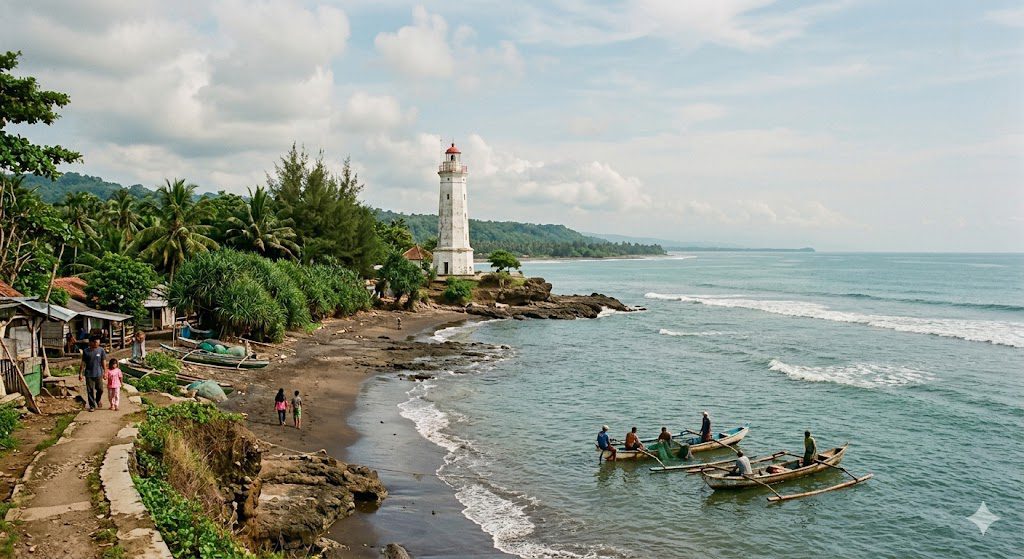
Ancestral Forests, Pristine Beaches, and Living Indigenous Traditions
At the western edge of Java lies Banten — a region where time moves differently.
Here, modern Indonesia fades into something older.
What makes Banten unique
- Home to the Baduy people, one of Indonesia’s most isolated indigenous communities
- Dense jungles protecting endangered wildlife
- Empty beaches with dramatic cliffs and caves
Top Hidden Gems in Banten
- Baduy Dalam & Baduy Luar
Walk into a living culture untouched by electricity, vehicles, or modern systems. - Ujung Kulon National Park
A UNESCO-listed sanctuary — home to the last remaining Javan rhinoceroses. - Pulau Panaitan
Remote, raw, and legendary among surfers. - Sawarna & Tanjung Layar Beaches
Rugged coastlines with rock formations and almost no crowds. - Mount Pulosari & Kaibon Palace Ruins
A blend of volcanic trekking and historical exploration.
👉 Banten is not for casual tourism — it’s for travelers who want authentic, off-grid experiences.
West Java
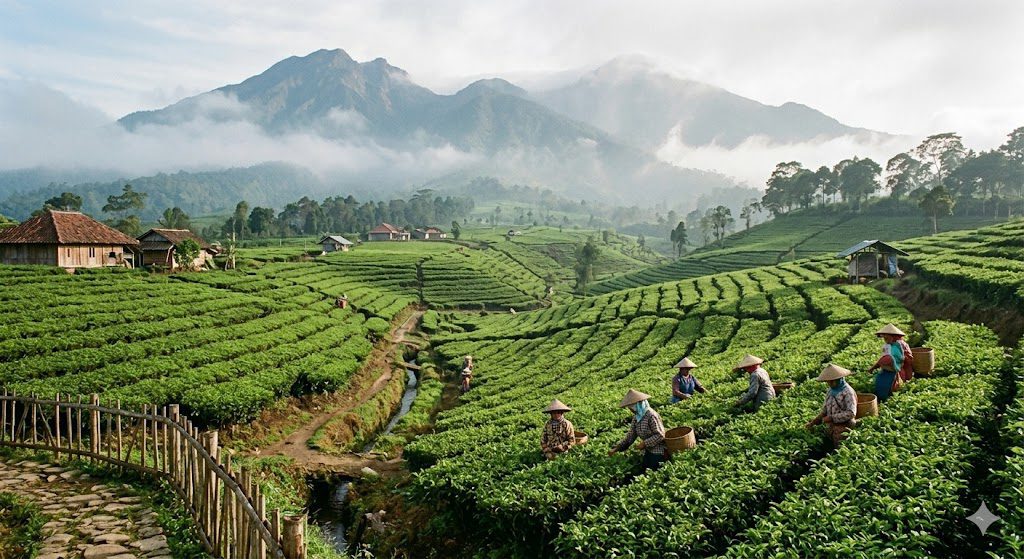
Volcanic Craters, Mystic Highlands, and Sundanese Villages
Where Nature Meets Mysticism
Sundanese philosophy shapes West Java’s misty peaks and crater lakes, where geology meets spirituality.
West Java feels alive.
Volcanoes breathe. Forests whisper. Villages hold centuries-old traditions.
Highlights of West Java Hidden Gems
- Kawah Putih (White Crater)
A surreal volcanic lake wrapped in mist — almost otherworldly. - Mount Papandayan
One of the most accessible yet dramatic volcanic hikes in Indonesia. - Kampung Naga
A preserved Sundanese village where tradition governs daily life. - Green Canyon, Pangandaran
Kayaking through emerald waters between towering cliffs. - Ciletuh Geopark (UNESCO)
Ancient geological formations meeting wild coastline. - Pelabuhan Ratu Coast
Mystical beaches tied to local legends of the Southern Sea Queen.
👉 West Java is ideal for travelers seeking nature + culture in one journey.
Central Java
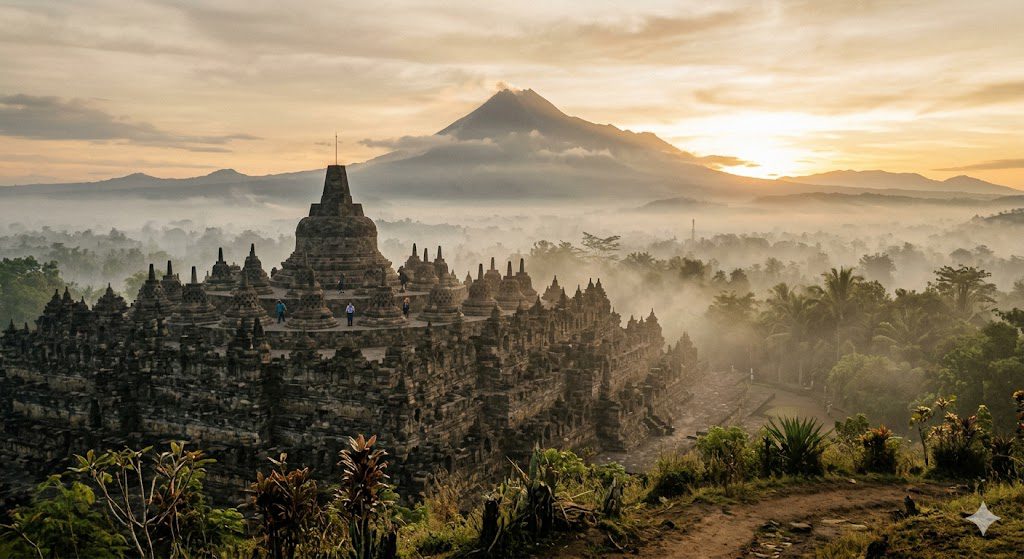
Ancient Civilizations and Volcanic Heartlands
Where History Breathes Through the Landscape
Central Java is the cultural backbone of the island.
This is where empires rose, temples were built, and traditions still live.
Must-Explore Hidden Gems
- Dieng Plateau
A mystical highland with ancient temples and surreal volcanic lakes. - Karimunjawa Islands
White sand, coral reefs, and island life without crowds. - Gedong Songo Temples
Mountain temples shrouded in fog — peaceful and atmospheric. - Selo Route (Merapi–Merbabu)
One of Indonesia’s most scenic volcano treks. - Segara Anakan Lagoon
A hidden mangrove ecosystem rich in biodiversity.
👉 Central Java offers history, spirituality, and nature in perfect balance.
Yogyakarta — The Living Soul of Java
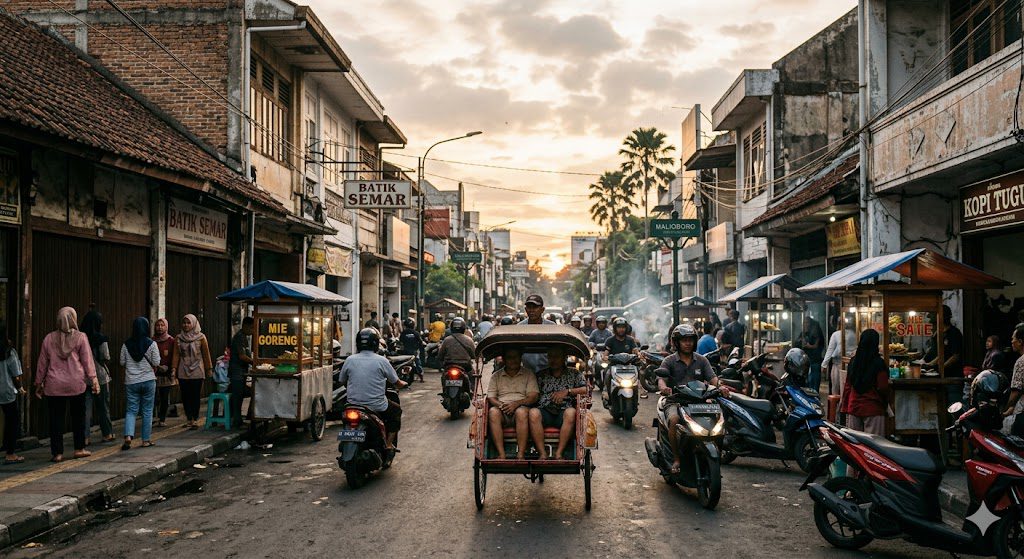
Ritual Grounds and Cultural Pulse
Culture You Don’t Just See — You Feel
Yogyakarta is not just a destination — it’s an experience.
It’s where ancient philosophy still shapes modern life.
Hidden Corners of Yogyakarta
- Goa Pin
- dul
Floating through underground rivers inside a cave system. - Mount Nglanggeran
An ancient volcano offering sunset views over rural Java. - Breksi Cliff
A former quarry transformed into a giant open-air art space. - Gunungkidul Beaches (Baron, Kukup, Krakal)
Dramatic limestone coastlines facing the Indian Ocean. - Alun-Alun Kidul Night Rituals
Walk blindfolded between twin trees — a local spiritual tradition.
👉 Yogya is perfect for travelers seeking culture that feels alive, not staged.
Java’s Volcano Culture: More Than Just Landscapes
For most international travelers, Java’s volcanoes begin as dramatic scenery.
Sunrise viewpoints, smoking craters, lava landscapes, and massive volcanic silhouettes dominate travel photography across the island. Destinations like Mount Bromo, Mount Merapi, and Ijen Crater have become some of Indonesia’s most recognizable natural attractions.
But in Java, volcanoes are far more than tourist destinations.
They shape culture, agriculture, spirituality, mythology, architecture, migration patterns, and daily life itself.
To understand Java properly, travelers must understand the relationship between people and volcanoes.
Java sits on the Pacific Ring of Fire, one of the most volcanically active regions on Earth. Dozens of active volcanoes stretch across the island, creating both extraordinary beauty and constant danger.
Entire civilizations in Java have grown in the shadow of volcanoes for centuries.
This relationship is visible almost everywhere.
Volcanic soil makes parts of Java incredibly fertile, allowing farmers to grow rice, vegetables, coffee, tobacco, tea, and spices across mountain slopes that would seem impossible for agriculture in many other countries.
Some of the greenest landscapes in Indonesia exist specifically because of volcanic activity.
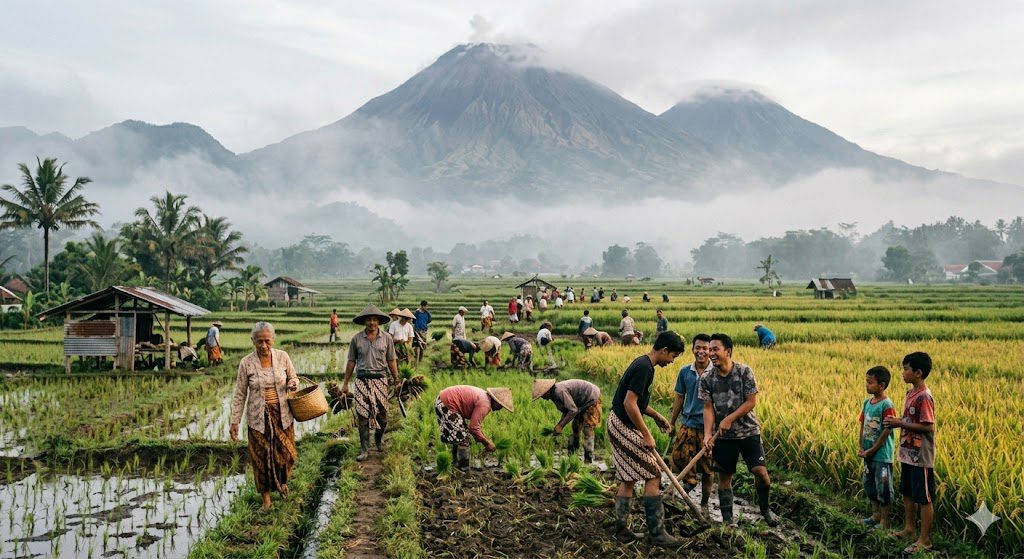
At the same time, eruptions remain part of reality.
Villages near active volcanoes sometimes experience ashfall, evacuations, earthquakes, road closures, and sudden disruptions. For local communities, volcanoes are not distant natural attractions. They are active forces that influence everyday life.
One of the clearest examples is Mount Merapi near Yogyakarta.
Merapi is considered one of the most active volcanoes in Indonesia and has erupted repeatedly throughout history. Yet millions of people continue living around its slopes.
Part of this relationship is practical. Fertile land supports agriculture and livelihoods.
But another part is spiritual.
Traditional Javanese beliefs often view volcanoes as sacred places connected to balance between nature, ancestors, and human life. Even today, ceremonies and offerings still occur around volcanic regions, blending older animist traditions with Islam and local cultural practices.
For many local communities, volcanoes are respected rather than feared completely.
Near Mount Bromo, travelers encounter another unique cultural landscape.
The Tenggerese people, a Hindu minority community living around the Bromo region, maintain traditions that differ significantly from much of Muslim-majority Java. Ceremonies, offerings, and festivals continue taking place around the volcano, especially during the annual Yadnya Kasada ritual where offerings are thrown into the crater.
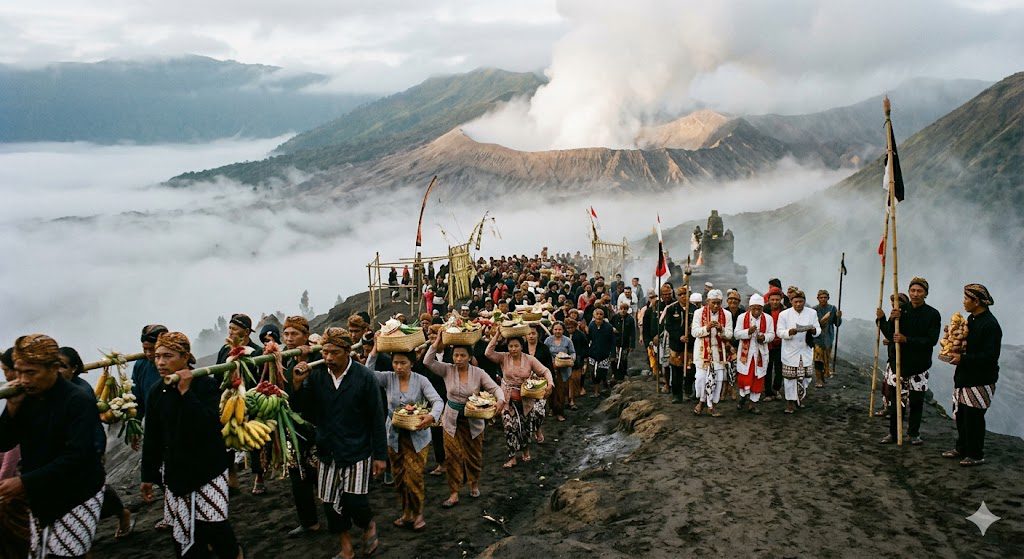
For travelers, these traditions reveal that Java’s volcanoes are not simply geological features.
They are cultural centers.
This connection between humans and volcanoes also shapes how many people emotionally understand the landscape itself.
In much of Europe or North America, dangerous natural environments are often separated from daily settlement patterns whenever possible.
In Java, people adapt and continue living beside active volcanoes generation after generation.
The coexistence becomes part of normal life.
Travelers often notice this contrast while moving through East Java.
One moment, they may stand at a scenic sunrise viewpoint filled with photographers and tourists. Only minutes away, farmers are already working fields beneath smoking mountains as if volcanic activity were simply another part of the weather.
That contrast can feel surreal for first-time visitors.
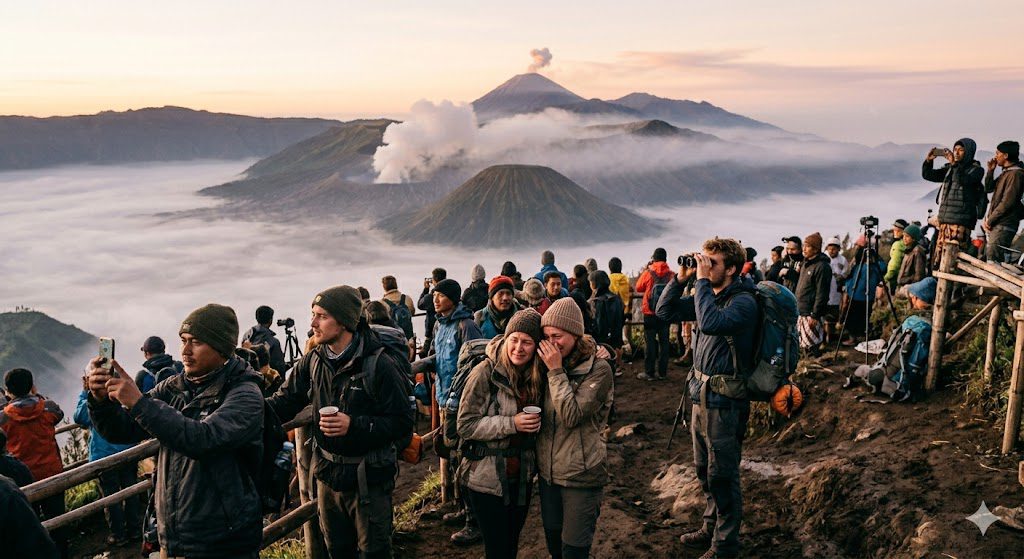
At popular destinations like Bromo and Ijen, tourism has grown rapidly in recent years, especially through social media. Sunrise jeep tours, drone photography, and Instagram viewpoints now attract large numbers of domestic and international tourists.
Because of this, some travelers arrive expecting untouched wilderness and feel surprised by the crowds.
The reality is more complex.
Java’s volcanoes are both major tourism destinations and deeply inhabited cultural landscapes at the same time.
The best experiences usually happen when travelers move beyond the standard photo stops.
Watching local farmers cross volcanic sand plains at dawn, staying in quieter mountain villages, speaking with guides who grew up near the volcanoes, or observing daily routines in highland communities often creates a far deeper understanding of the region.
Volcanoes in Java are not isolated natural monuments separated from civilization.
They are part of civilization itself.
And that relationship between beauty, danger, spirituality, and survival is one of the things that makes traveling across Java feel unlike almost anywhere else in Southeast Asia.
East Java — Raw, Untamed, and Spectacular
Epic Volcanoes, Waterfalls, and Rugged Shores
East Java is where the island shows its wild side.
This is adventure at its peak.
Top Hidden Gems in East Java
- Bromo Tengger Semeru National Park
The iconic sea of sand — but still magical if done right. - Mount Semeru
Java’s highest volcano — a serious trek with epic rewards. - Ijen Crater (Blue Fire)
One of the rarest natural phenomena on Earth. - Tumpak Sewu Waterfall
Often called Indonesia’s most beautiful waterfall. - Baluran National Park
A savanna landscape unlike anything else in Java. - Meru Betiri & Sukamade Beach
Witness sea turtles nesting in the wild. - Papuma & Klayar Beaches
Rugged cliffs, blowholes, and untouched coastal beauty.
👉 East Java is built for adventure travelers and photographers.
Java Hidden Gems
Why Explore Java’s 100 Hidden Gems?
Because Java rewards those who go deeper.
It’s not about ticking boxes —
it’s about discovering a place that still feels real.
What you gain
- Authentic cultural encounters
- Landscapes untouched by mass tourism
- Stories worth telling
Travel Ethically
- Support local guides and communities
- Respect cultural traditions
- Minimize environmental impact
Travel Costs In Java: What To Realistically Expect
Compared to Europe, North America, Japan, Singapore, or Australia, traveling across Java is generally very affordable. However, costs can vary significantly depending on transportation style, comfort expectations, and how quickly travelers move across the island.
Java works well for multiple travel styles.
Backpackers can travel relatively cheaply using trains, guesthouses, and local food stalls, while mid-range and comfort travelers often find surprisingly high value for private drivers, boutique hotels, and guided volcano trips.
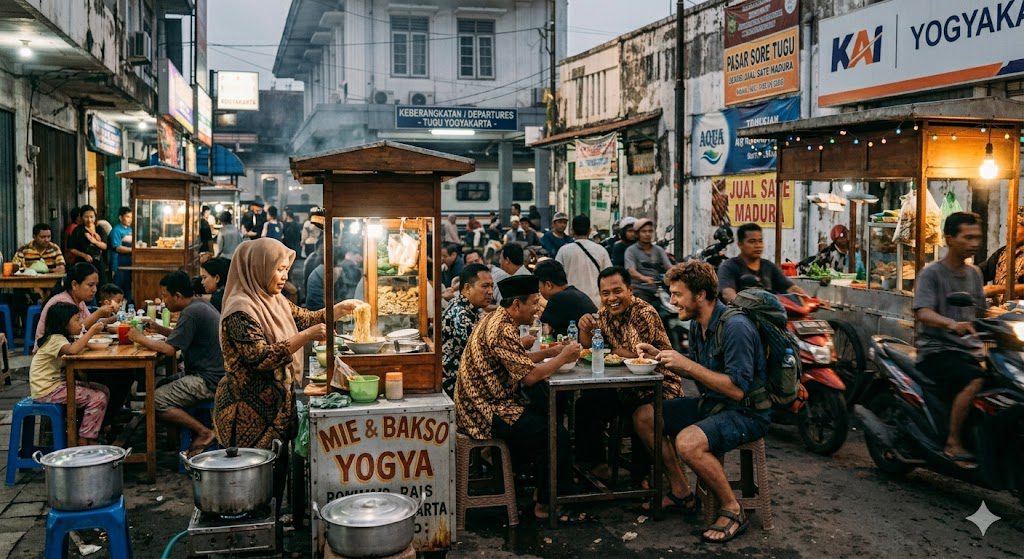
The biggest factor affecting cost is usually transportation rather than accommodation.
Traveling slowly almost always reduces overall expenses.
Backpacker Budget
Estimated:
USD $25–45 per day
This budget usually includes:
- hostel or basic guesthouse
- economy or executive train tickets
- local food stalls
- shared volcano tours
- basic transportation apps like Grab or Gojek
Backpackers who use trains instead of domestic flights can often travel comfortably while keeping costs relatively low.
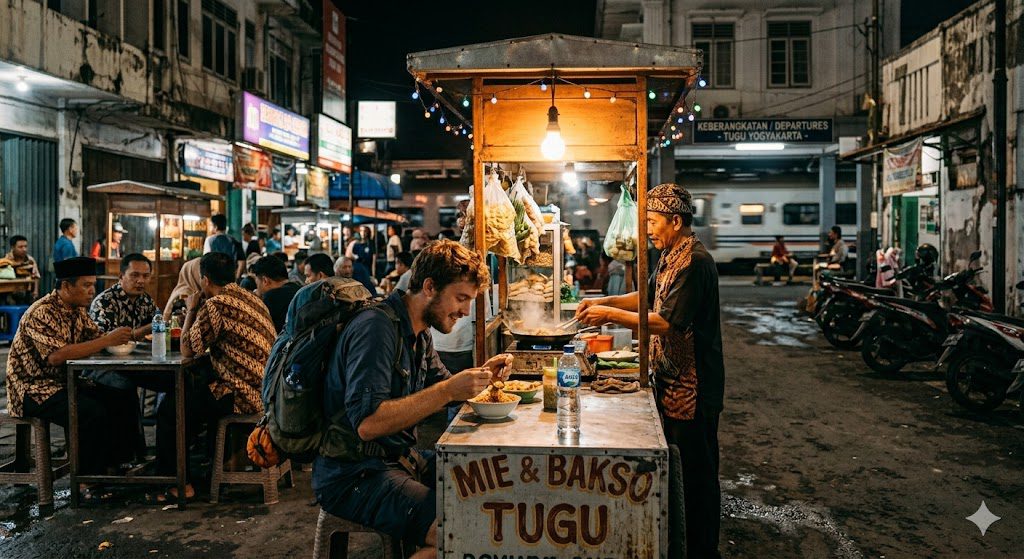
Street food is especially affordable.
Simple local meals often cost between:
USD $1–3
while coffee in local cafés may cost:
USD $1–4
Budget travelers should still expect occasional higher costs around major tourism areas like Bromo, Ijen, and Yogyakarta during peak season.
Mid-Range Budget
Estimated:
USD $60–120 per day
This is the range where Java offers excellent value.
Travelers at this level can usually enjoy:
- boutique hotels
- private volcano tours
- executive-class trains
- occasional domestic flights
- comfortable cafés and restaurants
- private drivers for mountain regions
Many international travelers choose this range because comfort levels increase significantly without dramatically increasing costs.
Private drivers in East Java are particularly popular because they simplify logistics around:
- Mount Bromo
- waterfalls
- Ijen Crater
- rural mountain routes
For couples or small groups, private transport often becomes surprisingly affordable when shared.
Comfort And Luxury Travel
Estimated:
USD $150+ per day
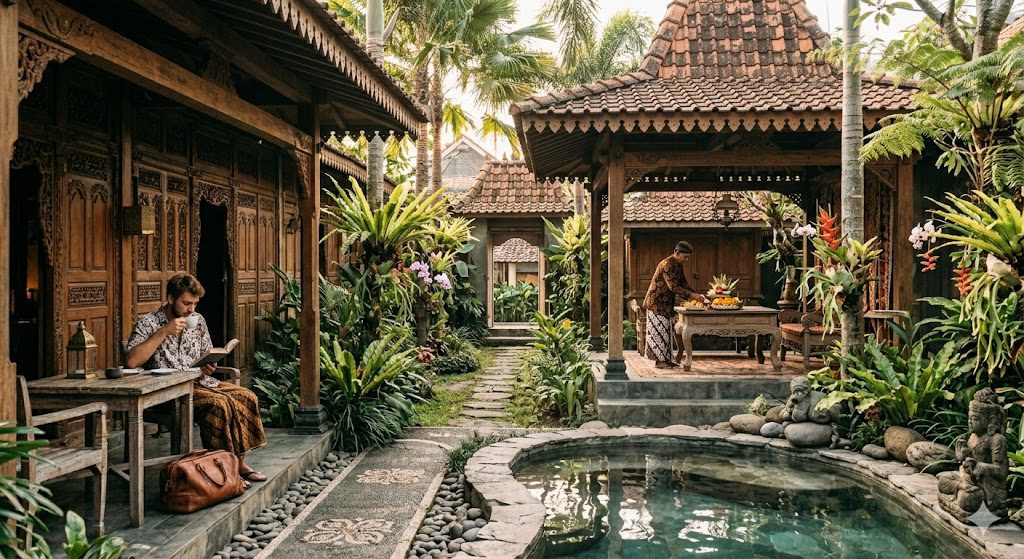
Luxury travel in Java is available but looks different compared to Bali.
Java focuses more on:
- heritage hotels
- boutique resorts
- luxury train experiences
- volcanic retreats
- private cultural tours
rather than large-scale beach resort tourism.
High-end stays are especially strong around:
- Yogyakarta
- Jakarta
- Bandung
- Borobudur
- selected mountain regions
Compared to luxury pricing in Europe or the United States, Java still offers relatively strong value at this level.
Train Costs Across Java
Train travel is one of the best-value experiences on the island.
Approximate executive-class ticket prices:
- Jakarta → Yogyakarta:
USD $20–40 - Yogyakarta → Malang:
USD $15–30 - Surabaya → Banyuwangi:
USD $10–25
Prices vary depending on:
- class
- season
- holidays
- booking timing
Booking several days early is strongly recommended during Indonesian holiday periods.
Domestic Flights
Domestic flights are common but not always dramatically cheaper than expected.
Approximate routes:
- Jakarta → Yogyakarta:
USD $40–90 - Jakarta → Surabaya:
USD $50–120 - Surabaya → Bali:
USD $40–80
Budget airlines can reduce prices, but delays and baggage fees are common.
Many travelers eventually prefer trains because the experience itself becomes part of the journey.
Volcano Tour Costs
Volcano tours are among the largest travel expenses in Java.
Mount Bromo Shared Tour
Usually:
USD $25–60
depending on:
- pickup city
- jeep type
- season
- group size
Private Bromo Tour
Usually:
USD $80–200+
depending on route and comfort level.
Ijen Crater Tours
Usually:
USD $30–100
especially if combined with transport toward Bali ferry crossings.
Accommodation Costs
Approximate nightly rates:
Budget Guesthouses
USD $10–25
Mid-Range Hotels
USD $35–90
Boutique And Luxury Hotels
USD $120–400+
Yogyakarta and Bandung often offer some of the best value accommodation in Indonesia.
SIM Cards And Internet
Internet access across Java is generally reliable in cities and tourism areas.
Tourist SIM cards usually cost:
USD $5–15
with large data packages included.
Popular providers:
- Telkomsel
- XL
- Indosat
Many cafés, hotels, and restaurants also offer free Wi-Fi.
Is Java Worth The Cost?
For many travelers, Java delivers some of the best overall value in Southeast Asia.
The combination of:
- volcanoes
- temples
- train journeys
- culture
- food
- landscapes
- local experiences
creates an experience that often feels significantly richer than the actual cost of traveling there.
Java is not always the easiest destination in Southeast Asia.
But for travelers willing to embrace movement, unpredictability, and overland adventure, it often becomes one of the most rewarding.
Frequently Asked Questions About Traveling In Java
Is Java Safe For Tourists?
Yes, Java is generally safe for international travelers, including solo travelers and backpackers. Violent crime against tourists is relatively uncommon in major travel areas. However, travelers should still use normal precautions regarding traffic, scams, pickpocketing in crowded cities, and nighttime transportation.
The biggest safety challenge in Java is often transportation itself, especially traffic and long travel distances.
Is Java Better Than Bali?
Java and Bali offer very different experiences.
Bali is easier, more tourism-oriented, and more internationally developed for leisure travel. Java is larger, more culturally intense, and generally feels more local and immersive.
Travelers interested in overland journeys, volcanoes, temples, trains, and everyday Indonesian culture often prefer Java.
Travelers looking mainly for beach resorts and nightlife usually prefer Bali.
How Many Days Do You Need In Java?
Most travelers need at least 10–14 days to experience Java comfortably.
One week is enough for a shorter route focused on either Central Java or East Java, but trying to cover the entire island too quickly can become exhausting.
Travelers who move slower usually enjoy Java significantly more.
Can You Travel Across Java By Train?
Yes. Java has one of the best train systems in Indonesia.
Long-distance trains connect many major cities including Jakarta, Bandung, Yogyakarta, Surabaya, Malang, and Banyuwangi. Executive-class trains are comfortable, affordable, and often become one of the highlights of traveling across the island.
Is Java Expensive?
Java is generally affordable compared to Europe, North America, Singapore, Japan, or Australia.
Budget travelers can travel comfortably on moderate daily budgets, especially when using trains and local food stalls. Mid-range travelers often find Java offers excellent value for hotels, transportation, private tours, and dining.
Luxury travel is also available in larger cities and high-end resorts.
What Is The Best Month To Visit Java?
The dry season between May and October is usually considered the best period for traveling across Java.
These months generally offer:
- clearer volcano views
- lower rainfall
- easier transportation
- better sunrise conditions
July and August are popular but also busier.
Rainy season travel is still possible, but landslides, flooding, and cloudy volcano conditions occasionally affect travel plans.
Is Mount Bromo Worth Visiting?
Yes, Mount Bromo remains one of the most impressive volcanic landscapes in Indonesia.
However, travelers should prepare for:
- cold temperatures before sunrise
- crowds during peak season
- early wake-up times
- dusty conditions
The experience is usually most rewarding for travelers who stay longer than a quick sunrise jeep tour.
Can You Travel Java Without Speaking Indonesian?
Yes, especially along popular travel routes.
English is common in tourism areas such as Yogyakarta, Bromo, Jakarta, and Bali-connected routes. Outside major tourism zones, communication may become more limited, but many travelers still navigate Java successfully using translation apps and basic local phrases.
Learning a few simple Indonesian words is highly appreciated by locals.
Is East Java Or Central Java Better?
They offer different experiences.
Central Java is stronger for:
- temples
- culture
- history
- royal cities
- slower travel
East Java is stronger for:
- volcanoes
- dramatic landscapes
- adventure travel
- waterfalls
- rugged scenery
Many travelers combine both regions in one overland route.
Is Java Good For First-Time Indonesia Travelers?
Yes, Java is one of the best islands in Indonesia for first-time visitors who want a deeper cultural and overland travel experience.
Compared to more remote Indonesian regions, Java has stronger transportation infrastructure, extensive train connections, large cities, and relatively accessible tourism services while still feeling far more local and immersive than Bali in many areas.
What Is The Best Route Across Java?
One of the most popular routes is:
Jakarta → Bandung → Yogyakarta → Malang → Mount Bromo → Ijen → Bali
This route combines:
- cities
- volcanoes
- temples
- train journeys
- culture
- landscapes
while allowing travelers to move gradually from west to east across the island.
What Is The Most Underrated Part Of Java?
Many travelers consider smaller towns, rural villages, train journeys, and lesser-known mountain regions to be the most underrated parts of Java.
Some of the island’s best experiences happen between the famous attractions rather than at the major tourist sites themselves.
Why Java Leaves Such A Strong Impression On Travelers
Java is not the easiest destination in Southeast Asia.
It is hotter, busier, louder, and more physically demanding than many travelers initially expect. Traffic can be exhausting, transportation days are often long, and famous attractions sometimes become crowded during peak seasons.
But Java also offers something increasingly rare in modern travel:
a journey that still feels deeply connected to real daily life.
This is an island where ancient temples stand beside modern cities, where volcanic mountains shape entire communities, where overnight train journeys cross endless rice fields, and where ordinary moments often become the most memorable parts of the trip.
Many travelers arrive expecting volcanoes and temples.
What they remember most are usually the smaller experiences:
late-night street food after long train rides, conversations with locals despite language barriers, sunrise over misty villages, the rhythm of prayer calls echoing across cities, or watching daily life unfold beneath active volcanoes.
Java rewards travelers who move slowly.
The island is too large, too layered, and too culturally complex to experience properly in a rushed itinerary. Those who give themselves time often discover that the journey between destinations becomes just as important as the destinations themselves.
For travelers looking beyond resort-style tourism, Java offers one of Southeast Asia’s most rewarding overland adventures.
It may not always feel polished.
But that is exactly why it feels real.
And for many visitors, that authenticity becomes the reason Java leaves a stronger and longer-lasting impression than almost anywhere else in Indonesia.
Final Thought — Java is Not a Shortcut Destination
Java is not designed for rushed travel.
It’s a place for:
- Slow exploration
- Meaningful encounters
- Genuine discovery
And that’s exactly why it stands apart.