
🌏Culture Villages in Indonesia: Living Traditions Beyond Tourism
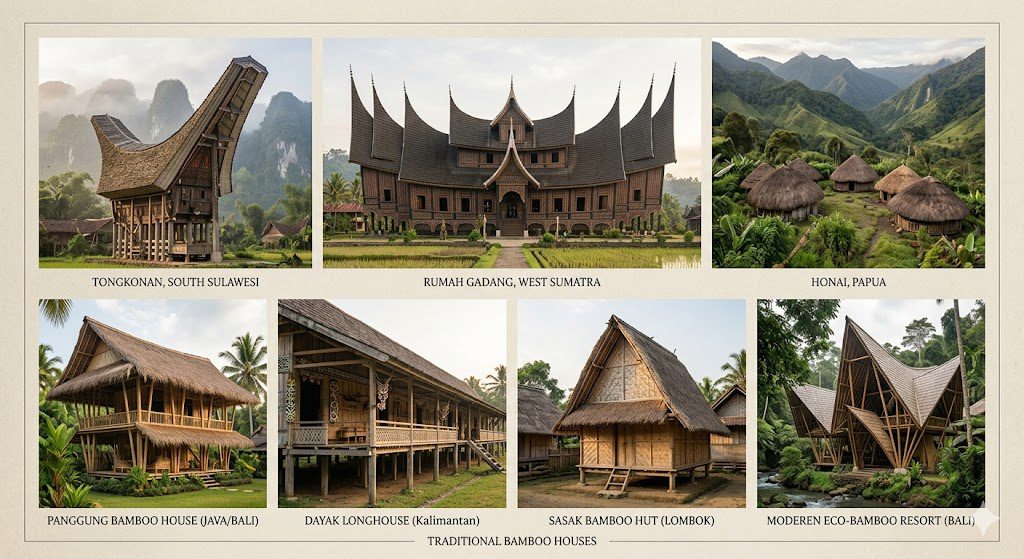
Indonesia is often seen through the lens of beaches and volcanoes. But the soul of the archipelago does not live in its landscapes—it lives in its people.
Scattered across more than 17,000 islands are communities that have preserved their ways of life for centuries. These are not cultural performances staged for visitors. They are living systems—where architecture, rituals, and belief are still woven into everyday life.
To visit these villages is not simply to travel. It is to step into a world where time moves differently.
✨ Why Explore Cultural Villages?
Traveling through Indonesia’s cultural villages offers something deeper than sightseeing.
It allows you to:
- Experience traditions that are still actively practiced
- Understand the diversity of over 1,300 ethnic groups
- Support communities that protect their heritage
- Build real human connections beyond tourism
This is where Indonesia reveals its true identity.
🏝️ Sumatra: Ancient Civilizations & Living Architecture
Sumatra holds some of Indonesia’s oldest cultural roots, shaped by kingdoms, trade routes, and strong ancestral beliefs.
🏠 Batak & Nias Traditions (North Sumatra)
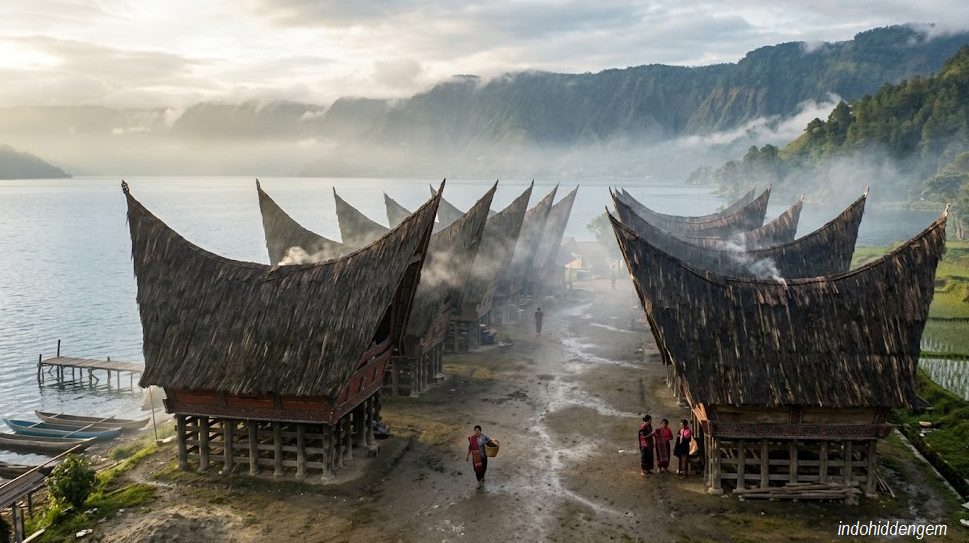
Around Lake Toba, traditional Batak villages stand proudly with their dramatic Rumah Bolon houses—symbols of lineage and identity.
Further west in Nias, the iconic stone jumping ritual (Fahombo) continues to represent strength and maturity, passed down through generations.
🏡 Minangkabau Heritage (West Sumatra)
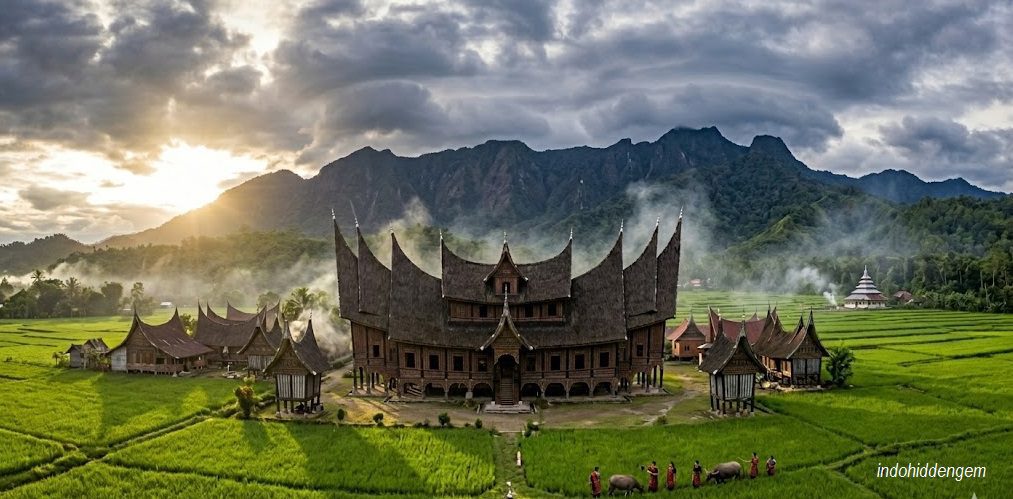
The Rumah Gadang is more than architecture—it is philosophy. Its horn-shaped roof reflects resilience, while its structure embodies the world’s largest matrilineal society.
Villages like Nagari Sijunjung still function as living cultural centers.
🌿 Java & Bali: Tradition Within Modern Landscapes
Even in Indonesia’s most developed regions, ancient ways of life endure.
🌳 Baduy Dalam (Banten)
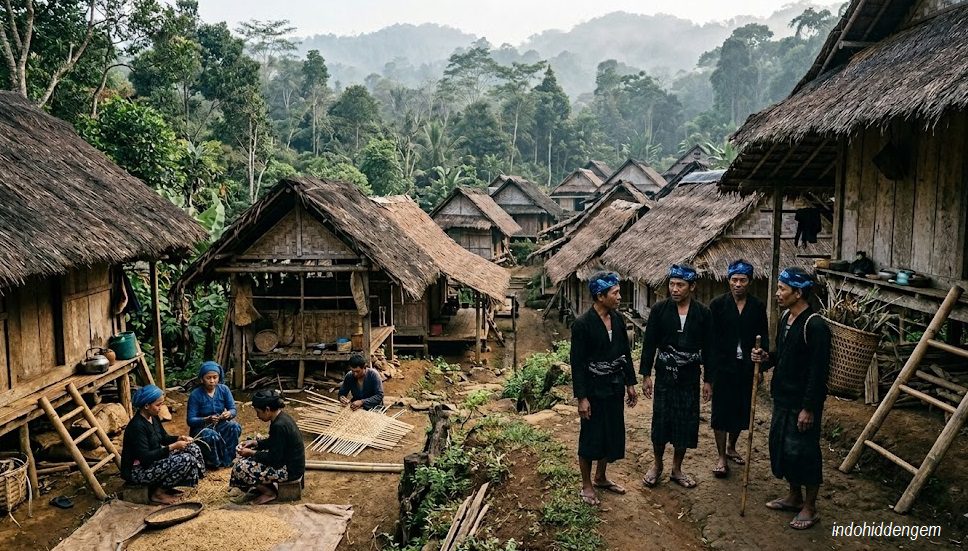
Deep in the forests of Banten, the Baduy Dalam live without electricity, vehicles, or modern tools. Their philosophy is simple: live in harmony with nature.
Visitors must follow strict rules—because this is not tourism. It is a protected way of life.
🔥 Tenggerese Villages (Mount Bromo)
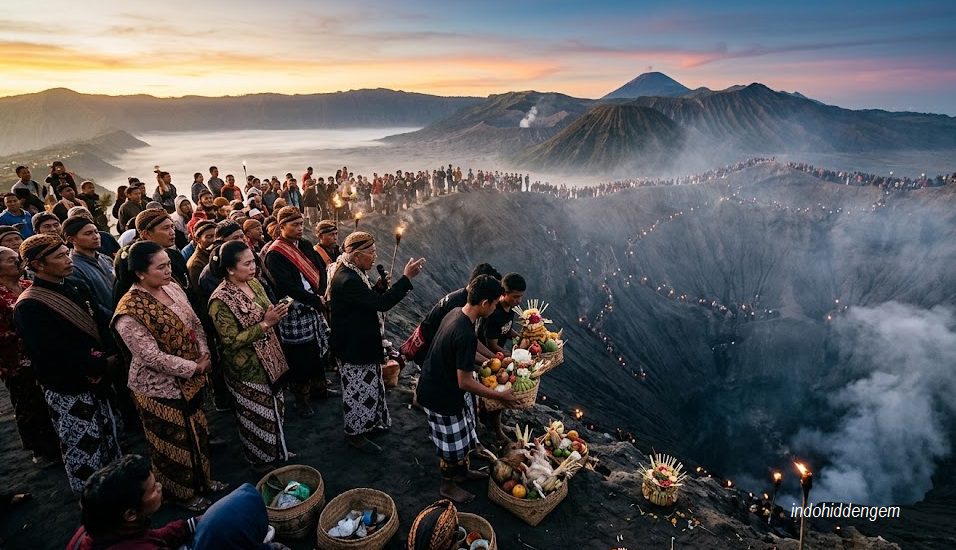
Surrounding Mount Bromo, the Tenggerese people preserve Hindu traditions dating back to the Majapahit era.
Their most sacred ritual, Yadnya Kasada, involves offerings thrown into the volcano—an act of devotion and respect to nature.
🧵 Tenganan Village (Bali Aga)
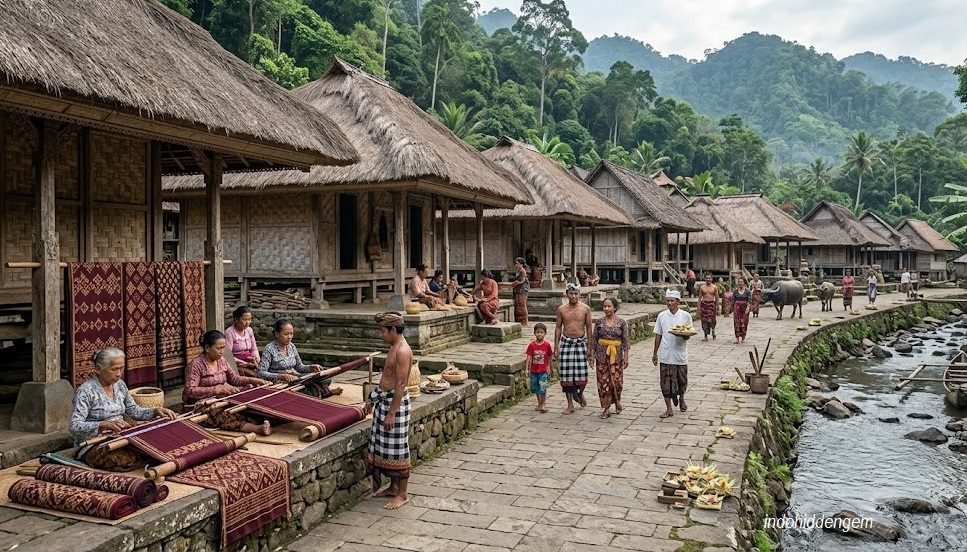
One of Bali’s oldest communities, Tenganan preserves pre-Majapahit traditions—including the rare double ikat weaving (Gringsing).
This is not modern Bali—it is Bali before tourism.
🌳 Kalimantan: Life in the Rainforest
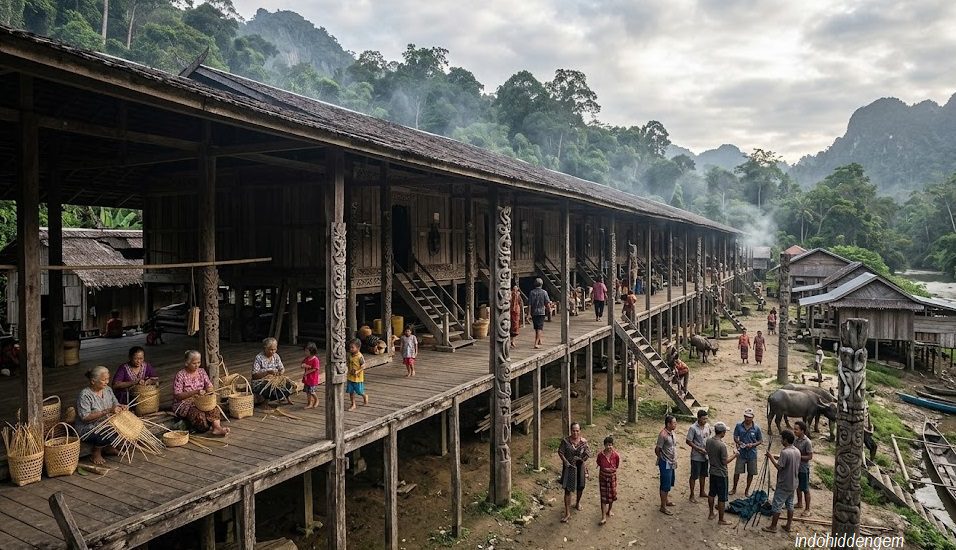
Deep within the rainforests of Kalimantan, culture is inseparable from nature. For the Dayak people, the forest is not merely a resource—it is a living system that shapes identity, belief, and daily survival. Their villages are often located along rivers or deep inland, where access is limited and traditions remain closely tied to the land.
At the heart of Dayak life stands the Rumah Panjang (longhouse)—a communal structure that can house dozens of families under one roof. Unlike modern housing, which emphasizes separation, the longhouse is built around collective living. Each family occupies a section, yet all are connected through shared spaces that function as social, ceremonial, and decision-making areas.
This architectural form reflects a deeper philosophy: community over individuality. Daily activities—from cooking to crafting—are often done collectively, reinforcing strong social bonds.
Equally important is the Dayak relationship with the forest. Their knowledge of medicinal plants, seasonal cycles, and sustainable farming practices has been passed down for generations. Rather than exploiting nature, they coexist with it—maintaining a balance that modern systems often struggle to achieve.
Cultural expression is also visible in intricate carvings, beadwork, and rituals that honor ancestral spirits. These are not decorative elements—they are narratives, encoding history, identity, and belief.
In a rapidly changing world, Dayak villages stand as a reminder that sustainability is not a modern concept—it is an inherited way of life.
In the heart of Borneo, culture and nature are inseparable.
🏠 Dayak Longhouse Communities
The Rumah Panjang (longhouse) is a symbol of unity, where entire communities live under one roof.
Their traditions reflect deep knowledge of the rainforest—built on balance, not exploitation.
⛰️ Sulawesi: Rituals, Death & Ancestral Power
In the highlands of Sulawesi, culture is deeply rooted in ritual and the relationship between the living and the spiritual world. Among the Toraja people, life is not defined by birth—but by death, which is seen not as an end, but as a transition.
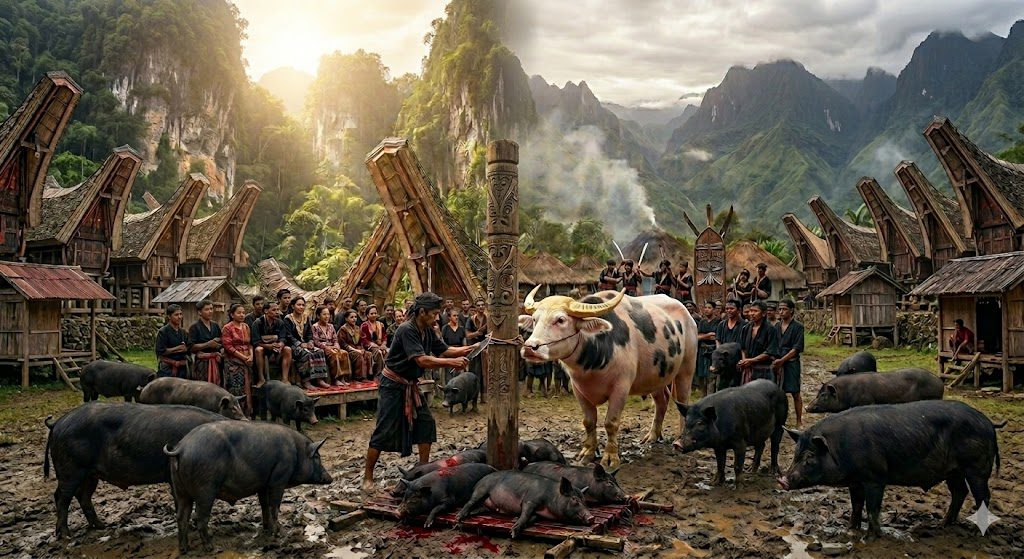
Toraja villages are instantly recognizable by their iconic tongkonan houses, with sweeping, boat-shaped roofs that dominate the landscape. These structures are not simply homes; they represent lineage, status, and connection to ancestors. Every detail—from orientation to carving—holds symbolic meaning tied to cosmology and belief.
The most striking aspect of Toraja culture is the funeral tradition known as Rambu Solo. Unlike modern funerals, which are brief and private, Toraja ceremonies can last for days and involve entire communities. Families may spend months or even years preparing for these events, which are both social and spiritual milestones.
Buffalo sacrifices play a central role, as they are believed to guide the soul to the afterlife. The scale of the ceremony often reflects the social standing of the deceased, reinforcing the importance of hierarchy and tradition.
Despite increasing tourism, many Toraja communities continue to practice these rituals with authenticity. Visitors are not simply observers—they are entering a living cultural system that demands respect and understanding.
In Sulawesi, culture is not hidden—it is expressed openly, powerfully, and with purpose.
🪦 Tana Toraja
In Toraja, death is not the end—it is a transition.
Funeral ceremonies can last days, involving entire communities and symbolic rituals that connect the living with the spiritual world.
🌄 Nusa Tenggara: Ancient Worlds Still Alive
Across the islands of Nusa Tenggara, culture exists in landscapes that are both harsh and beautiful—rolling hills, dry savannas, and volcanic terrain. These environments have shaped communities that are resilient, deeply spiritual, and strongly connected to ancestral traditions.
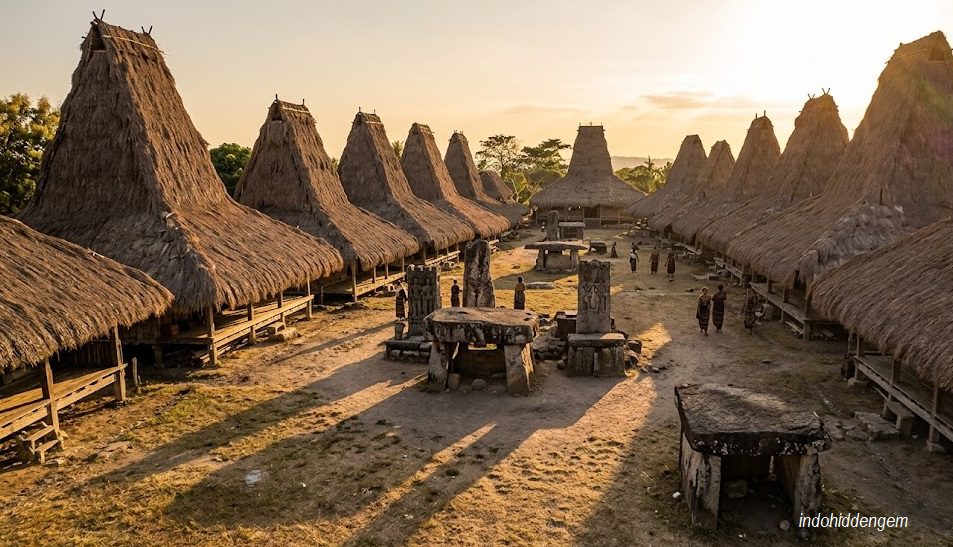
On the island of Sumba, villages are defined by towering thatched houses and massive megalithic tombs placed prominently within living spaces. These stone structures are not remnants of the past—they are still actively built and used, often requiring entire communities to transport and construct them through traditional methods.
At the core of Sumbanese life is the Marapu belief system, an ancestral religion that governs social structure, rituals, and interactions with nature. Unlike organized religions, Marapu is not written—it is lived, expressed through ceremonies and oral tradition.
One of the most well-known rituals is Pasola, a ceremonial horseback battle where participants throw wooden spears. While it may appear violent, the ritual is symbolic—marking seasonal cycles and maintaining spiritual balance between humans and the land.
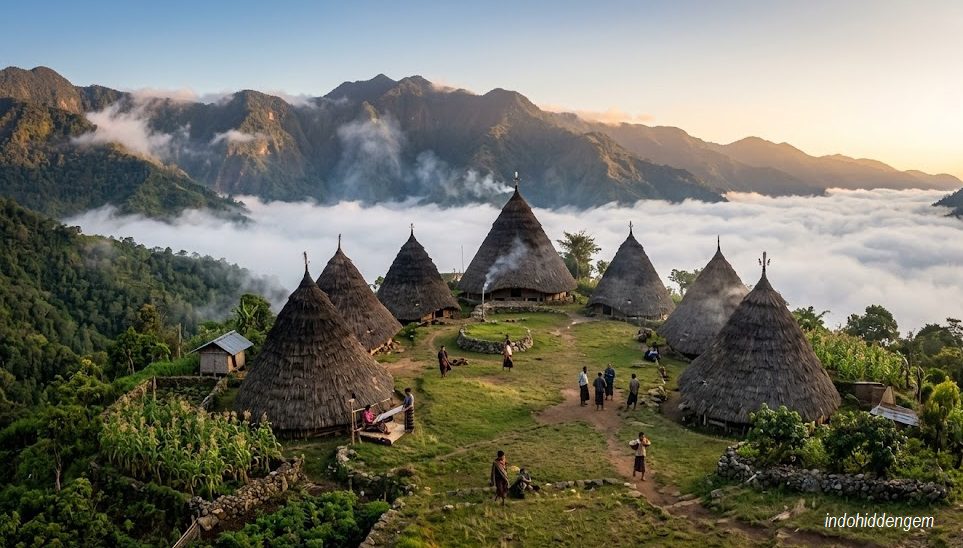
In Flores, the village of Wae Rebo offers a different yet equally compelling experience. Nestled high in the mountains and accessible only by foot, the village is known for its cone-shaped Mbaru Niang houses, which house multiple families and symbolize unity.
Life here is communal, slow, and deeply rooted in tradition. Surrounded by mist and isolation, Wae Rebo feels less like a destination—and more like a preserved world.
🐎 Sumba Villages
Sumba is one of the last places where megalithic traditions still exist.
Massive stone tombs stand in front of homes, while rituals like Pasola reflect a deep spiritual connection to land and ancestors.
☁️ Wae Rebo (Flores)
Hidden in the mountains, Wae Rebo feels like a world above the clouds.
Its iconic cone-shaped houses (Mbaru Niang) symbolize unity and connection between humans and the spiritual realm.
🌊 Papua: The Last Cultural Frontier
In the highlands of Papua, culture remains among the most intact in Indonesia. Geographic isolation has allowed communities to preserve traditions that have existed for centuries, largely untouched by modern influence.
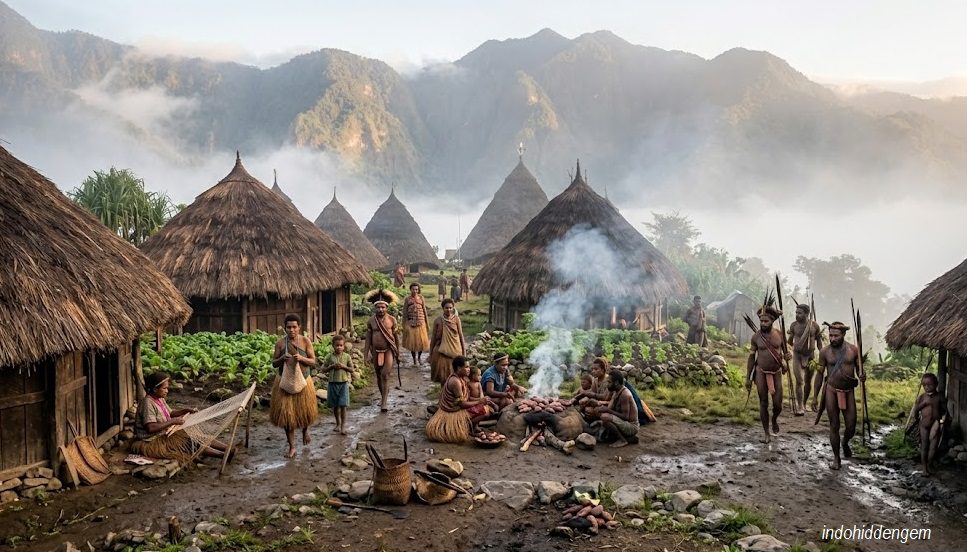
In the Baliem Valley, the Dani people maintain a way of life centered on community, ritual, and adaptation to the environment. Their homes, known as Honai, are small, round structures with thatched roofs designed to retain warmth in the cool highland climate.
Each building serves a specific purpose—some for sleeping, others for storage or communal activities—reflecting an organized and functional village system.
One of the most important cultural practices is Bakar Batu, a communal cooking ritual where heated stones are used to cook meat and vegetables underground. This is more than a method of preparation—it is a social event that strengthens relationships, marks important occasions, and resolves conflict.
The Dani are also known for preserving ancestral mummies, treated with respect and displayed as symbols of leadership and continuity. These practices offer insight into a worldview where the past remains actively present in daily life.
Despite increasing exposure to the outside world, many Dani communities continue to uphold their traditions with clarity and pride.
Papua is not just remote—it is one of the last places where culture exists with minimal compromise.
🛖 Dani Tribe (Baliem Valley)
In Papua’s highlands, the Dani people maintain traditions that predate modern civilization.
From Honai houses to the communal Bakar Batu ritual, their way of life remains deeply rooted in ancestry.
⚠️ Travel Respectfully
These are not tourist attractions—they are homes.
Always:
- Ask permission before taking photos
- Dress modestly
- Use local guides
- Respect customs and beliefs
🌏 Discover the Real Indonesia
Indonesia’s true richness is not found in luxury resorts, but in the traditions that continue to shape everyday life.
These cultural villages are not relics of the past—they are living identities.
Travel here is not about checking destinations off a list.
It is about understanding a different way of life.