
Kei Islands Travel Guide: Indonesia’s Hidden Tropical Paradise Beyond Bali
Introduction
The Kei Islands are one of the last truly under-the-radar tropical destinations in Indonesia. Located deep in the southeastern part of Maluku Province, far away from Bali’s beach clubs and Lombok’s busy tourist zones, the Kei Islands feel like a forgotten paradise where nature still dominates everyday life.
For many international travelers, Indonesia often means Bali, Komodo, or perhaps Raja Ampat. Very few travelers realize that some of the country’s most beautiful white-sand beaches are actually hidden in the Kei archipelago. In fact, many travelers who eventually reach Kei are shocked by how untouched and peaceful the islands still are.
Imagine beaches with powdery sand so soft it resembles flour. Imagine crystal-clear turquoise water stretching endlessly across shallow lagoons. Imagine villages where children still wave enthusiastically at passing visitors because tourism remains relatively rare. This is not the polished luxury tourism environment of Bali. Kei offers something different: authenticity, simplicity, and genuine island life.
The Kei Islands consist of several islands, but the main tourism area revolves around Kei Kecil and Kei Besar. Most visitors arrive in Langgur or Tual before exploring beaches, fishing villages, sandbars, coral islands, and remote coastal landscapes.
One of the biggest reasons travelers fall in love with Kei is the atmosphere. Life moves slowly here. There are no massive beach clubs, almost no traffic, and very little nightlife compared to Bali. Instead, travelers come for snorkeling, island hopping, local seafood, sunrise photography, and peaceful tropical scenery.
At first glance, some travelers compare Kei to the Maldives because of the bright turquoise lagoons and white beaches. Others compare it to remote Pacific islands. But Kei still feels uniquely Indonesian. Traditional villages, local fishing boats, spice-route history, and Maluku culture create a very different experience from mainstream tropical destinations.
Kei is not perfect, however. Reaching the islands takes effort. Flights are limited. Weather disruptions can happen. Infrastructure remains basic in many areas. Internet quality varies. Luxury tourism is still developing. Travelers expecting Bali-style convenience may initially struggle.
But for adventurous travelers willing to embrace slower travel, the rewards are enormous.
Unlike many famous tropical destinations that have become crowded and commercialized, the Kei Islands still feel raw and real. You can walk along long stretches of beach without seeing another tourist. You can interact naturally with local communities rather than entering staged tourism environments.
For photographers, divers, backpackers, couples, and travelers searching for Indonesia’s hidden gems, Kei offers one of the country’s most memorable island experiences.
This complete Kei Islands travel guide explains everything you need to know before visiting, including logistics, transportation, costs, accommodation, island hopping, cultural tips, beaches, itineraries, and realistic expectations.
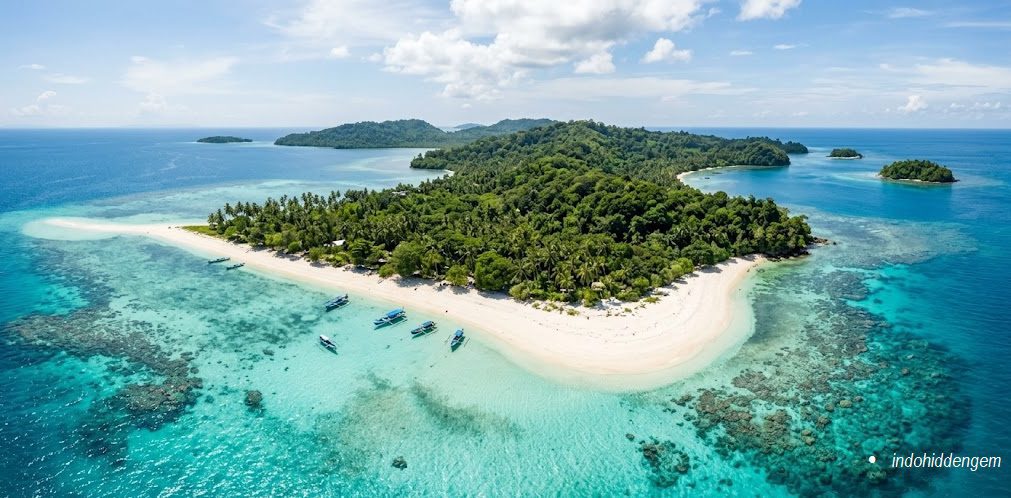
“Aerial view of the Kei Islands Indonesia, ultra-white sand beaches, turquoise shallow lagoons, tropical islands surrounded by coral reefs, small wooden fishing boats, natural sunlight, photorealistic, documentary travel photography, drone shot, realistic ocean texture, not AI-looking”
Where Are the Kei Islands & Why They Matter
The Kei Islands, also spelled Kai Islands, are located in Southeast Maluku Regency within Maluku Province, eastern Indonesia. Geographically, the islands sit between Papua and Timor, far from Java and Bali.
The main gateway towns are Tual and Langgur, located on Kei Kecil Island. Although the islands appear remote on the map, they historically played an important role in regional trade routes across eastern Indonesia.
The Kei archipelago includes dozens of islands, though only a few are commonly visited by travelers. The two largest islands are:
- Kei Kecil (Little Kei)
- Kei Besar (Great Kei)
Most tourism infrastructure is concentrated on Kei Kecil because it has the airport, main roads, and better accommodations.
What makes Kei especially important is its incredible combination of beaches, culture, and relatively untouched marine ecosystems.
Many beaches in Southeast Asia have suffered from overdevelopment. Beachfront resorts, pollution, jet skis, beach bars, and overtourism have dramatically changed the atmosphere of many famous destinations.
Kei remains different.
The islands still maintain a strong connection between local communities and nature. Traditional fishing continues to shape daily life. Villages remain active cultural centers rather than tourist attractions designed only for visitors.
One of the most famous beaches is Ngurbloat Beach, often called Pasir Panjang. The sand here is remarkably soft and bright white. Many Indonesians consider it one of the finest beaches in the country.
Kei also matters because it represents another side of Indonesia that many international tourists never see. Instead of crowded tourist infrastructure, travelers experience local markets, island ferries, family-owned guesthouses, and small fishing communities.
Culturally, the islands preserve strong traditional customs called adat. Local social structures, ceremonies, and village systems remain highly respected.
Religious diversity is another important aspect of life in Kei. Christian and Muslim communities coexist peacefully across the islands, creating a social atmosphere that many travelers find welcoming.
Marine biodiversity around Kei is also impressive. While the islands are less famous than Raja Ampat, snorkeling and diving opportunities can still be excellent in certain areas, especially around smaller offshore islands.
Another reason Kei matters is accessibility compared to more extreme remote destinations.
Although reaching Kei requires multiple transport steps, it is still considerably easier and more affordable than some isolated diving destinations in eastern Indonesia.
For travelers wanting a hidden tropical destination without spending luxury-level Raja Ampat prices, Kei can become an excellent alternative.
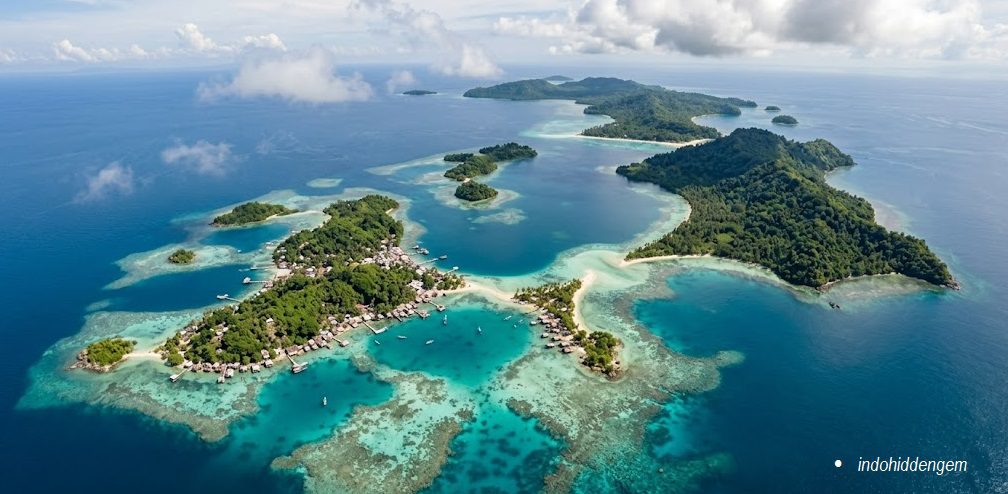
Geographic overview section
Why the Kei Islands Experience Is Unique
The Kei Islands offer a travel experience that feels increasingly rare in Southeast Asia.
In many famous tropical destinations, travelers often move through carefully designed tourism ecosystems. Restaurants cater mainly to foreigners. Resorts isolate visitors from local communities. Excursions follow predictable schedules.
Kei feels far less commercialized.
Here, travel still involves unpredictability. You interact directly with local people. You adapt to island schedules. Boats may leave late. Electricity interruptions can occasionally happen in smaller areas. But these imperfections are part of what makes Kei memorable.
One of the most unique aspects of Kei is the extraordinary quality of its beaches.
Ngurbloat Beach is perhaps the most famous example. The sand is incredibly soft because it contains finely crushed coral particles accumulated over centuries. Walking barefoot here feels completely different from typical tropical beaches.
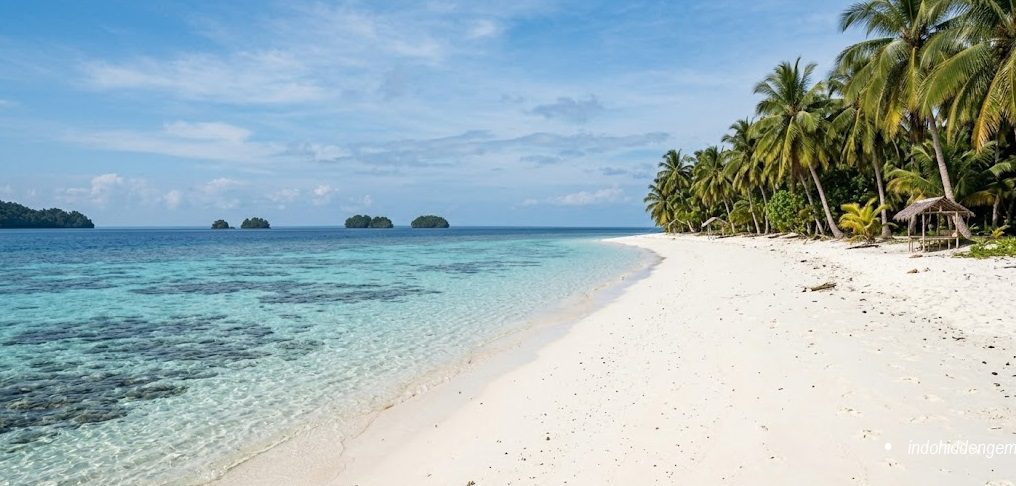
The water around Kei is equally impressive. In shallow lagoons, the ocean shifts through multiple shades of turquoise, aqua, emerald, and deep blue depending on sunlight and tides.
Unlike Bali, where many beaches have strong waves and dark volcanic sand, Kei offers calmer swimming conditions and lighter tropical scenery.
Another unique element is the pace of life.
Many travelers describe Kei as emotionally relaxing because daily life feels slower and quieter. Traffic is minimal. Commercial noise is limited. There are fewer distractions.
Sunsets become events rather than quick Instagram moments.
Travelers often spend hours sitting quietly on beaches, talking with local residents, or simply watching fishing boats return home.
The island-hopping experience also feels authentic rather than highly commercial.
In places like Thailand or Bali, island tours often involve crowded speedboats filled with tourists. In Kei, many boat trips still feel personal and flexible.
You may hire a local fisherman for the day and visit tiny sandbars, remote beaches, and snorkeling spots with almost nobody else around.
The cultural atmosphere also makes Kei different.
Tourism here is still developing, meaning interactions often feel more genuine. Children wave enthusiastically. Local people ask where you are from. Small conversations happen naturally.
Food in Kei is another underrated highlight.
Fresh seafood is abundant. Grilled fish, squid, tuna, and local shellfish frequently appear in local restaurants and family warungs. Because tourism remains smaller-scale, prices are usually much lower than Bali.
For photographers, Kei offers extraordinary lighting and scenery.
The combination of white beaches, traditional boats, tropical forests, and quiet villages creates endless photography opportunities.
Sunrise and sunset conditions can be spectacular, especially during the dry season.
Another unique aspect is how uncrowded the islands remain.
Even during Indonesian holiday periods, many beaches still feel relatively peaceful compared to major tourism destinations.
Travelers searching for silence, nature, and slow exploration often consider Kei one of Indonesia’s best hidden gems.
Still, visitors should understand that Kei is not a luxury tourism destination in the same sense as Bali or the Maldives.
Road quality varies. English is limited outside tourism areas. Healthcare facilities are basic. Internet can be inconsistent.
But for travelers prioritizing authenticity over convenience, these trade-offs often become part of the adventure.
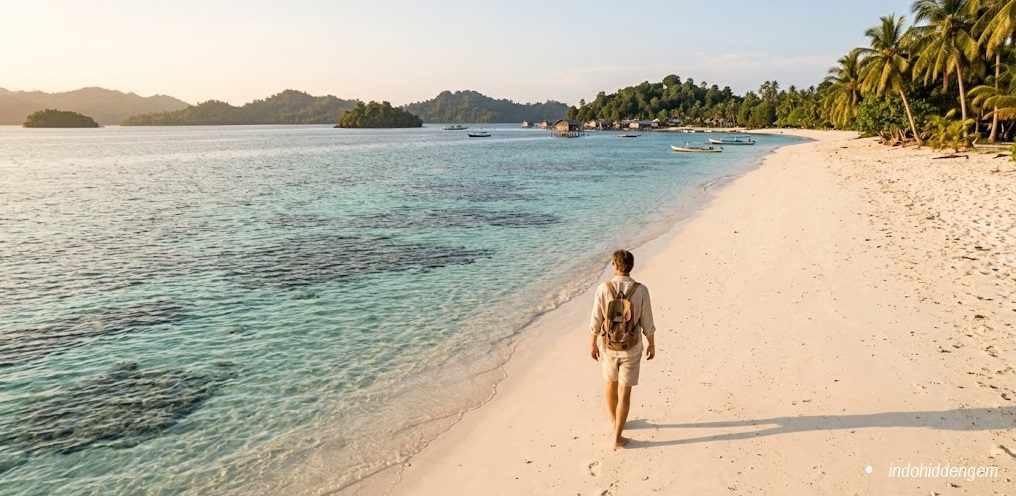
“Traveler walking alone on Ngurbloat Beach Kei Islands,
How to Get to the Kei Islands
Getting to the Kei Islands requires planning and patience.
This is not a destination where travelers simply arrive directly from Europe or North America. Reaching Kei usually involves multiple flights and sometimes overnight stays.
However, the journey is part of the experience.
Travelers willing to handle the logistics are rewarded with one of Indonesia’s least crowded tropical destinations.
International Flights to Indonesia
Most international travelers first arrive in:
- Jakarta
- Bali (Denpasar)
- Makassar
- Surabaya
For most travelers, Bali or Jakarta become the easiest starting points.
From Europe or the United States, reaching Indonesia may already require long-haul connections through Singapore, Doha, Dubai, Kuala Lumpur, Tokyo, or Istanbul.
Domestic Route to Kei Islands
The main airport serving Kei is:
Karel Sadsuitubun Airport (LUV) near Langgur.
Flights usually connect through Ambon, the capital of Maluku Province.
The most common route is:
International City → Jakarta/Bali → Ambon → Langgur (Kei Islands)
Step-by-Step Example From Bali
- Fly from Bali to Ambon
- Overnight in Ambon is often necessary
- Take morning domestic flight to Langgur
- Travel by car to your accommodation
Why Overnight Stops Matter
Many travelers make the mistake of booking tight domestic connections.
Indonesian domestic flights can experience delays, schedule changes, or weather disruptions.
It is highly recommended to spend one night in Ambon before continuing to Kei.
This reduces stress and lowers the risk of missing connecting flights.
Flying From Jakarta
Travelers departing Jakarta usually connect through Ambon or Makassar.
Travel time can easily exceed 10–15 hours total depending on schedules.
Ferry Options
Budget travelers sometimes use Pelni ferries.
These large passenger ships connect parts of eastern Indonesia including Maluku.
However, ferries are:
- Much slower
- Less comfortable
- Schedule-dependent
- Sometimes delayed
Still, adventurous backpackers occasionally enjoy the experience because ferries provide insight into everyday Indonesian travel.
Travel time by ferry from Ambon to Kei can take many hours or even overnight depending on schedules.
Arrival at Langgur Airport
Langgur Airport is small and relatively simple.
Do not expect major international airport facilities.
However, the arrival process is usually easy and relaxed.
Outside the airport, travelers can arrange:
- Local taxis
- Hotel pickups
- Rental motorbikes
- Drivers
Getting Around Kei
Transportation on Kei Kecil mainly includes:
- Motorbike rental
- Private car with driver
- Local minibuses
- Ojek (motorbike taxi)
Motorbike rental is popular among independent travelers because distances are manageable.
Road conditions near main beaches are generally acceptable, though some rural roads remain rough.
Island Hopping Transport
Exploring smaller islands requires boats.
You can arrange:
- Private boats
- Fisherman charters
- Shared island tours
Prices vary depending on distance, fuel, and negotiation skills.
Common Travel Mistakes
1. Underestimating Travel Time
Many first-time visitors assume they can reach Kei quickly.
In reality, the journey often consumes one or two full travel days.
2. Expecting Bali-Level Infrastructure
Kei remains relatively remote.
ATM access, internet quality, and transportation convenience are limited compared to Bali.
3. Not Bringing Cash
Cash is extremely important.
Many small businesses do not accept cards.
4. Ignoring Weather Risks
Heavy rain or rough seas occasionally affect flights and boats.
Flexible schedules help significantly.
Backpacker vs Luxury Access
Backpackers often combine:
- Budget airlines
- Ferries
- Guesthouses
- Shared transport
Luxury travelers usually prefer:
- Domestic flight combinations
- Private transfers
- Resort pickups
- Private island-hopping tours
Travel Reality Check
Reaching Kei is not effortless.
Compared with Bali, logistics are far more complicated.
But this difficulty also protects the islands from overtourism.
Travelers who successfully reach Kei often feel a strong sense of accomplishment because they have gone beyond mainstream Indonesian tourism.
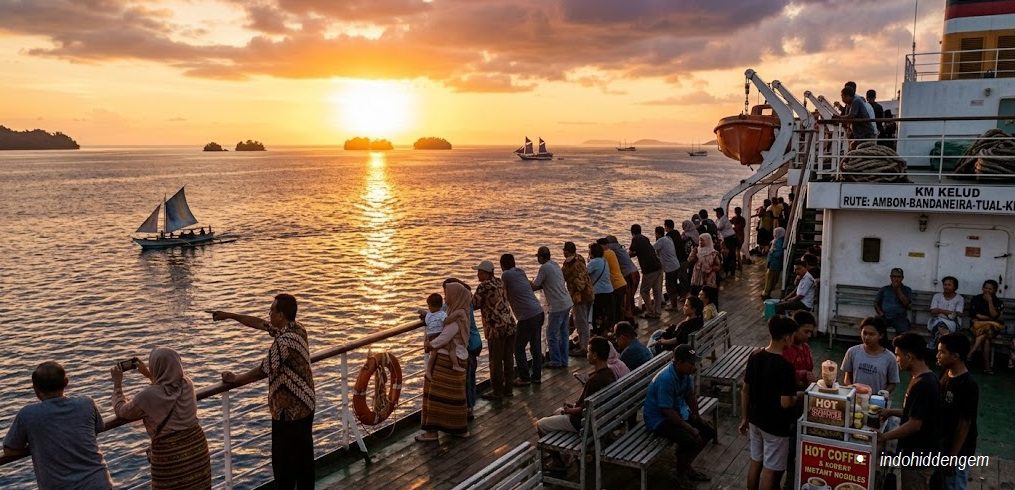
Pelni Ferry logistics subsection
Best Time to Visit the Kei Islands
The best time to visit the Kei Islands is generally during the dry season, especially between October and April.
Unlike western Indonesia, eastern Indonesia follows slightly different seasonal weather patterns.
Travelers should always double-check regional forecasts before booking.
Dry Season Advantages
During the drier months, visitors usually experience:
- Calmer seas
- Better visibility for snorkeling
- More reliable island-hopping conditions
- Brighter blue water
- Better photography lighting
Beaches become especially beautiful during sunny periods because the turquoise lagoons appear far more vibrant.
Rainy Periods
Rainy conditions can create:
- Rougher seas
- Ferry delays
- Cloudier water
- Reduced visibility
- Muddy rural roads
However, even rainy periods may still include sunny intervals.
Best Months for Photography
October through December often provides excellent lighting conditions.
The ocean colors become extremely vivid during calm sunny mornings.
Golden hour photography at Ngurbloat Beach can look spectacular.
Peak Domestic Tourism Periods
Indonesian holiday periods can increase local visitor numbers, especially:
- Christmas
- New Year
- Eid holidays
- School vacations
Still, Kei remains far less crowded than Bali.
Diving & Snorkeling Conditions
Marine visibility varies depending on weather and tides.
Calmer conditions usually provide better underwater experiences.
Temperature & Humidity
Kei remains tropical year-round.
Expect:
- Warm temperatures
- High humidity
- Strong sunlight
Travelers from Europe may initially struggle with the heat.
Light clothing, hydration, and sunscreen are essential.
When NOT to Visit
Travelers with extremely tight schedules should avoid weather-sensitive periods.
Because transportation options are limited, weather disruptions can seriously affect travel plans.
Best Travel Style by Season
Dry Season
Ideal for:
- Island hopping
- Beach photography
- Snorkeling
- Backpacking
- Motorbike exploration
Wetter Months
Better for:
- Slower cultural travel
- Relaxation
- Fewer domestic tourists
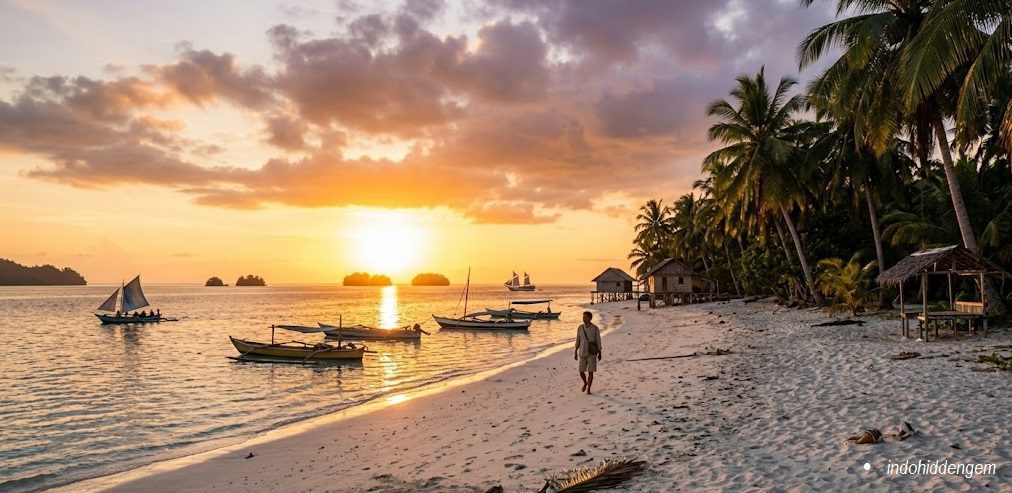
“Golden hour at Ngurbloat Beach Kei Islands
Beaches, Marine Life & Island Experiences
The beaches are unquestionably the main reason most travelers visit the Kei Islands.
Some visitors even claim Kei has better beaches than Bali.
While that comparison is subjective, it is easy to understand why travelers become emotionally attached to these islands.
Ngurbloat Beach (Pasir Panjang)
Ngurbloat Beach is the most famous beach in Kei.
Stretching for several kilometers, the beach features extraordinarily soft white sand and calm turquoise water.
Unlike heavily commercialized beaches elsewhere in Southeast Asia, Ngurbloat still feels peaceful.
Small cafes and guesthouses exist nearby, but the atmosphere remains relaxed.
Walking here at sunrise or sunset becomes one of the highlights of any Kei trip.
Ngurtafur Sandbar
Ngurtafur is another iconic destination.
This narrow sandbar extends dramatically into the sea during low tide.
The scenery often reminds travelers of the Maldives.
Flamingos are occasionally reported in the area during certain periods, though sightings are not guaranteed.
Boat trips are required to reach the sandbar.
Bair Island
Bair Island is sometimes called the “Raja Ampat of Maluku” because of its dramatic limestone formations and blue-green water.
The narrow waterways and cliffs create spectacular scenery for drone photography and kayaking.
Although less famous internationally, many domestic travelers consider Bair one of eastern Indonesia’s hidden gems.
Snorkeling Around Kei
Snorkeling conditions vary depending on location and season.
Some areas feature:
- Coral reefs
- Tropical fish
- Clear shallow lagoons
- Sea grass ecosystems
Kei does not yet compete directly with Raja Ampat for marine biodiversity, but snorkeling remains enjoyable and accessible.
Fishing Culture
Fishing remains central to local life.
Traditional wooden boats frequently line beaches and harbors.
Morning fish markets provide insight into daily island routines.
Boat Experiences
One of the best parts of Kei travel is hiring local boats.
These trips often feel spontaneous and personal rather than heavily commercialized.
You may:
- Visit tiny uninhabited islands
- Picnic on remote beaches
- Swim in shallow lagoons
- Explore hidden sandbars
What It REALLY Feels Like
Many travel articles over-romanticize tropical destinations.
Kei truly is beautiful, but visitors should also expect:
- Heat
- Mosquitoes
- Limited facilities
- Occasional plastic waste in some areas
- Weather unpredictability
Still, the emotional atmosphere often outweighs the inconveniences.
The islands feel peaceful in a way many travelers rarely experience anymore.
Sunrise & Sunset Atmosphere
Sunrise tends to feel calm and reflective.
Fishermen leave early while the beaches remain nearly empty.
At sunset, the sky often turns orange, pink, and purple across shallow turquoise water.
Comparison With Bali
Compared to Bali:
Kei Advantages:
- Less crowded
- Cleaner beach atmosphere
- More authentic local life
- Better sense of exploration
Bali Advantages:
- Easier logistics
- Better nightlife
- More restaurants
- Stronger tourism infrastructure
Comparison With Maldives
Kei visually resembles parts of the Maldives but differs significantly.
The Maldives focuses heavily on luxury resort tourism.
Kei feels more adventurous, local, and culturally immersive.
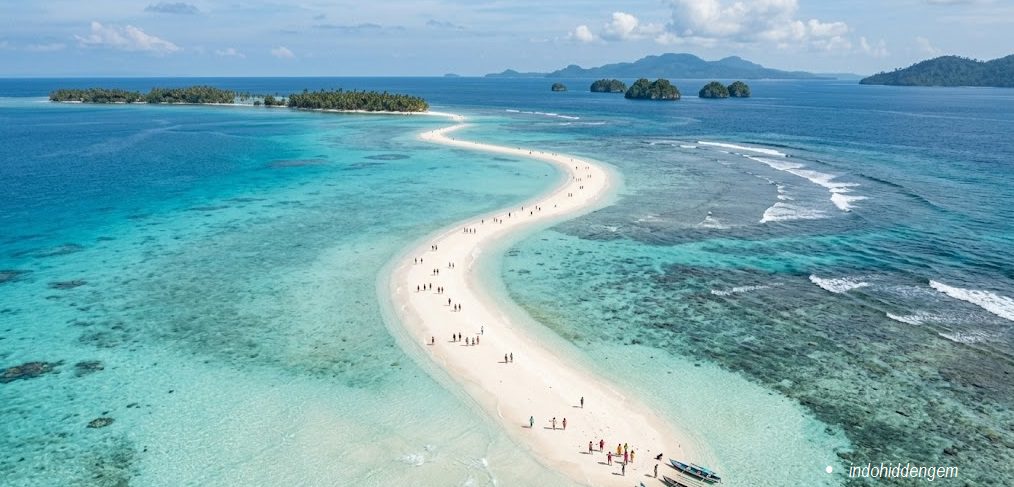
Ngurtafur beach kei islands
Food, Seafood & Daily Life in Kei
Daily life in the Kei Islands revolves around the sea.
Fishing boats leave early in the morning and return with tuna, squid, reef fish, and shellfish.
Seafood dominates local cuisine.
Travelers can enjoy grilled fish with sambal, rice, vegetables, and simple soups at affordable prices.
Unlike luxury tourism destinations where seafood prices become inflated, meals in Kei are often surprisingly affordable.
Local Food Highlights
Common dishes include:
- Grilled tuna
- Fried fish
- Squid dishes
- Sago-based foods
- Rice meals with sambal
- Fresh coconuts
Daily Rhythm
Life starts early in Kei.
Markets become active in the morning while afternoons often slow down because of the heat.
Evenings are generally quiet.
This is not a nightlife destination.
Coffee & Cafes
Cafe culture remains limited compared to Bali.
Travelers should not expect large numbers of specialty coffee shops.
Internet & Remote Work
Some accommodations offer decent internet, but reliability varies.
Kei is not yet ideal for intensive remote work lifestyles.
Cultural Respect
Local communities remain relatively conservative.
Respectful clothing and behavior are appreciated, especially outside tourist beaches.
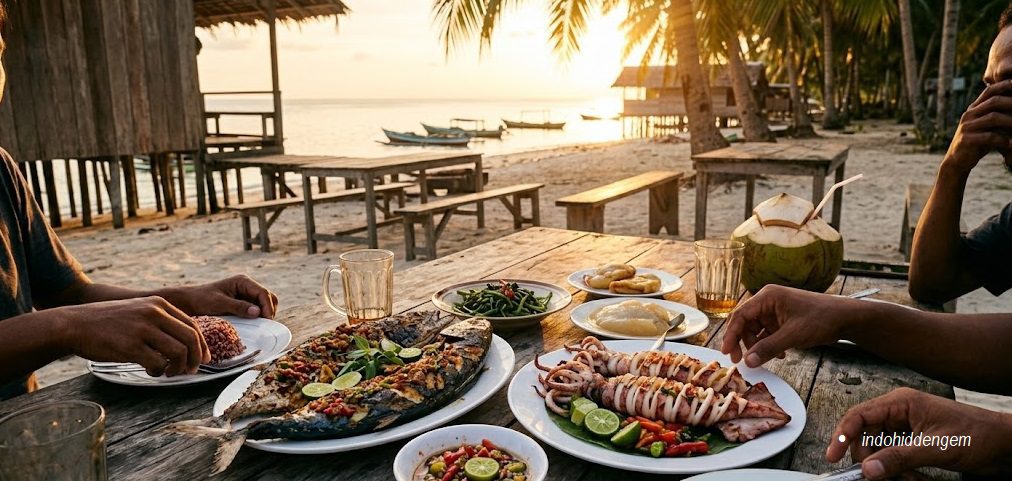
“Fresh grilled seafood
Top Things to Do in the Kei Islands
1. Relax at Ngurbloat Beach
The simplest activity is often the best.
Spend time swimming, walking, reading, and watching sunsets.
2. Visit Ngurtafur Sandbar
This is one of the most photogenic locations in Maluku.
Low tide timing is important.
3. Explore Bair Island
Take a boat through dramatic limestone landscapes and hidden waterways.
4. Island Hopping
Hire a local boat and explore smaller islands.
5. Snorkeling
Several areas around Kei offer coral reefs and tropical fish.
6. Photography
Kei is excellent for:
- Drone photography
- Beach photography
- Portraits
- Documentary travel photography
7. Experience Local Markets
Markets provide insight into everyday island life.
8. Visit Traditional Villages
Some villages preserve strong adat traditions.
9. Try Local Seafood
Fresh seafood becomes part of the experience.
10. Explore by Motorbike
Independent travelers often enjoy slowly exploring coastal roads.
Hidden Gems Beyond Main Tourism Areas
Some of Kei’s best experiences happen away from famous beaches.
Remote villages, hidden coastlines, and spontaneous encounters frequently become the most memorable moments.
Where to Stay in the Kei Islands
Accommodation in Kei ranges from basic backpacker guesthouses to developing resort-style properties.
Travelers should keep expectations realistic.
Even higher-end accommodations may not match Bali luxury standards.
Backpacker Accommodation
Budget guesthouses usually cost:
- USD 10–25 per night
These often include:
- Fan or basic AC
- Private room
- Simple bathroom
- Basic breakfast
Mid-Range Hotels
Mid-range accommodations generally cost:
- USD 30–80 per night
These properties may offer:
- Better beachfront access
- Air conditioning
- Restaurant facilities
- Airport pickup assistance
Resort-Style Stays
Higher-end properties remain limited but growing.
Prices typically range:
- USD 100–250+ per night
Luxury travelers should remember that Kei focuses more on natural beauty than ultra-luxury infrastructure.
Best Areas to Stay
Ngurbloat Area
Best for beach access and relaxation.
Langgur/Tual
Best for logistics and transportation convenience.
Homestays
Homestays provide cultural interaction and lower costs.
Facilities are simpler but experiences often feel more personal.
Booking Advice
Book accommodations early during holiday periods because options remain limited.
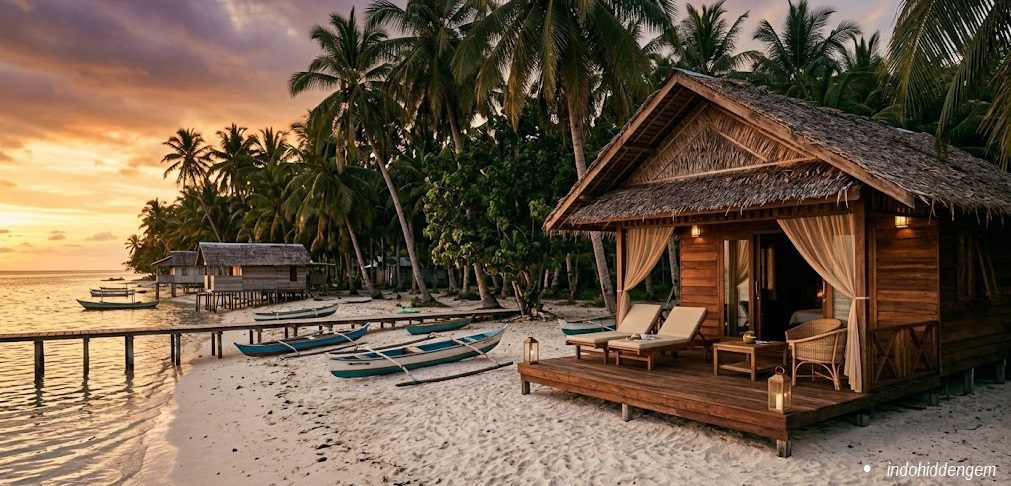
“Beachfront bungalow in Kei Islands Indonesia,
Sample Kei Islands Itineraries
4-Day Quick Escape
Day 1
- Arrive in Langgur
- Transfer to Ngurbloat
- Sunset beach walk
Day 2
- Island hopping
- Snorkeling
- Seafood dinner
Day 3
- Ngurtafur sandbar
- Photography
- Village exploration
Day 4
- Relaxing morning
- Airport transfer
7-Day Balanced Itinerary
Day 1–2
Arrival and beach relaxation.
Day 3
Island hopping and snorkeling.
Day 4
Bair Island exploration.
Day 5
Traditional village visits.
Day 6
Motorbike coastal exploration.
Day 7
Departure.
10-Day Slow Travel Itinerary
Ideal for photographers, writers, and travelers wanting deeper cultural immersion.
Backpacker vs Luxury Style
Backpackers often move slowly and flexibly.
Luxury travelers usually prefer private drivers and organized tours.
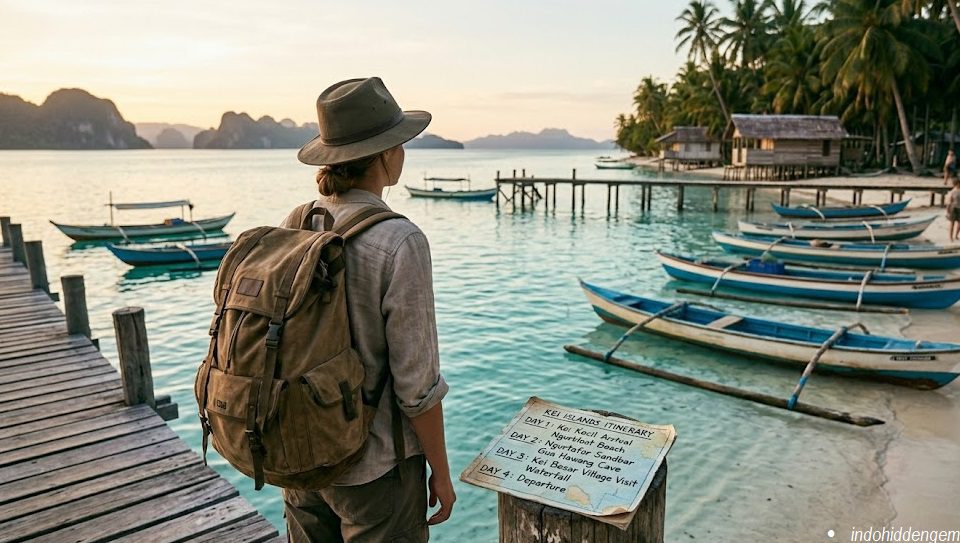
“Travel itinerary concept in Kei Islands
Kei Islands Travel Costs Breakdown
Kei can be relatively affordable compared with Bali or Raja Ampat.
However, transportation costs remain the biggest expense.
Budget Backpacker
Approximate daily budget:
- Accommodation: USD 10–20
- Food: USD 8–15
- Motorbike: USD 5–10
- Shared boats/tours: USD 10–25
Estimated total:
- USD 35–70 per day
Mid-Range Traveler
Approximate daily budget:
- Hotel: USD 40–80
- Food: USD 15–30
- Private transport: USD 20–50
- Boat trips: USD 40–100
Estimated total:
- USD 120–250 per day
Luxury-Style Travel
Luxury-style travel in Kei remains limited but possible.
Estimated budget:
- USD 300–600+ daily
Flight Costs
Domestic Indonesian flights fluctuate significantly.
Flights to eastern Indonesia are often more expensive than travelers expect.
Hidden Costs
Remember to budget for:
- Extra hotel nights due to flight delays
- Cash withdrawals
- Fuel surcharges for boats
- Weather-related schedule changes
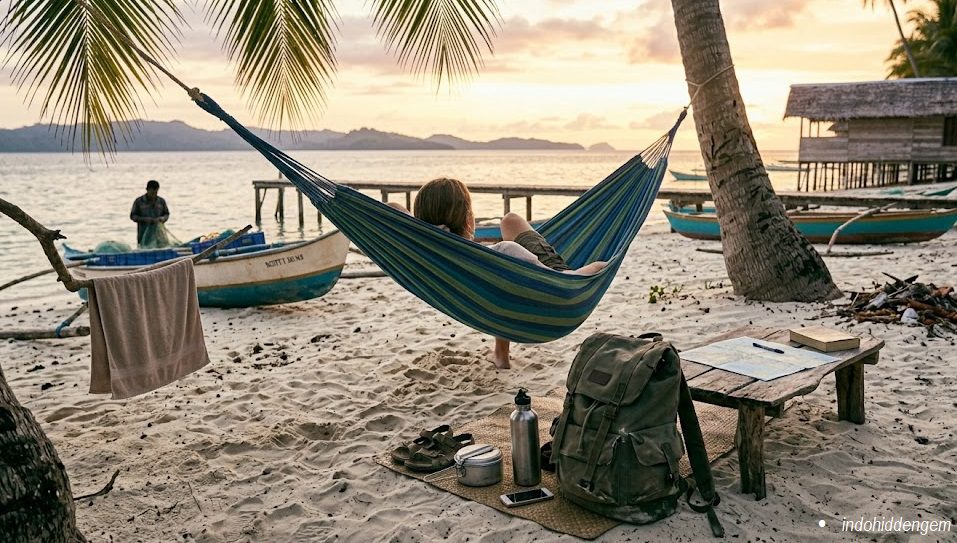
Backpacker relaxing on remote Kei Islands beach.
Honest Pros & Cons of Visiting Kei Islands
Pros
1. Extraordinary Beaches
Some of the best white-sand beaches in Indonesia.
2. Very Few Crowds
Kei still feels peaceful compared to Bali.
3. Authentic Local Atmosphere
Tourism remains relatively natural and community-based.
4. Affordable Food & Seafood
Fresh seafood is excellent value.
5. Incredible Photography Potential
The islands are visually stunning.
Cons
1. Difficult Logistics
Reaching Kei requires patience.
2. Limited Infrastructure
Roads, internet, and facilities remain basic.
3. Limited Nightlife
Travelers wanting entertainment may become bored.
4. Weather Sensitivity
Flights and boats may experience disruptions.
5. Healthcare Limitations
Medical facilities are limited compared with Bali or Jakarta.
Who Will LOVE Kei
- Photographers
- Couples
- Slow travelers
- Backpackers
- Nature lovers
- Travelers tired of overtourism
Who May NOT Enjoy Kei
- Luxury-only travelers
- Party travelers
- Travelers needing perfect internet
- Visitors with extremely tight schedules
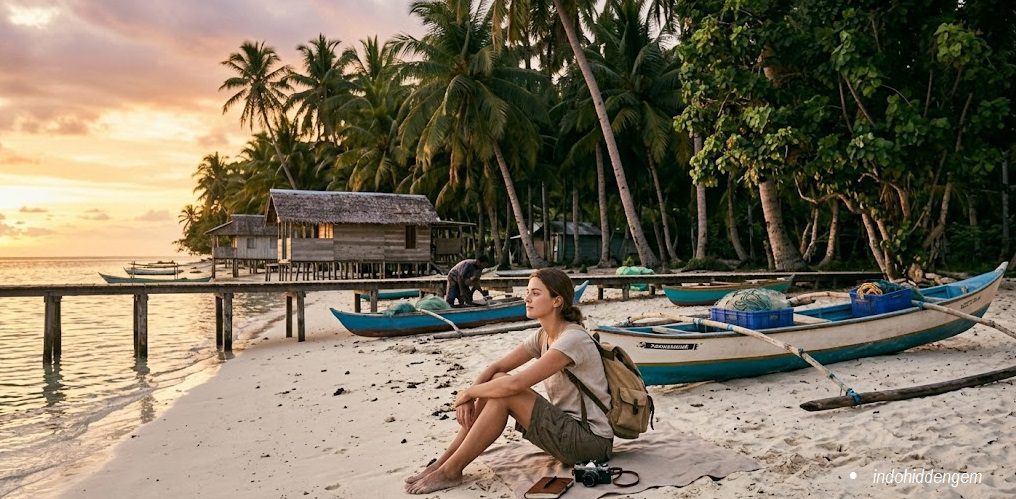
“Remote tropical island reality in Kei Islands Indonesia
Essential Travel Tips for Kei Islands
Bring Enough Cash
Cash is critical because many places do not accept cards.
Download Offline Maps
Internet can become unreliable.
Use Reef-Safe Sunscreen
The sun is extremely strong.
Respect Local Culture
Modest behavior outside tourist beaches is appreciated.
Prepare for Slow Travel
Patience is essential in eastern Indonesia.
Pack Light Clothing
Humidity remains high year-round.
Bring Basic Medicine
Pharmacies may be limited.
Learn Simple Indonesian Phrases
Even basic greetings help create positive interactions.
Be Flexible
Rigid schedules often create frustration in remote destinations.
Travel Insurance Matters
Because flights and boats can be disrupted, insurance is recommended.
Drone Use
Kei is excellent for drone photography, but always respect local privacy and weather conditions.
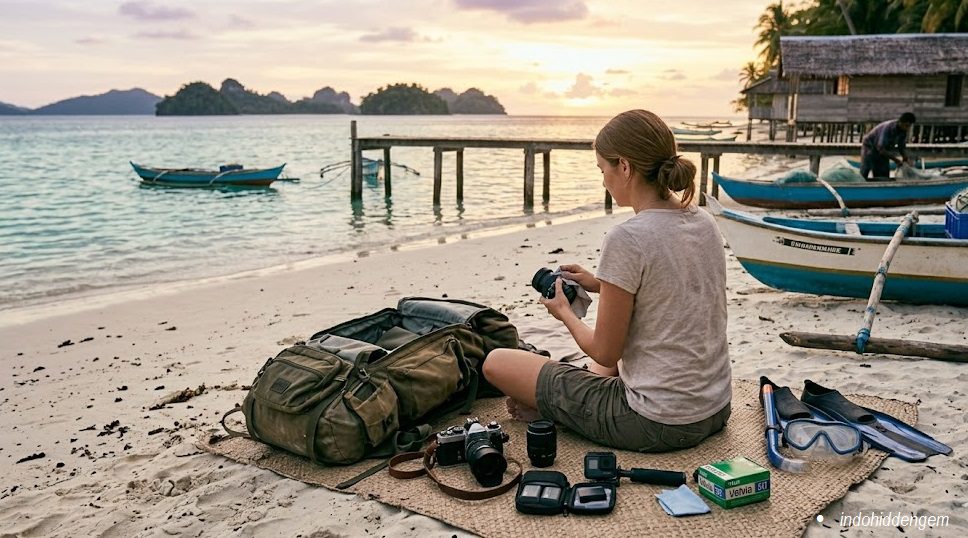
Traveler preparing for tropical island adventure in Kei Islands,
Final Verdict: Is Kei Islands Worth Visiting?
For the right traveler, the Kei Islands can become one of Indonesia’s most unforgettable destinations.
Kei is not about luxury shopping malls, beach clubs, or polished tourism convenience.
Instead, the islands offer something increasingly difficult to find in modern travel: quiet tropical authenticity.
The beaches are genuinely spectacular.
The turquoise water often looks unreal in person. Sunsets feel peaceful rather than commercialized. Local communities still shape the atmosphere of the islands more than tourism corporations do.
However, travelers should arrive with realistic expectations.
Reaching Kei takes time. Infrastructure remains limited. Weather disruptions occasionally happen. Some areas still lack polished tourism services.
But those imperfections are also why Kei remains special.
In many famous destinations, overtourism has transformed local culture and natural landscapes.
Kei still feels raw, relaxed, and emotionally refreshing.
For photographers, island lovers, backpackers, couples, and adventurous travelers searching for Indonesia beyond Bali, Kei represents one of the country’s finest hidden gems.
The islands reward patience.
Travelers who embrace slower schedules, flexible planning, and authentic exploration often leave Kei with stronger memories than they expected.
Perhaps the best way to describe Kei is this:
It feels like the kind of tropical paradise that Southeast Asia used to be before mass tourism changed everything.
And that alone makes the journey worthwhile.
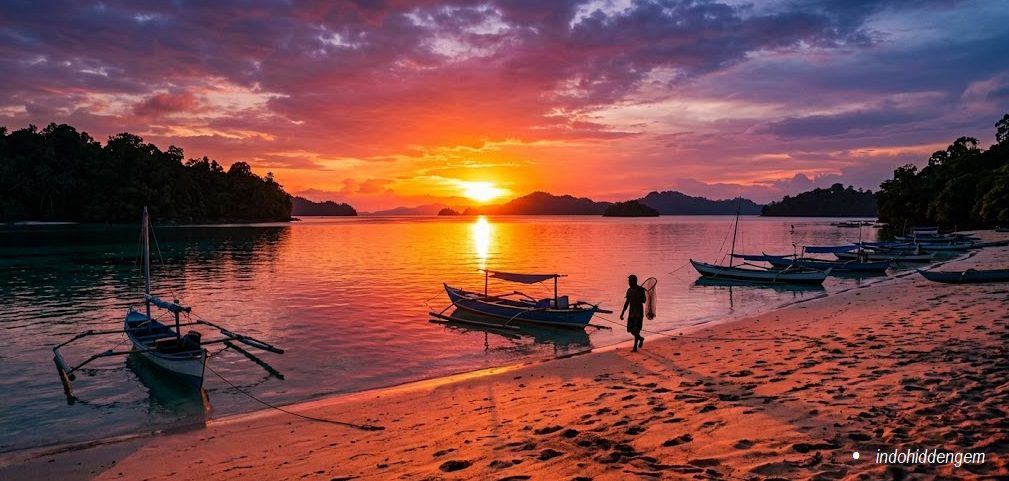
Epic sunset over Kei Islands Indonesia
For travelers exploring the Kei Islands, the wider journey across the beautiful Maluku Islands reveals even more hidden beaches, remote tropical escapes, and authentic eastern Indonesian culture.\n\nThe Kei Islands are also part of Indonesia’s fascinating Maluku Province, a region famous for its spice-trade history, untouched islands, crystal-clear seas, and incredible marine biodiversity.
Suggested Internal Links
- Maluku Travel Guide
- Indonesia Hidden Beaches
- Raja Ampat Travel Guide
- Banda Islands Guide
- Eastern Indonesia Destinations
Suggested External Topic Connections
- Bali vs Kei Islands
- Best Beaches in Indonesia
- Hidden Islands in Southeast Asia
- Maluku Island Hopping
Frequently Asked Questions About Kei Islands
Is Kei Islands safe for foreign travelers?
Yes. The Kei Islands are generally considered safe and welcoming for international travelers. Violent crime against tourists is very rare. However, travelers should still use common sense, especially when traveling late at night or carrying expensive camera equipment.
How many days should you spend in Kei?
At least 4–5 days is recommended because transportation to Kei already consumes significant travel time.
Is Kei better than Bali?
The answer depends on travel style. Kei offers quieter beaches, fewer tourists, and more authenticity. Bali offers easier logistics, nightlife, shopping, and broader tourism infrastructure.
Can you snorkel in Kei Islands?
Yes. Several areas around Kei provide excellent snorkeling opportunities with coral reefs and tropical fish.
Is Kei Islands expensive?
Daily life is relatively affordable, but transportation to eastern Indonesia can become expensive.
Do people speak English?
English is limited outside tourism businesses. Learning a few Indonesian phrases helps significantly.
Is internet reliable in Kei?
Internet quality varies. Some hotels provide decent connections, but travelers should not expect Bali-level connectivity everywhere.
Can backpackers travel Kei cheaply?
Yes. Backpackers can reduce costs using guesthouses, local food, ferries, and shared transport.
Is Kei suitable for honeymoon travel?
Absolutely. Couples seeking quiet beaches and privacy often love Kei.
What is the most beautiful beach in Kei?
Ngurbloat Beach is usually considered the most famous and beautiful beach in the islands.
Additional Photography & Content Creation Ideas
Travel creators visiting Kei often focus on:
- Drone cinematography
- Slow travel storytelling
- Beach photography
- Local fishing culture
- Tropical lifestyle content
- Underwater footage
- Sunset time-lapses
Because tourism remains relatively limited, content creators can often capture cleaner and less crowded scenes than in Bali.
Recommended Camera Gear
- Drone
- Polarizing filter
- Waterproof phone case
- Action camera
- Lightweight tripod
Best Content Timing
Early morning and late afternoon provide the best tropical lighting.
Midday sunlight can become extremely harsh.
Ethical Photography Tips
Always ask permission before photographing local residents closely.
Respect village customs and religious activities.
Cultural Notes About Kei Islands
The people of Kei maintain strong adat traditions that shape local society.
Community values, mutual respect, and traditional leadership remain important.
Visitors who behave respectfully are usually welcomed warmly.
Religion & Harmony
Both Christian and Muslim communities live across the islands.
One of the most remarkable aspects of Kei is the relatively harmonious coexistence between communities.
Traditional Villages
Some villages preserve traditional architecture and social customs.
Travelers interested in culture should explore beyond beaches to better understand island life.
Local Hospitality
Many travelers remember the friendliness of local residents long after leaving Kei.
Because tourism remains smaller-scale, interactions often feel sincere rather than transactional.
Why Kei Islands May Become More Popular Soon
Kei is slowly gaining attention among Indonesian travelers, photographers, and adventure travelers.
Social media exposure has increased dramatically in recent years.
Drone footage of Ngurtafur sandbar and Ngurbloat Beach frequently goes viral.
As infrastructure gradually improves, tourism will likely continue growing.
This creates both opportunities and risks.
More tourism may improve:
- Transportation
- Hotel quality
- Economic opportunities
- Restaurant variety
But excessive tourism could also damage the peaceful atmosphere that currently makes Kei special.
Travelers visiting now still experience the islands before large-scale international tourism arrives.
That rare sense of discovery is becoming increasingly difficult to find in Southeast Asia.
Final Reflection
The Kei Islands are not the easiest tropical destination to reach.
But sometimes the places requiring the greatest effort become the most rewarding.
Kei offers a reminder that Indonesia is far larger and more diverse than most travelers realize.
Beyond Bali’s cafes and Lombok’s resorts lies an enormous archipelago filled with islands where tourism still feels human, local, and connected to nature.
Kei represents that side of Indonesia beautifully.
For travelers searching for crystal-clear water, empty beaches, slow island life, and genuine adventure, the Kei Islands remain one of the country’s finest hidden tropical escapes.